
The short answer
On 22 January 1987, a march for comprehensive land reform ended in gunfire near Mendiola Bridge. Thirteen farmers were killed, exposing how democratic restoration could coexist with coercive institutions, unequal landholding and unresolved accountability.
Chronology
A timeline of the turning points
Farmers organise in Manila
Kilusang Magbubukid ng Pilipinas and allied groups pressed the new government for comprehensive land reform.
The march reaches Mendiola
Thousands moved toward the bridge leading to Malacañang after talks with government representatives produced no settlement.
Gunfire kills thirteen farmers
Violence at the security line left thirteen demonstrators dead and many protesters and personnel injured.
A citizens’ commission is created
Administrative Order No. 11 established an independent body to investigate the incident.
The commission submits its report
The Citizens’ Mendiola Commission found unnecessary firing by police and military personnel and made recommendations on responsibility and crowd control.
The Supreme Court rules on the civil case
Cariño v. Commission on Human Rights upheld dismissal of the damages action against the Republic on state-immunity grounds.
Why were farmers marching?
The People Power transition raised expectations that democratic restoration would include structural change in the countryside. Farmers’ organisations demanded comprehensive land reform and direct action from the Aquino government, whose political coalition included both reform advocates and powerful landowning interests.
On 22 January, a large march moved toward Malacañang after negotiations failed. The demonstration’s lack of a permit became part of later official findings, but it did not settle the separate questions of whether the security response was necessary, proportionate or lawfully controlled.
What happened at Mendiola Bridge?
Police and military units formed security lines near Mendiola. As the crowd pressed forward, the confrontation escalated through thrown objects, gunfire and a breakdown of command. Thirteen farmers were killed and many people were wounded.
The name “Mendiola Massacre” reflects public memory of lethal state force against an agrarian protest. A precise account should distinguish what official investigations established from claims about which individual fired each shot, because the latter question did not produce comprehensive criminal accountability.
What did the Citizens’ Mendiola Commission find?
President Aquino created a citizens’ commission after the violence. Its findings, later summarised by the Supreme Court, noted that crowd-control personnel were armed, that security men in civilian clothes were present and that police and military forces fired unnecessarily.
The report also addressed failures of planning, command and coordination. Its significance lies in documenting institutional responsibility soon after the event, even though the path from factual findings to individual legal liability remained incomplete.
Why did the Supreme Court case fail?
Families of those killed and injured sought damages from the Republic and public officials. In Cariño v. Commission on Human Rights, the Supreme Court held that the Republic had not consented to be sued in that action and that the lower court therefore lacked jurisdiction over the state.
State immunity was a procedural and constitutional barrier, not a factual declaration that the shooting was justified or that no wrong occurred. That distinction helps explain why Mendiola remains a symbol of unresolved accountability during democratic restoration.
Continue the chronology
Related history guides
The People Power Revolution
The democratic transition that raised expectations of political and social reform.
Read the timeline1986–1987The 1987 Philippine Constitution
The rights and institutions being rebuilt as the confrontation occurred.
Read the timeline1986–2001Philippine Democratic Transition
Follow political leadership and institutional stress after EDSA.
Read the timelineConnected biographies
The democratic leaders and reform advocates surrounding the crisis
 Philippines · Politics
1933—2009
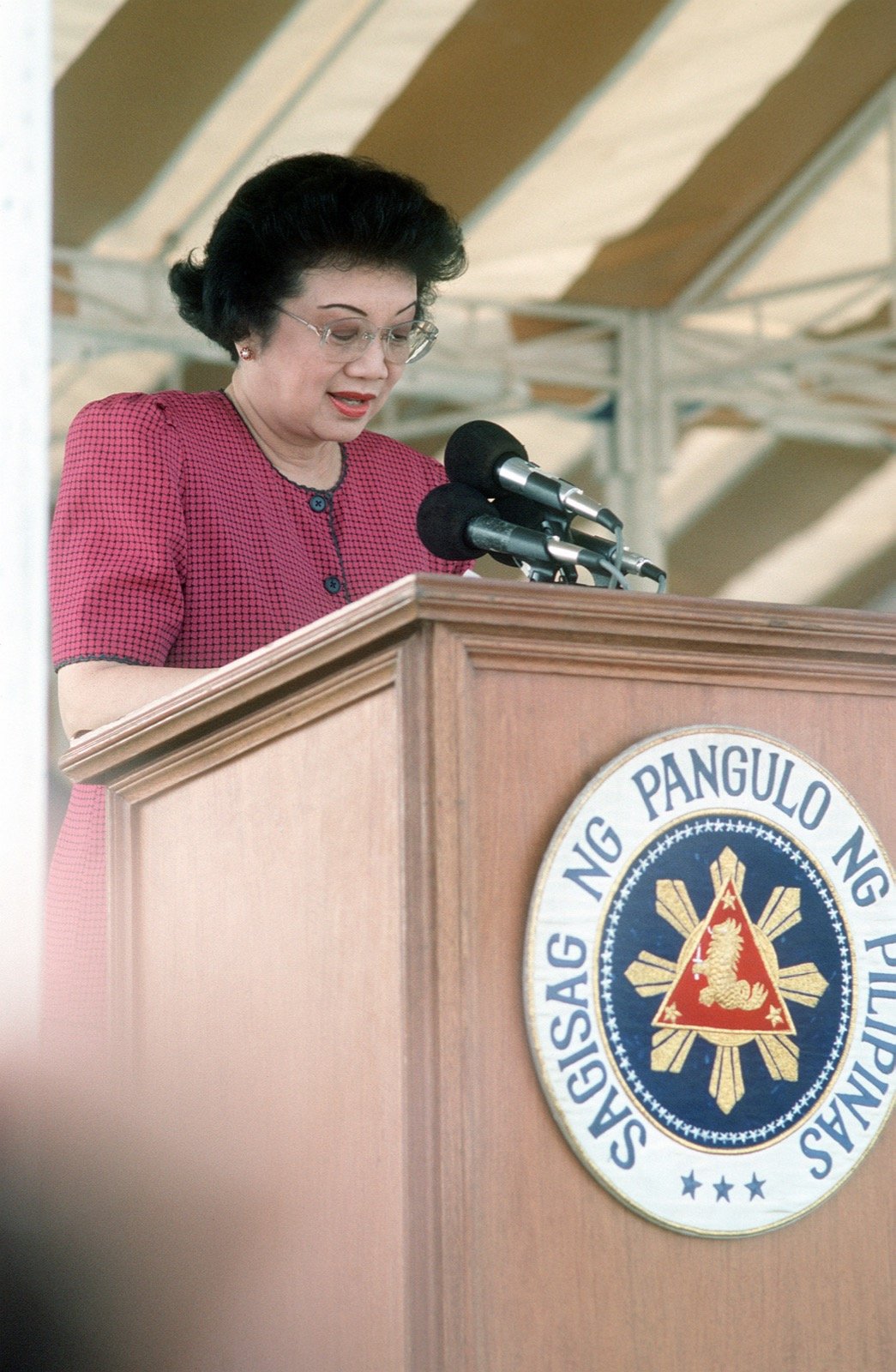
Corazon Aquino
President of the Philippines, 1986–1992The opposition leader who became president after People Power and restored constitutional government following the Marcos dictatorship.Read biography Philippines · Politics
1898—1992
Lorenzo Tañada
Senator, nationalist and anti-dictatorship leaderA four-term Filipino senator known as Ka Tanny who returned from retirement to defend political prisoners and lead public resistance under martial law.Read biography Philippines · Politics
1920—2016
Jovito Salonga
Opposition senator and post-EDSA Senate presidentA Filipino lawyer, opposition leader and statesman who survived wartime imprisonment and the Plaza Miranda bombing before helping rebuild the Senate after EDSA.Read biography Philippines · Politics
1945—2016
Miriam Defensor Santiago
Senator, judge and public administratorA lawyer, judge, cabinet official and senator whose sharp legal arguments and forceful public style made her one of the Philippines’ most recognisable political figures.Read biographyQuick answers
Common questions
- When did the Mendiola Massacre happen?
- The confrontation occurred on 22 January 1987 near Mendiola Bridge in Manila.
- How many people were killed?
- Thirteen farmers were killed. Many demonstrators and members of the security forces were also reported injured.
- What was the protest about?
- Farmers and allied groups were demanding comprehensive land reform from the new Aquino government.
- Did the Supreme Court decide that the shooting was lawful?
- No. The civil action was dismissed against the Republic on state-immunity grounds; that holding did not amount to a factual judgment that the shooting was justified.
Primary and institutional sources
How this history was checked
Dates, legal milestones and historical claims are checked against the official and institutional records below. This article was reviewed on 9 September 2026.
- Supreme Court of the Philippines via LawPhilCariño v. Commission on Human Rights — incident, commission findings and state immunity
- The LawPhil Project1987 Constitution of the Republic of the Philippines
- The LawPhil ProjectAdministrative Order No. 11 — Citizens’ Mendiola Commission
- Wikimedia CommonsCorazon Aquino portrait and licence record