
The short answer
The removal of Norodom Sihanouk on 18 March 1970 did not merely replace one leader. It ended Cambodia’s monarchy, pulled the country fully into the regional war, strengthened a coalition that included the Khmer Rouge and began five years of destruction before Phnom Penh fell.
Chronology
A timeline of the turning points
Insurgency and regional war intensify
Rural rebellion, North Vietnamese and Viet Cong bases, and cross-border pressure weakened Sihanouk’s neutrality.
The National Assembly removes Sihanouk
While the prince was abroad, legislators voted him out as head of state and Lon Nol emerged as the central leader.
War crosses Cambodia’s borders
South Vietnamese and U.S. forces entered eastern Cambodia as North Vietnamese forces expanded operations elsewhere.
The Khmer Republic is proclaimed
The monarchy was formally replaced by a republic led by Lon Nol.
Military pressure and bombing grow
Foreign intervention, communist offensives and U.S. air operations displaced civilians and damaged rural life.
U.S. bombing ends
Congressional restrictions ended the American air campaign, while the civil war continued.
Lon Nol leaves Cambodia
The republic’s president departed as Khmer Rouge forces closed around Phnom Penh.
Phnom Penh falls
Khmer Rouge troops entered the capital and immediately began its forced evacuation.
Why was Norodom Sihanouk removed in 1970?
Cambodia’s neutrality had become increasingly difficult to sustain as the Vietnam War crossed its borders. North Vietnamese and Viet Cong forces used Cambodian territory, while Sihanouk alternated between accommodation and pressure. Economic problems and rural insurgency further weakened confidence in his rule.
Sihanouk travelled abroad in January 1970. After anti-Vietnamese unrest, the National Assembly voted unanimously on 18 March to remove him as head of state. The action used parliamentary form, but military leaders under Prime Minister Lon Nol controlled key institutions and made the change durable.
How did a political crisis become a regional war?
Sihanouk allied in exile with a Beijing-based resistance coalition that included the Khmer Rouge. His name and royal prestige helped insurgents reach rural supporters who might not previously have joined a communist movement.
North Vietnamese forces expanded operations, while South Vietnamese and U.S. troops entered eastern Cambodia in April and May 1970. The Khmer Republic depended heavily on foreign aid and struggled to command a rapidly enlarged army or protect roads and provincial centres.
What did bombing and civil war do to Cambodian society?
The fighting emptied countryside districts and sent hundreds of thousands of displaced people toward Phnom Penh. U.S. bombing targeted communist forces and supply routes, but its scale, civilian effects and relationship to Khmer Rouge recruitment remain central to historical debate.
Inflation, corruption, military losses and blocked transport weakened the republic. Rural destruction did not alone cause the Khmer Rouge victory, yet war transformed the social landscape in which the movement recruited, governed and radicalised its programme.
Why did the Khmer Republic collapse in 1975?
The January 1973 Paris agreement ended direct U.S. participation in Vietnam but did not produce a Cambodian settlement. Congress stopped American bombing in August, and the republic faced an increasingly organised Khmer Rouge movement without a stable political answer or secure supply routes.
By early 1975 Phnom Penh was encircled and dependent on airlifted supplies. Lon Nol left on 1 April; Khmer Rouge forces entered on 17 April. Their immediate evacuation of the capital began a radically different system of forced labour, collectivisation and mass violence.
Was the removal of Sihanouk a coup?
The National Assembly invoked constitutional authority and recorded a vote of no confidence. Historians nevertheless commonly call the event a coup because it removed the absent head of state under military pressure and transferred effective power to Lon Nol’s circle.
Available evidence does not settle every claim about outside orchestration. The United States quickly supported the new government, but describing that support is different from proving that Washington directed the 18 March vote. Careful histories distinguish documented intervention after the change from disputed claims about its origin.
Continue the chronology
Related history guides
Connected biographies
Four lives connected to the coup and civil war

1922—2012
Norodom Sihanouk
King, head of state and independence leaderThe king, independence campaigner and head of state whose long public career crossed colonial rule, neutrality, civil war, exile and Cambodia’s restored monarchy.Read biography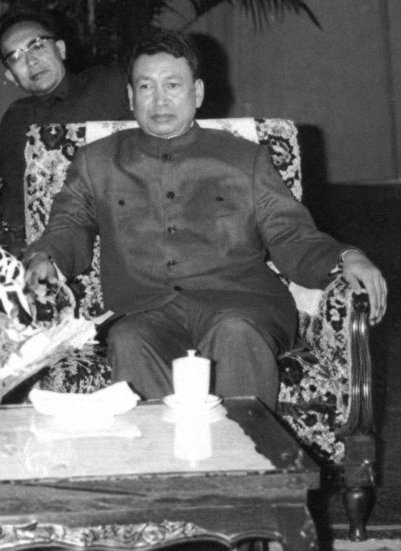
1925—1998
Pol Pot
Leader of the Communist Party of KampucheaThe Khmer Rouge leader whose Democratic Kampuchea regime subjected Cambodia to forced evacuation, labour, starvation, imprisonment and mass killing.Read biography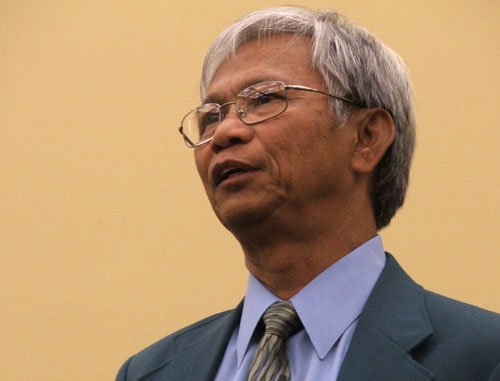
1942—2008
Dith Pran
Photojournalist, interpreter and genocide survivorThe Cambodian interpreter and photojournalist whose survival, reporting and human-rights advocacy gave the phrase “the killing fields” global meaning.Read biography
1940—1996
Haing S. Ngor
Physician, actor and genocide survivorThe Cambodian physician and Khmer Rouge survivor who won an Oscar in his first acting role and used international fame to testify about Cambodia.Read biographyQuick answers
Common questions
- What happened in Cambodia on 18 March 1970?
- The National Assembly voted to remove Norodom Sihanouk as head of state while he was abroad, and Prime Minister Lon Nol became the dominant leader.
- Who led the Khmer Republic?
- General Lon Nol was its central political and military leader and became president under the 1972 constitution.
- Did Sihanouk support the Khmer Rouge after the coup?
- Sihanouk joined a resistance coalition that included the Khmer Rouge and called on Cambodians to oppose the new government, although the alliance was politically uneasy.
- When did the Cambodian Civil War end?
- The war ended when Khmer Rouge forces captured Phnom Penh on 17 April 1975 and overthrew the Khmer Republic.
- Did the United States organise the 1970 coup?
- The United States supported Lon Nol’s government and intervened militarily after Sihanouk’s removal, but the available documentary record does not conclusively establish that Washington organised the Assembly vote itself.
Primary and institutional sources
How this history was checked
Dates, legal milestones and historical claims are checked against the official and institutional records below. This article was reviewed on 9 September 2026.
- Library of CongressCambodia: A Country Study
- U.S. Department of State, Office of the HistorianForeign Relations of the United States: Cambodia, 1969–1976
- U.S. Department of State, Office of the HistorianNational Security Council memorandum on Cambodia, April 1970
- Extraordinary Chambers in the Courts of CambodiaHistorical timeline of the Cambodian conflict