The short answer
Democratic Kampuchea ruled Cambodia from April 1975 to January 1979 through forced evacuation, collectivisation, security prisons and mass violence. Expert estimates cited by the ECCC place the death toll at approximately 1.5 to 2 million people.
Chronology
A timeline of the turning points
The Communist Party builds an insurgency
An underground movement later known as the Khmer Rouge expanded in rural Cambodia.
Civil war widens
Sihanouk’s removal, regional conflict and bombing helped the insurgency recruit and gain territory.
Phnom Penh falls
Khmer Rouge forces entered the capital and immediately forced its population into the countryside.
Democratic Kampuchea is formalised
A new constitution named the state while the Communist Party remained concealed from much of the public.
Coercive collectivisation and purges
Forced labour, food control, prisons, executions and internal purges spread across administrative zones.
War with Vietnam escalates
Border attacks, retaliation and regime purges intensified the regional conflict.
Vietnamese-led forces take Phnom Penh
Democratic Kampuchea’s government collapsed and its forces retreated toward border areas.
The Khmer Rouge fragments
Defections and internal conflict ended the movement as a coherent national force; Pol Pot died.
The ECCC conducts proceedings
The hybrid tribunal tried a limited number of senior former leaders and established a judicial record.
How did the Khmer Rouge take power?
The Communist Party of Kampuchea grew from a clandestine movement into a major insurgency during the civil war. The 1970 coup, Sihanouk’s alliance with resistance, U.S. bombing and the weakness of the Khmer Republic enlarged the movement’s reach.
Victory on 17 April 1975 did not end mass disruption. Forces ordered Phnom Penh and other towns evacuated, sending residents—including hospital patients—toward rural cooperatives with little preparation or food.
How did Democratic Kampuchea control daily life?
The regime abolished money, markets and most private property, separated families and organised labour through communes, mobile units and work sites. Individual rights disappeared under a system that classified people by background and demanded absolute political obedience.
Food was collected and redistributed while impossible production targets, punishment and weak medical care produced hunger and disease. Religious practitioners, ethnic Vietnamese, Cham Muslims, officials of earlier governments and suspected internal enemies faced particular persecution.
What caused the mass deaths?
People died through executions, torture, overwork, malnutrition and untreated illness. Security centres such as S-21 formed part of a wider prison system in which confession, accusation and collective punishment were used to identify alleged enemies.
ECCC background materials cite expert estimates of 1.5 to 2 million deaths between April 1975 and January 1979. Estimates vary because records are incomplete, causes overlap and Cambodia’s prewar population cannot be known with perfect precision.
How did the regime end?
Violence along the Vietnamese border and purges in Cambodia’s Eastern Zone preceded a full Vietnamese intervention in late 1978. Phnom Penh fell on 7 January 1979 and a new Vietnam-backed government took power.
The change ended nationwide Democratic Kampuchea rule but not the conflict. Khmer Rouge forces withdrew to border areas, and Cold War politics allowed the anti-Vietnamese coalition to retain international recognition and material support for years.
What did later trials establish?
The Extraordinary Chambers in the Courts of Cambodia began operations decades later. Its cases convicted former prison chief Kaing Guek Eav and senior leaders Nuon Chea and Khieu Samphan, including findings concerning crimes against humanity, war crimes and genocide in legally specified contexts.
The court tried only a small number of defendants and Pol Pot had died in 1998. Historical responsibility for the regime can be described from extensive evidence, but particular legal findings must remain attached to the defendants and charges the court actually decided.
Continue the chronology
Related history guides
Connected biographies
Five lives connected to the regime and its memory
 Cambodia · Politics
1925—1998
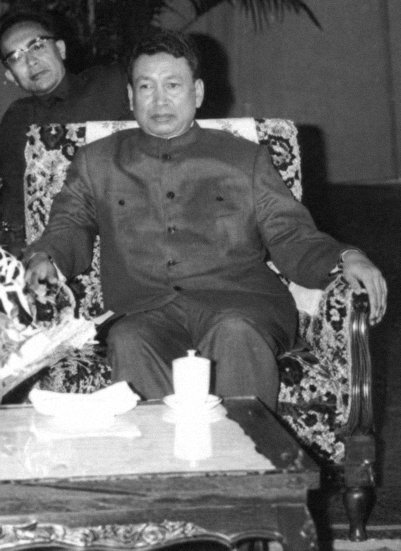
Pol Pot
Leader of the Communist Party of KampucheaThe Khmer Rouge leader whose Democratic Kampuchea regime subjected Cambodia to forced evacuation, labour, starvation, imprisonment and mass killing.Read biography Cambodia · Culture
1964—
Rithy Panh
Film director and documentary makerThe filmmaker behind S21 and The Missing Picture, whose documentaries join survivor memory, archival evidence and formally inventive cinema.Read biography Cambodia · Culture
c. 1966—
Arn Chorn-Pond
Musician, survivor and cultural activistThe Khmer Rouge survivor and musician who founded Cambodian Living Arts to reconnect master artists, students and audiences after genocide.Read biography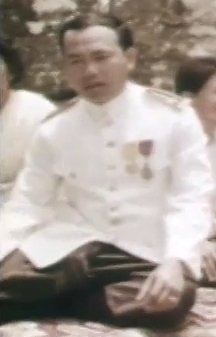 Cambodia · Culture
c. 1933—c. 1976
Sinn Sisamouth
Singer and songwriterThe prolific singer-songwriter called the King of Khmer Music, whose recordings blended Khmer melody with crooning, rock, Latin and soul influences.Read biography Cambodia · Politics
1922—2012
Norodom Sihanouk
King, head of state and independence leaderThe king, independence campaigner and head of state whose long public career crossed colonial rule, neutrality, civil war, exile and Cambodia’s restored monarchy.Read biographyQuick answers
Common questions
- When did the Khmer Rouge rule Cambodia?
- The Khmer Rouge captured Phnom Penh on 17 April 1975. Democratic Kampuchea lost the capital to Vietnamese-led forces on 7 January 1979.
- Who led the Khmer Rouge?
- Pol Pot, born Saloth Sar, was secretary of the Communist Party of Kampuchea and prime minister of Democratic Kampuchea. Leadership also included Nuon Chea, Khieu Samphan, Ieng Sary and others.
- How many people died?
- ECCC materials cite expert estimates of approximately 1.5 to 2 million deaths from execution, forced labour, starvation and disease.
- Why were cities evacuated?
- The regime sought to remake society through agrarian collectivisation and political control. It portrayed urban residents as suspect and forced them into rural labour systems.
- Was Pol Pot convicted by the Khmer Rouge tribunal?
- No. Pol Pot died in 1998 and was never an ECCC defendant. The tribunal’s judgments concerned other named individuals and charges.
Primary and institutional sources
How this history was checked
Dates, legal milestones and historical claims are checked against the official and institutional records below. This article was reviewed on 9 September 2026.