
The short answer
Cambodia’s modern history runs from colonial protection and royal independence through civil war, Democratic Kampuchea, Vietnamese intervention, a UN transition and a restored constitutional monarchy. The chronology matters because sovereignty, regime change and peace arrived in distinct stages.
Chronology
A timeline of the turning points
Cambodia becomes a French protectorate
King Norodom accepted French protection as European imperial competition reshaped mainland Southeast Asia.
Norodom Sihanouk becomes king
The young monarch took the throne during French colonial rule and the Second World War.
Cambodia achieves independence
France transferred full sovereignty after Sihanouk’s royal campaign and negotiations.
The Sangkum era begins
Sihanouk abdicated, formed Sangkum Reastr Niyum and dominated government under a policy of neutrality.
Sihanouk is removed
The National Assembly voted him out while Lon Nol established the Khmer Republic amid regional war.
Khmer Rouge capture Phnom Penh
Democratic Kampuchea evacuated cities and imposed coercive collectivisation across the country.
Democratic Kampuchea falls
Vietnamese-led forces entered Phnom Penh; war and international isolation continued.
Paris Peace Agreements are signed
Cambodian parties and international signatories authorised a UN-supervised transition.
UNTAC organises national elections
More than four million Cambodians registered and a constituent assembly was elected.
The monarchy is restored
A new constitution established a multiparty constitutional monarchy and returned Sihanouk to the throne.
CPP power consolidates and war ends
Factional fighting altered the coalition; the final Khmer Rouge movement fragmented and surrendered.
Norodom Sihamoni becomes king
The throne council selected Sihanouk’s son after the king’s second abdication.
The Khmer Rouge tribunal conducts trials
The ECCC convicted senior former leaders while building a major judicial record.
Hun Manet becomes prime minister
Hun Sen transferred the premiership after nearly four decades while retaining political influence.
How did colonial rule and independence shape the state?
French protection preserved the monarchy while subordinating foreign affairs, taxation and administration to colonial power. Roads, schools and bureaucratic institutions expanded unevenly, and borders were fixed within French Indochina.
Sihanouk made royal authority the vehicle for an accelerated independence campaign. Sovereignty came on 9 November 1953, followed by his 1955 abdication and electoral leadership of Sangkum, a system that mixed development and neutrality with increasingly restricted opposition.
Why did Cambodia enter civil war?
Cambodia tried to remain neutral during the wars in neighbouring Vietnam and Laos, but cross-border sanctuaries, U.S. bombing, domestic insurgency and elite conflict destabilised that balance. Lon Nol’s 1970 removal of Sihanouk established the Khmer Republic.
Sihanouk then supported a resistance coalition in which the Khmer Rouge grew rapidly. Civil war, rural destruction and displacement weakened the republic until Khmer Rouge troops entered Phnom Penh in April 1975.
What happened under Democratic Kampuchea?
The regime emptied cities, abolished money and markets, separated families and forced people into collective labour. Security centres, execution sites, starvation and untreated disease formed parts of a coercive national system.
Extraordinary Chambers historical materials cite expert estimates of 1.5 to 2 million deaths between April 1975 and January 1979. Vietnamese intervention removed the regime, but Khmer Rouge forces continued fighting and retained international support for years.
How did peace and constitutional government return?
The 1991 Paris Peace Agreements created a framework for ceasefire, refugee return, disarmament and elections under the United Nations Transitional Authority in Cambodia. The Khmer Rouge did not fully demobilise, yet voting went ahead in May 1993.
The constitution promulgated that September restored the monarchy and defined a multiparty system. Power sharing remained unstable, and armed conflict in 1997 consolidated Hun Sen’s position before the last organised Khmer Rouge structures collapsed.
What defines contemporary Cambodia?
Peace enabled rapid growth in garments, construction, tourism and agriculture, accompanied by major urban change. The benefits have existed alongside land conflict, environmental pressure, dependence on external investment and uneven labour protections.
The Cambodian People’s Party has dominated institutions while opposition parties, media and civic groups have faced restrictions. The 2023 transfer from Hun Sen to Hun Manet changed the prime minister but not the governing party, so current developments remain open rather than settled history.
Continue the chronology
Related history guides
Cambodian Independence
How royal campaigning and French negotiations produced sovereignty.
Read the timeline1975—1979Khmer Rouge Era
The regime, its systems of coercion and the record of mass death.
Read the timeline1991—1993Paris Peace Agreements and UNTAC
How the UN transition led to elections and a restored monarchy.
Read the timelineConnected biographies
Five lives across Cambodia’s modern turning points

1922—2012
Norodom Sihanouk
King, head of state and independence leaderThe king, independence campaigner and head of state whose long public career crossed colonial rule, neutrality, civil war, exile and Cambodia’s restored monarchy.Read biography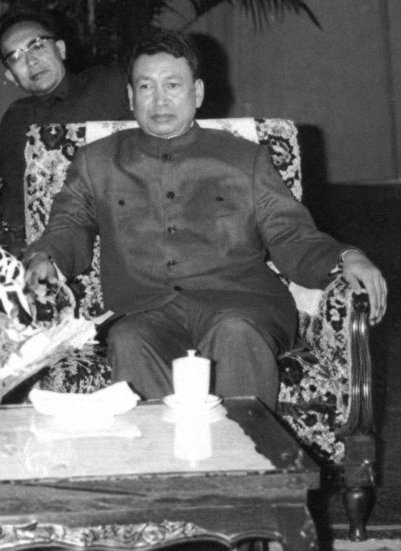
1925—1998
Pol Pot
Leader of the Communist Party of KampucheaThe Khmer Rouge leader whose Democratic Kampuchea regime subjected Cambodia to forced evacuation, labour, starvation, imprisonment and mass killing.Read biography1911—2000
Son Sann
Economist, prime minister and resistance leaderA former Cambodian prime minister who led a non-communist resistance front and presided over the assembly that adopted the 1993 constitution.Read biography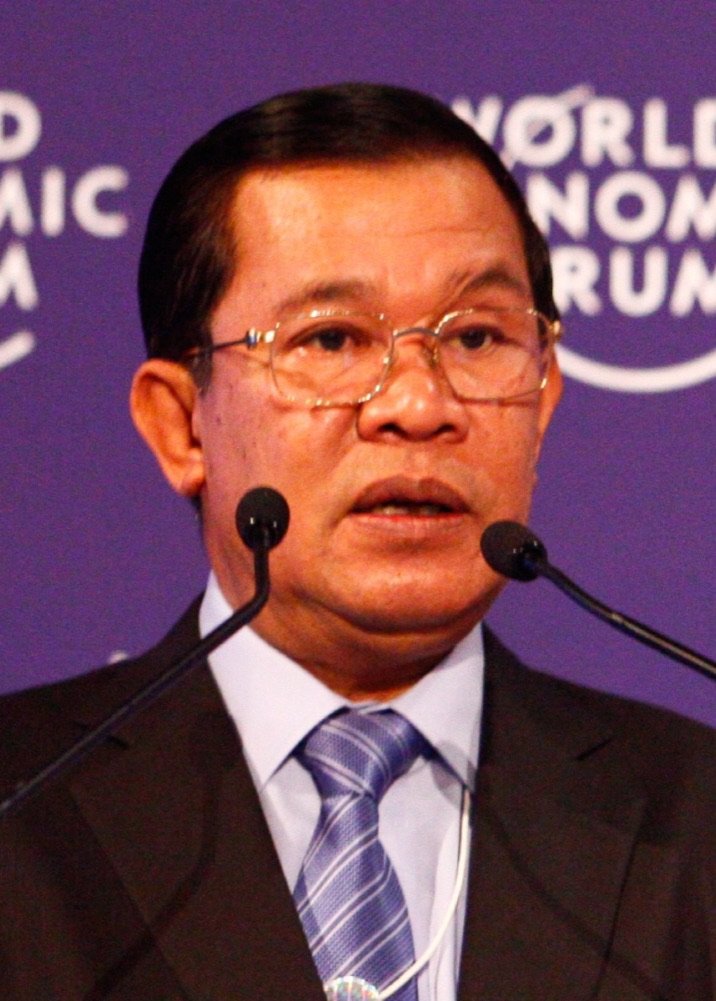
1952—
Hun Sen
Former prime minister and president of the SenateThe politician who became prime minister in 1985, dominated postwar Cambodian politics and transferred the premiership to his son in 2023.Read biography
1953—
Norodom Sihamoni
King of CambodiaThe dancer, teacher and cultural diplomat elected king in 2004, bringing an artistic career to Cambodia’s constitutional monarchy.Read biographyQuick answers
Common questions
- When did Cambodia gain independence?
- Cambodia achieved full independence from France on 9 November 1953.
- When did the Khmer Rouge rule Cambodia?
- Khmer Rouge forces captured Phnom Penh on 17 April 1975. Democratic Kampuchea was removed from the capital on 7 January 1979.
- How many people died under Democratic Kampuchea?
- ECCC historical materials cite expert estimates of approximately 1.5 to 2 million deaths from execution, forced labour, starvation and disease.
- What did the 1991 Paris Peace Agreements do?
- They established a comprehensive settlement and authorised a UN-supervised transition involving ceasefire measures, refugee return, elections and a new constitution.
- Is Cambodia a monarchy today?
- Yes. The 1993 constitution restored Cambodia as a constitutional monarchy in which the king reigns but does not govern.
Primary and institutional sources
How this history was checked
Dates, legal milestones and historical claims are checked against the official and institutional records below. This article was reviewed on 9 September 2026.
- Office of the Council of Ministers, CambodiaSummary biography of Norodom Sihanouk
- Extraordinary Chambers in the Courts of CambodiaThe Democratic Kampuchea regime
- United Nations PeacemakerAgreements on a Comprehensive Political Settlement of the Cambodia Conflict
- United Nations PeacekeepingUNTAC background
- Extraordinary Chambers in the Courts of CambodiaGuide to the ECCC