
The short answer
An opposition alliance won a large officially recognised bloc, challenged the result and stayed outside Parliament before negotiating its entry. Follow the declared seats, the crisis on the streets and the agreement that briefly made parliamentary dialogue possible.
Official allocation
The seats reported after the 2013 election
These are National Assembly seats, not presidential votes or a replacement recount.
| Party | Official seats | Position in the dispute |
|---|---|---|
| Cambodian People’s Party (CPP) | 68 | Larger governing bloc |
| Cambodia National Rescue Party (CNRP) | 55 | Disputed the outcome and initially boycotted its seats |
Chronology
A timeline of the turning points
CNRP formed
The Sam Rainsy Party and Human Rights Party combined before the national contest.
Rainsy returns
The opposition leader returned from exile shortly before polling.
National Assembly election
The official allocation was CPP 68 seats and CNRP 55; the opposition disputed it.
Assembly opens during the boycott
The UN report records only CPP parliamentarians attending.
Violence and restrictions on protest
Security-force interventions and the clearing of Freedom Park deepened the crisis.
Political agreement
The parties agreed a route to parliamentary entry and reform.
Opposition takes its seats
CNRP parliamentarians entered the Assembly; no new general election had taken place.
Later party dissolution
A separate Supreme Court decision dissolved the CNRP and barred senior members.
What was Cambodia’s 2013 election?
Cambodia voted for its National Assembly on 28 July 2013. The main contest was between the governing Cambodian People’s Party, or CPP, and the Cambodia National Rescue Party, or CNRP. The official allocation gave the CPP 68 seats and the CNRP 55. It was a parliamentary election, not a direct presidential contest, and it did not remove Hun Sen from government.
The result nevertheless produced a major political crisis because the opposition rejected the declared outcome and initially refused to take its seats. Understanding the episode requires following the election, the dispute and the later settlement separately. A seat total answers who was officially allocated representation; it does not, by itself, settle every allegation about the electoral process.
How the CNRP brought opposition organisations together
The CNRP was formed in 2012 through the merger of the Sam Rainsy Party and Kem Sokha’s Human Rights Party. It therefore entered the 2013 contest as a recently combined organisation with established political networks behind it. Rainsy and Sokha had different public careers, but the alliance reduced the fragmentation of the main parliamentary opposition.
Rainsy returned from exile on 19 July 2013, shortly before polling day. The UN Secretary-General’s account describes the large crowds that greeted him and the intensive campaigning by both major parties. Those observations explain the scale of mobilisation without proving that a crowd size was an accurate measure of national voting intentions or that the opposition’s preferred result had already been established.
The official results and the dispute over the process
The official 68–55 distribution gave the CPP the larger bloc in the 123-seat Assembly. The table below records that allocation, not an independent recount. The CNRP challenged the result and sought changes to election administration. Its boycott meant that the Assembly opened on 23 September 2013 with only CPP members attending, according to the UN report.
In June 2014, Special Rapporteur Surya Subedi identified voter registration, complaint resolution and the independence of the National Election Committee as important reform questions. The Cambodian government defended the legal and parliamentary framework in its response to the UN reporting. These sources record different institutional positions. Neither the official allocation nor a later political agreement should be described as a judicial finding proving or disproving every allegation of irregularity.
Protests, garment workers and the January 2014 violence
The post-election demonstrations continued through the end of 2013 and overlapped with garment workers’ demands for higher wages. The UN account describes convergence between political and labour mobilisation, not a single organisation directing every participant. It records serious incidents involving live ammunition and injuries during 2013, followed by a sharper crackdown at the beginning of 2014.
On 2 and 3 January 2014, security-force interventions around labour demonstrations involved arrests, violence and deaths. Authorities cleared Freedom Park on 4 January and announced a suspension of demonstrations. Those events widened the crisis beyond negotiations over parliamentary positions: freedom of assembly, police conduct and workers’ concerns became part of the consequences of the political standoff.
The July 2014 agreement and the opposition’s entry
The two main parties reached a political agreement on 22 July 2014. Subedi later welcomed the deal as opening a path for the opposition to join the Assembly and for electoral reform. The CNRP took its seats in August. This was entry into the legislature after a boycott, not a new national election that reversed the July 2013 result.
The subsequent reform process changed the National Election Committee, with representation from both parliamentary parties and an independent member. The government’s response also described a division of Assembly leadership and committee responsibilities between the two blocs. The period became known as a culture of dialogue, but the IPU’s later case record shows that agreement did not end proceedings and pressure involving opposition parliamentarians.
Why the 2017 dissolution is a different event
The CNRP’s dissolution came years later. On 16 November 2017, the Supreme Court dissolved the party and barred 118 senior members from political activity for five years. The UN Special Rapporteur’s 2018 account explains that its National Assembly and local-council representation was redistributed, raising concerns about the political participation of voters whose representatives had been removed.
That decision should not be moved backwards into the 2013 campaign or confused with Kem Sokha’s later criminal judgment. The sequence is election and dispute in 2013, agreement and parliamentary entry in 2014, then party dissolution in 2017. Following the connected biographies provides the later individual histories without turning this guide into an undated account of every opposition case.
Continue the chronology
Related history guides
Paris Peace Agreements and UNTAC
Understand the earlier UN-backed transition and restored constitutional framework, not a second description of the 2013 vote.
Read the timelineLonger chronologyCambodia History Timeline
Place the election between earlier state transitions and the later changes in political representation.
Read the timelineConnected biographies
The leaders and parliamentarians connected with the crisis
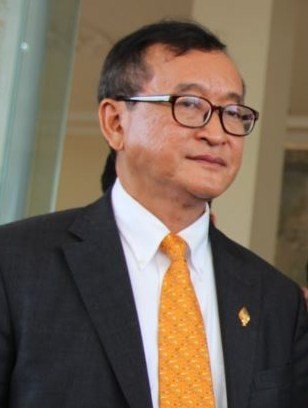
1949—
Sam Rainsy
Opposition politician and former finance ministerThe former finance minister who founded a long-running opposition movement, co-led the CNRP and continued campaigning from exile after 2015.Read biography
1953—
Kem Sokha
Former opposition leader and human-rights advocateThe human-rights organiser and opposition leader whose arrest, treason trial and restricted detention became a test case for political freedom in Cambodia.Read biography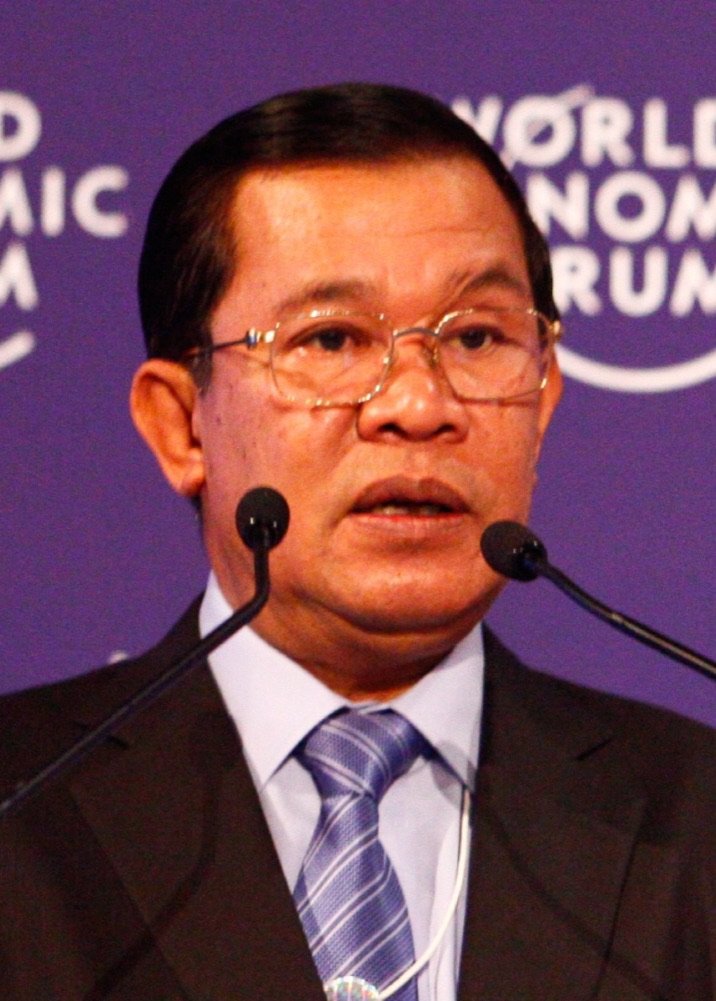
1952—
Hun Sen
Former prime minister and president of the SenateThe politician who became prime minister in 1985, dominated postwar Cambodian politics and transferred the premiership to his son in 2023.Read biography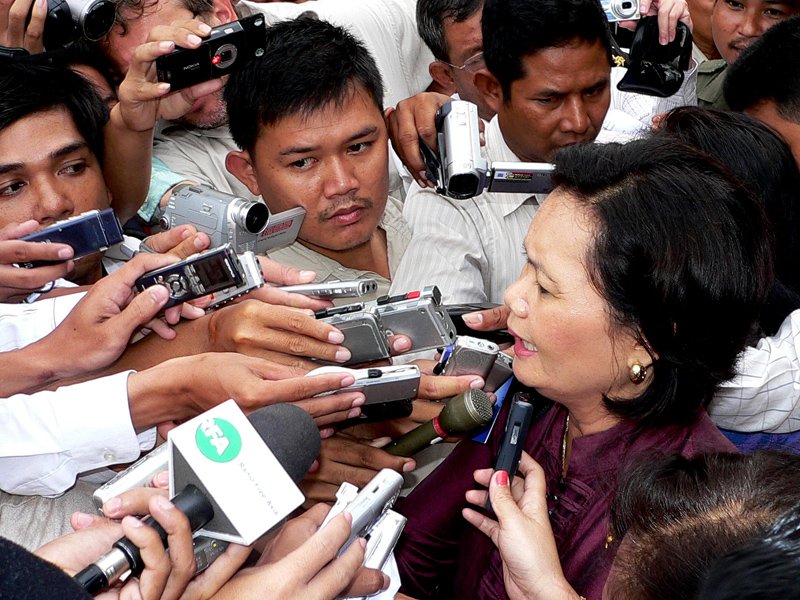
1954—
Mu Sochua
Former minister, parliamentarian and women’s-rights advocateThe former women’s affairs minister and opposition parliamentarian who connected gender equality, anti-trafficking work and democratic reform.Read biographyQuick answers
Common questions
- Who won Cambodia’s 2013 election?
- The official allocation gave the CPP 68 National Assembly seats and the CNRP 55. The CPP remained the larger bloc; the CNRP disputed the result.
- What does CNRP stand for?
- Cambodia National Rescue Party, formed in 2012 by the Sam Rainsy Party and Kem Sokha’s Human Rights Party.
- When did the CNRP take its seats?
- In August 2014, after the 22 July political agreement. Taking its seats ended the boycott; it was not a fresh general election.
- Was the CNRP dissolved in 2013?
- No. The Supreme Court dissolved it on 16 November 2017. That was distinct from the 2013 election dispute, the 2014 settlement and individual criminal cases.
Primary and institutional sources
How this history was checked
The UN Secretary-General’s 2014 report supplies the official seat allocation and contemporaneous crisis account. Special Rapporteur statements and the later election addendum address reforms, settlement and parliamentary entry. The Cambodian government’s response is included as its own position, not independent certification of contested claims. These records are not a fresh recount or a complete review of every election complaint. The 2015 statement was readable in indexed text; its complete PDF was not retrievable in this review. This article was reviewed on 17 October 2026.
- UN Secretary-General / OHCHRA/HRC/27/43, paragraphs 3–6: results, boycott, protests and January violence
- UN Special Rapporteur / OHCHRElection-history addendum, paragraphs 10–13: merger, reform and August 2014 entry
- UN Special Rapporteur / OHCHR24 June 2014: voter registration, electoral complaints and parliamentary reform
- UN Special Rapporteur / OHCHR23 January 2015 statement: the agreement reached on 22 July 2014
- Royal Government of Cambodia, hosted by OHCHRSeptember 2014 comments: the government’s position and parliamentary arrangements
- Inter-Parliamentary UnionApril 2017 case record: the political agreement and later pressure on parliamentarians
- UN Special Rapporteur / OHCHRA/HRC/39/73, paragraphs 68–76: the separate November 2017 dissolution
- Wikimedia CommonsExisting Sam Rainsy portrait: VOA provenance and public-domain record