In this biography
Quick facts
- Born
- 7 April 1770
- Died
- 23 April 1850
- Birthplace
- Cockermouth, Cumberland, England
- Country
- United Kingdom
- Nationality
- British
- Known for
- Lyrical Ballads, The Prelude, Tintern Abbey and I wandered lonely as a cloud
- Collaboration
- Lyrical Ballads with Samuel Taylor Coleridge, 1798
- Household collaborator
- Dorothy Wordsworth, writer and sister
- Long autobiographical poem
- The Prelude, first published posthumously in 1850
- Public appointment
- Poet Laureate, 1843–1850
Why this life matters
His poetry gave sustained formal attention to the language and experiences of people outside elite literary subjects, while making recollection an active part of poetic thought.
Timeline
Key moments
Born in Cockermouth
Born on 7 April in the historic county of Cumberland.
Revolutionary France
Lived in France during the revolutionary period.
Lyrical Ballads
Published the collaborative volume with Coleridge, including Tintern Abbey.
Dove Cottage and marriage
Settled with Dorothy at Grasmere in 1799; married Mary Hutchinson in 1802.
A major period of writing
Completed an early long version of The Prelude; the 1807 poems included the daffodils lyric.
Laureateship and posthumous publication
Became Poet Laureate in 1843; died on 23 April 1850, before The Prelude appeared later that year.
Childhood, loss and education
William Wordsworth was born at Cockermouth on 7 April 1770, in the historic county of Cumberland, now part of Cumbria. His mother died in 1778 and his father while he was at Hawkshead Grammar School. Later poetry returned repeatedly to childhood and loss, but it arranges remembered experiences for a reader rather than supplying an untouched record of what a child felt.
He studied at St John’s College, Cambridge, and travelled in Europe. His education therefore included books, institutions, walking and encounters beyond the Lake District. The mountain landscapes later associated with his name belonged to a changing intellectual life, not to an existence spent permanently apart from cities, politics or international events.
France, political hope and reconsideration
Wordsworth visited revolutionary France and lived there in 1791–1792. His early hopes for political transformation were followed by disillusionment and searching reconsideration. The Prelude later made this period part of an account of the growth of a poet’s mind. The historical young traveller and the older writer organising that history should remain distinguishable.
Stephen Gill’s account for the Wordsworth Trust stresses both political experience and a developing conviction that poetry could contribute to human betterment. That conviction did not erase social hardship from his work. Poems about the poor, displaced or bereaved ask what can be understood from lives that respectable observers might overlook.
Dorothy, Coleridge and Lyrical Ballads
His friendship with Samuel Taylor Coleridge, developing from the mid-1790s, helped produce Lyrical Ballads in 1798. The volume joined different poetic practices rather than making the two men interchangeable. Wordsworth’s Tintern Abbey revisits a landscape after five years and asks how remembered scenes enter later feeling, moral life and the relationship with his sister Dorothy.
Dorothy was a writer and close observer whose journals and shared experiences contributed to the household’s literary work. Her importance extends beyond supplying useful scenery to a famous brother. Their move to Dove Cottage at Grasmere in December 1799 created a home where conversation, reading, composition and the practical work of living occupied the same small space.
Poems of memory, work and ordinary feeling
The daffodils poem, first published in 1807, does more than describe a pleasant walk. Its speaker later recalls the flowers while lying indoors, so the remembered sight becomes a renewed source of feeling. Tintern Abbey similarly joins a present visit to earlier experience. Memory is an action in these poems, changing what a landscape can mean.
Michael gives a shepherd’s family and labour the seriousness of a substantial narrative poem. The sonnet Composed upon Westminster Bridge finds beauty in London, complicating a simple picture of Wordsworth as opposed to every city scene. Reading these works together reveals differing forms: ballad-like encounter, sonnet, narrative and meditative blank verse organise their subjects in distinct ways.
Family life and the long making of The Prelude
Wordsworth married Mary Hutchinson in 1802. Mary, Dorothy and Sara Hutchinson contributed household work and literary assistance while the family raised children. Their activity matters to the material history of the poems: apparently solitary reflection depended in part on a shared home, copied writing, care and time made available for composition.
He completed a major version of The Prelude in 1805, then continued to revise the work over decades. Addressed to Coleridge, it explores childhood, imagination, travel and political disappointment. It was first published only after Wordsworth’s death in 1850. A date attached to a modern edition may therefore identify a particular version rather than the moment when the entire poem was first written.
A public poet whose writing invites disagreement
Wordsworth became Poet Laureate in 1843 and died at Rydal Mount on 23 April 1850. The later public figure differs from the young revolutionary traveller. His long career includes changes of political position as well as recurrent interests. Calling him simply the poet of nature misses his encounters with poverty, ageing, labour and the pressure of economic values.
There are limits to the sympathy his poems offer: a speaker may interpret another person’s story while that person receives little opportunity to answer. Such questions can accompany appreciation of his attention to ordinary lives. His poems remain compelling when readers examine both the renewal offered by recollection and the authority claimed by the remembering voice.
Quick answers
Frequently asked questions about William Wordsworth
- Did Wordsworth write Lyrical Ballads alone?
- No. The 1798 collection was a collaboration with Samuel Taylor Coleridge, containing distinctive contributions by each poet.
- Why is Dorothy Wordsworth important?
- She was a writer, observer and household collaborator. Her journals, shared experiences and literary assistance are part of the setting in which many poems were made.
- When was The Prelude published?
- It appeared posthumously in 1850. Wordsworth completed an important version in 1805 and continued revising it over many years.
- Is the daffodils poem only a description of flowers?
- The final movement shows the flowers returning in memory when the speaker is indoors. The poem connects observation with the later emotional life of recollection.
Keep exploring
Lives connected to this story
- William Blake
Compare another Romantic poet’s representations of childhood, poverty, authority and the city.
- J. M. W. Turner
Compare a contemporary artist’s treatment of landscape and the experience of looking.
Sources and further reading
Explore the evidence
These references support the biography and offer further reading. Official records, first-person accounts and independent reporting provide different perspectives; image records document attribution and licensing.
- 1. Wordsworth Grasmere / Wordsworth TrustWilliam Wordsworth: childhood, France, Coleridge and Dove Cottage
- 2. Academy of American PoetsWilliam Wordsworth: life, major publications and dates
Read selected biographical passages and publication chronology. The site uses the modern county name Cumbria; the profile distinguishes historic Cumberland from modern geography.
- 3. Wordsworth Trust / Stephen GillWilliam Wordsworth: The Prelude, politics and poetry of ordinary lives
Read Gill’s essay on the changing poet, The Prelude and ordinary lives. His quoted letters were read only as excerpts, not as complete original correspondence.
- 4. Wordsworth GrasmereThe People: Dorothy, Mary, children and household literary work
- 5. British LibraryWilliam Wordsworth: dates and selected poem publication context
- 6. William Wordsworth / Academy of American PoetsPublic-domain poems: Tintern Abbey, Westminster Bridge and selected lyrics
Read the public-domain Tintern Abbey and Westminster Bridge texts. The anthology interface may be user assembled; poem texts, not the grouping’s curatorial authority, support the readings.
- 7. William Wordsworth / Academy of American PoetsPublic-domain text of I wandered lonely as a Cloud
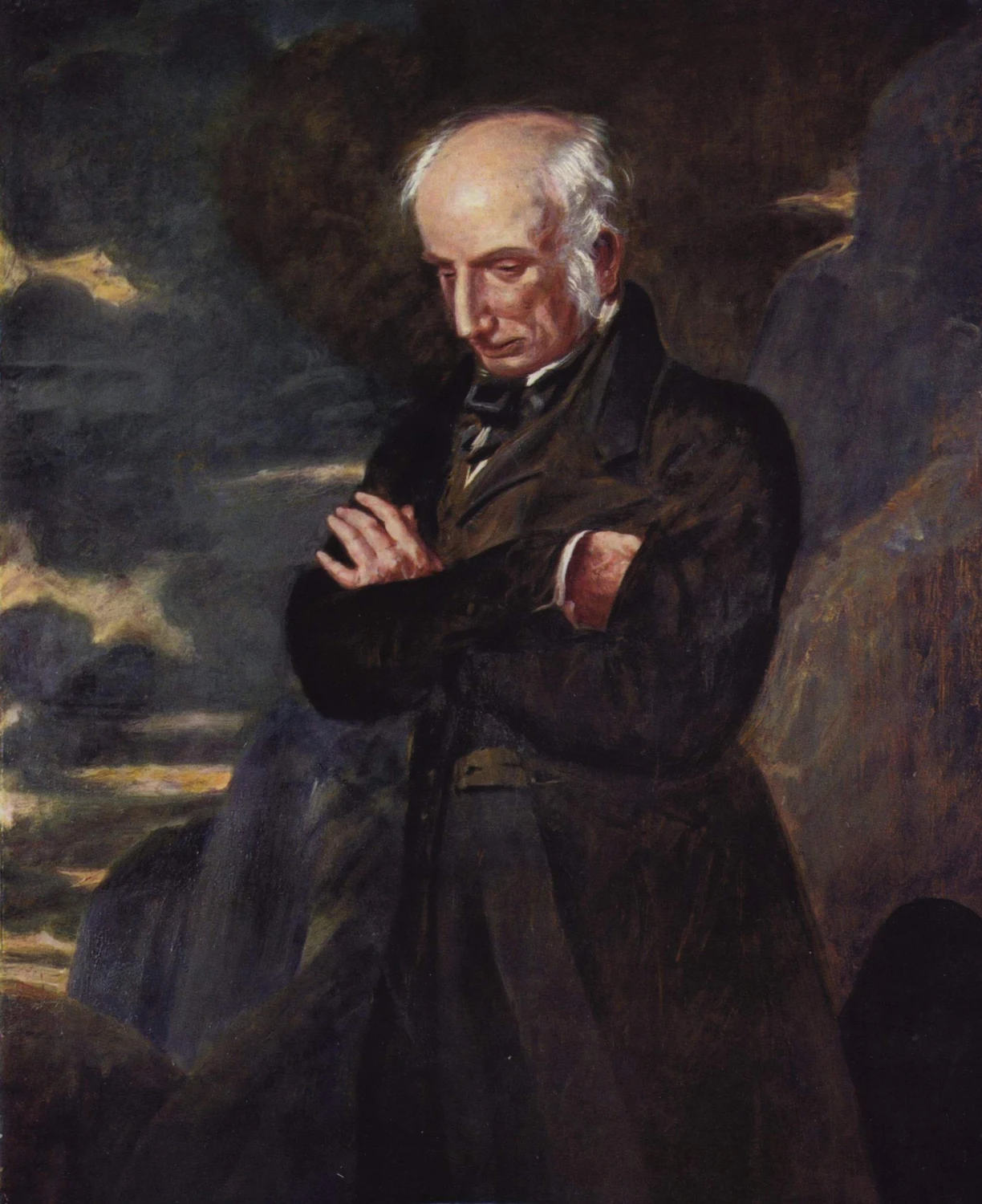
- 8. Benjamin Robert Haydon / Wikimedia CommonsExact Wordsworth artwork, Yorck source, rights and sole revision
The exact sitter record identifies the British poet; Commons discloses an NPG reproduction claim alongside the specific PD-Art/Yorck basis.
- 9. Wikimedia CommonsComplete current Wordsworth JPEG