In this biography
Quick facts
- Born
- 5 May 1988
- Birthplace
- London, England
- Country
- United Kingdom
- Nationality
- British
- Known for
- The albums 19, 21, 25 and 30, expressive vocal performances and the film song Skyfall
- Full name
- Adele Laurie Blue Adkins
- Debut studio album
- 19, released 2008
- Second studio album
- 21, released 2011
- Film songwriting
- Skyfall, with Paul Epworth; original-song Oscar in 2013
Why this life matters
Her international success brought soul-influenced singing and carefully shaped albums to a broad pop audience, through close work with songwriters, producers and musicians.
Timeline
Key moments
Born in London
Adele Laurie Blue Adkins was born on 5 May.
Education and early recording
Adele studied at the BRIT School before the release of her debut album.
19 and early awards
19 appeared in 2008; Best New Artist and a vocal-performance Grammy followed in 2009.
21 reaches an international audience
The album opened with Rolling in the Deep and closed its standard sequence with Someone Like You; it won the 2012 album Grammy.
Skyfall
Adele and Paul Epworth’s James Bond theme won the 2013 Academy Award for original song.
25 and Hello
25 was released in 2015 and won Album of the Year at the 2017 Grammys.
30 and Easy on Me
30 appeared in 2021; Easy on Me won the 2023 Grammy for pop solo performance.
London and the route into music
Adele Laurie Blue Adkins was born in London on 5 May 1988. Her upbringing in Tottenham and her early interest in singers including Etta James and Lauryn Hill formed part of the background she discussed in a 2015 interview. A performing career developed through study as well as enthusiasm. She attended the BRIT School in Croydon, an institution offering education across music, theatre, dance and other creative disciplines.
The school’s own account places her within a community of alumni rather than presenting professional success as an isolated discovery. That is useful context for an artist often described primarily in terms of a remarkable natural voice. Education, practice, friendships and access to collaborators also matter. Her later recording credits continue that pattern: the recognisable singer sits at the centre of records made with a changing group of writers and musicians.
19 and the emergence of a public voice
Her debut album, 19, was released in 2008. Songs including Chasing Pavements introduced a voice able to connect conversational phrasing with a forceful vocal climax. The first BRIT Critics’ Choice award and the 2009 Grammys for Best New Artist and female pop vocal performance marked her early recognition. Those dated awards show a career taking shape before the much larger international success associated with her next album.
The appeal was not simply vocal volume. A song could move between hesitation and certainty, with the singer’s phrasing shaping how a familiar subject was understood. The album format also mattered: listeners encountered a collection of performances rather than only one signature single. Looking back from the scale of her subsequent success can make the debut seem like a preliminary exercise, but it established a public identity and a set of musical relationships in its own right.
21: an individual voice within collaborative work
Released in 2011, 21 broadened that audience. XL’s standard eleven-track listing begins with Rolling in the Deep and ends with Someone Like You. Between them are changes of pace, arrangement and perspective, including the Cure cover Lovesong. The album’s coherence should not obscure the range of contributors. Paul Epworth, Ryan Tedder, Jim Abbiss, Rick Rubin, Fraser T. Smith and Dan Wilson appear in its writing or production credits in different combinations.
The distinction between writing and producing is particularly clear on Turning Tables: Adele and Tedder receive writing credits, while Abbiss is the producer. A biography that calls every collaborator simply a co-writer loses that information. The album won the 2012 Grammy for Album of the Year, and its songs received major recognition too. It established Adele as an international recording artist through a body of work whose personal address was carefully made with others.
A film theme, 25 and a return on her own timescale
Skyfall extended the career into a different musical setting. Written with Paul Epworth for the James Bond film, it won the Academy Award for original song in 2013. The Academy’s joint credit is worth retaining: the award honours a song and its writers, rather than simply rewarding the most famous voice attached to a film. A screen theme also has to negotiate the identity of an existing series alongside the singer’s own style.
25 followed in 2015, led by Hello. It revisited memory and separation after a gap between studio albums and won Album of the Year in 2017. The Recording Academy’s retrospective records Adele’s acknowledgement of the collaborators who helped her return, including Greg Kurstin. The numbered titles locate the albums in stages of a life, but they should not be read as exact transcripts of private events or as permission to identify every person behind a song.
30 and a career heard through the albums
30 appeared in 2021, continuing the series of numbered studio albums. Easy on Me later won the Grammy for pop solo performance in 2023. These milestones show a recording career proceeding through substantial intervals, with each release arriving after a period outside the album cycle. The gaps are part of the chronology; they do not require speculation about an artist’s private circumstances or predictions about when another record will appear.
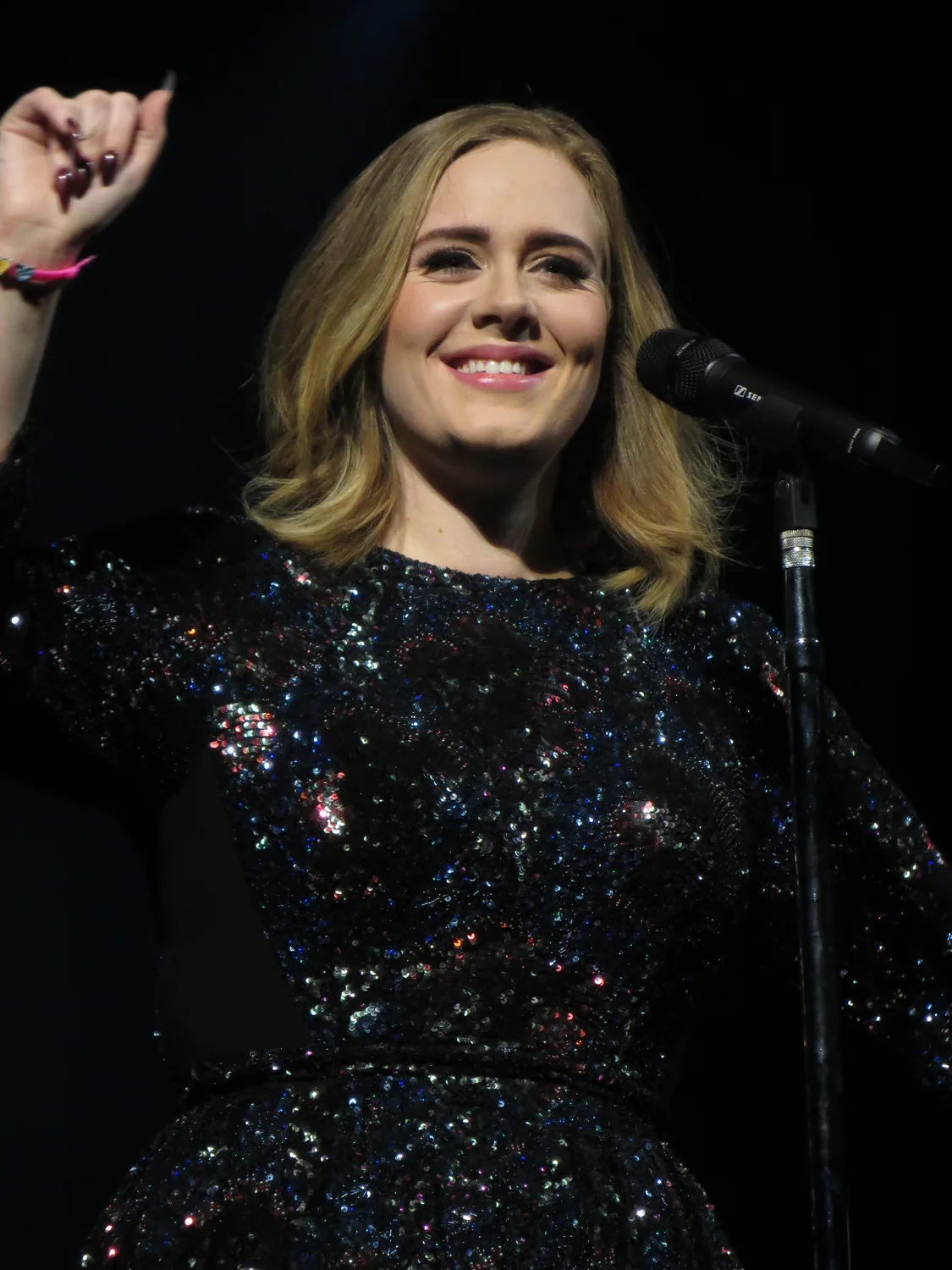
Adele’s cultural significance rests on the way a powerful, immediately identifiable voice can sustain close attention across an album. Her records join soul and R&B influences to contemporary pop songwriting and production. Awards provide evidence of reception, while credits explain how the music was made. The real concert photograph on this page offers another setting for that work: it records her in Glasgow in 2016, several years after 21, and should not be mistaken for an album recording session.
Quick answers
Frequently asked questions about Adele
- What is Adele’s full name?
- Adele Laurie Blue Adkins. She was born in London, England, on 5 May 1988.
- Was 21 Adele’s first album?
- No. Her debut studio album was 19 in 2008; 21 followed in 2011, then 25 in 2015 and 30 in 2021.
- Did Adele write Skyfall alone?
- No. The Academy credits Adele Adkins and Paul Epworth together for the music and lyrics. The song won the 2013 Oscar for original song.
- Where did Adele study music?
- She attended the BRIT School in Croydon before releasing her debut album, 19, in 2008.
Keep exploring
Lives connected to this story
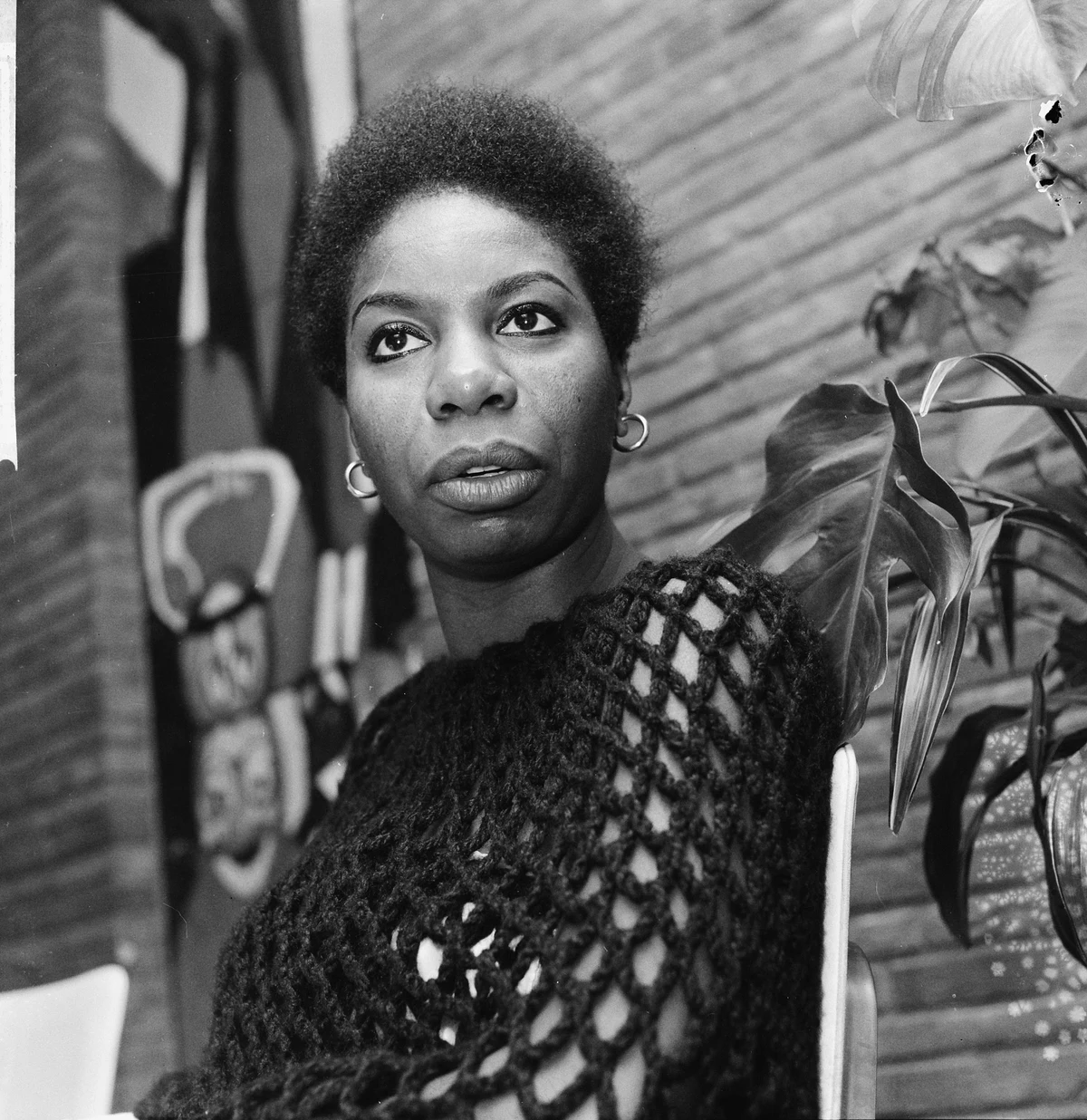
- Nina Simone
Compare another distinctive singer whose phrasing, musical education and repertoire deserve attention beyond a single best-known recording.
- Frank Sinatra
Explore another career in which the album sequence, arrangements and vocal interpretation shaped a singer’s public identity.
Sources and further reading
Explore the evidence
These references support the biography and offer further reading. Official records, first-person accounts and independent reporting provide different perspectives; image records document attribution and licensing.
- 1. Recording AcademyAdele: birth, early awards and dated Grammy records
- 2. Sony Music UKAdele: debut, BRIT recognition and recording career
The label page contains older cumulative award and sales totals; those are not used as current figures. Dated album and early-career milestones are separated from promotional claims.
- 3. The BRIT SchoolHappy 30th Birthday BRIT: school and alumni context
- 4. Recording Academy / Philip MerrillAdele Turns 25: album chronology and collaborative comeback
- 5. Academy of Motion Picture Arts and Sciences2013 ceremony: Skyfall, original-song award and joint credit
- 6. XL Recordings21: 24 January 2011 release and eleven-track sequence
- 7. TIDAL21: label-supplied track, writing and production credits
The search service’s detailed cached label-supplied credit text was read; direct page extraction was empty. Selected writing, production and instrumental credits were checked, not a physical booklet or session tapes.
- 8. Apple Music21: album editorial, expanded digital listing and catalogue dates
- 9. TIMEAdele Is Music’s Past, Present and Future: 2015 interview, selected passages
Selected 2015 interview passages on upbringing, influences, family privacy and returning to recording were read. No claim is made to have reviewed the complete audio interview or album masters.
- 10. marcen27 / Wikimedia CommonsAdele, Glasgow 2016: exact original file history and CC BY 2.0
Exact source and CC licence review read. The original 2016 revision was downloaded and visually inspected, rather than the later levels-adjusted file. EXIF orientation was applied before proportional reduction; no supplied frame area was removed.
- 11. Wikimedia CommonsOriginal 2016 unadjusted full-frame JPEG revision