In this biography
Quick facts
- Born
- 1759-08-24
- Died
- 1833-07-29
- Birthplace
- Kingston upon Hull, England
- Country
- United Kingdom
- Nationality
- British
- Known for
- Parliamentary leadership in the campaign against the British slave trade
- Born
- 24 August 1759, Hull
- Education
- St John’s College, Cambridge
- First parliamentary seat
- Hull, elected 1780
- Major legislation
- Slave Trade Act 1807: trade prohibition, not general emancipation
- Retirement
- Left Parliament in 1825
- Died
- 29 July 1833, before the Slavery Abolition Act received Royal Assent
Why this life matters
His importance lies in sustained parliamentary advocacy within a larger movement of Black writers, organisers, religious groups and enslaved people’s resistance, rather than a solitary act of liberation.
Timeline
Key moments
Born in Hull
He came from a prosperous merchant family in the Yorkshire port.
Entered Parliament
He was elected MP for Hull, later representing Yorkshire.
Evangelical conversion
Religious conviction reshaped his approach to public duty and moral reform.
Spoke against the slave trade
He became a leading parliamentary advocate of abolition.
Trade abolition became law
Royal Assent on 25 March prohibited British participation in the trade under the Act’s terms.
Supported emancipation and retired
He helped establish the Anti-Slavery Society; Buxton carried forward parliamentary leadership.
Died before the final Act
He died on 29 July; the Slavery Abolition Act received Royal Assent on 28 August.
Wealth and education opened a route into Parliament
William Wilberforce was born in Hull on 24 August 1759 into a merchant family. He studied at St John’s College, Cambridge, and became a close friend of William Pitt, later prime minister. Election for Hull in 1780 brought him into the Commons at twenty-one. In 1784 he moved to the much larger Yorkshire constituency, which he represented until 1812.
His early position depended on wealth, education and social connections unavailable to most people. Those advantages later gave him access to ministers and a prominent parliamentary platform. They also locate him within the political establishment: his opposition to the slave trade did not arise from a general rejection of inherited social hierarchy.
Evangelical conviction joined abolition to moral reform
An evangelical conversion in the mid-1780s redirected Wilberforce’s public ambitions. The former slave-ship captain John Newton was one of the religious influences around him. He came to regard the suppression of the slave trade and the reform of public morals as linked responsibilities. Religious commitment supplied a language of duty and a network through which campaigns could be sustained.
The connection also complicates a modern celebratory portrait. His reform programme was not the same as a commitment to political or social equality in every sphere. Oxford’s research introduction identifies domestic conservatism as part of his contested reputation. His faith could challenge the enslavement of Africans while supporting a strongly ordered vision of British society.
He spoke for an organised movement with many leaders
Wilberforce’s celebrated parliamentary speech of 1789 emerged from work undertaken beyond Westminster. Thomas Clarkson gathered evidence and devoted himself to the campaign; Granville Sharp helped organise the London committee established in 1787. Henry Thornton, James Stephen and Zachary Macaulay were among Wilberforce’s close collaborators. Petitions and local organisation gave parliamentary proposals a constituency.
Black writers, including Olaudah Equiano and Ignatius Sancho, challenged British readers’ understanding of slavery. Enslaved people resisted the system in ways that cannot be reduced to lobbying British MPs. Wilberforce’s specific role was to carry abolitionist arguments into Parliament and maintain political connections. Describing him as the lone person who ended slavery removes the people, evidence and pressure on which that role depended.
The 1807 victory prohibited a trade rather than abolishing slavery
Parliamentary defeat repeatedly delayed abolition. The final breakthrough came when abolition became a government measure in 1806–1807, after Pitt’s death. The Act received Royal Assent on 25 March 1807. Its opening provisions prohibited specified dealings in enslaved people and the fitting out of ships for the trade, principally from 1 May. Penalties and forfeiture provisions made the prohibition more than a declaration.
The law did not generally free those already enslaved on British colonial plantations. Plantation slavery and the profits drawn from coerced labour continued. Nor did a British statute end trafficking everywhere: enforcement, international agreements and evasion remained important. Wilberforce’s success should therefore be measured against what the law actually changed, while recognising the scale of the political obstacle it overcame.
Emancipation required another campaign and different parliamentary leadership
In 1823 Wilberforce helped form the organisation campaigning for the mitigation and gradual abolition of slavery. Thomas Fowell Buxton took on the parliamentary leadership as Wilberforce’s health and activity declined. Wilberforce retired from the Commons in 1825. The next legislative struggle concerned the status and labour of people enslaved in the colonies, rather than the legality of the Atlantic trade alone.
Wilberforce died on 29 July 1833. The Slavery Abolition Act received Royal Assent on 28 August, after his death, and its principal emancipation date was 1 August 1834. It contained territorial exclusions and imposed apprenticeship on many formerly enslaved people. Compensation went to enslavers. These terms prevent the later settlement from being treated as either Wilberforce’s personal enactment or immediate, complete freedom.
Commemoration can obscure the limits of the achievement
Wilberforce was buried in Westminster Abbey on 3 August 1833. His marriage to Barbara Spooner, whom he married in 1797, and their family formed another part of a life often compressed into a parliamentary anniversary. His religious associations and sustained advocacy made him an enduring subject of biography and public commemoration.
The enduring question is how to recognise his contribution without making abolition a story of benevolence bestowed by one British politician. The distinction between 1807 and 1833, the work of collaborators and the continued coercion of apprenticeship all matter. His record shows the importance of parliamentary persistence, but also why legal victories require scrutiny of their beneficiaries, exclusions and consequences.
Quick answers
Frequently asked questions about William Wilberforce
- Did Wilberforce abolish slavery in 1807?
- No. The 1807 Act prohibited British participation in the slave trade under its terms. Slavery continued in British colonies and required a further emancipation campaign.
- Who worked with him?
- Thomas Clarkson, Granville Sharp, Henry Thornton, James Stephen and Zachary Macaulay were among the organisers and collaborators. Black authors, local campaigners and enslaved people’s resistance also shaped the wider movement.
- Did he pass the Slavery Abolition Act 1833?
- He supported the movement, but retired from Parliament in 1825 and died on 29 July 1833. The Act received Royal Assent on 28 August, with Buxton a principal parliamentary campaigner.
Keep exploring
Lives connected to this story
- Millicent Fawcett
Compare sustained parliamentary lobbying in another reform movement, with different aims, constituencies and exclusions.
Sources and further reading
Explore the evidence
These references support the biography and offer further reading. Official records, first-person accounts and independent reporting provide different perspectives; image records document attribution and licensing.
- 1. Oxford Bibliographies in Atlantic HistoryWilliam Wilberforce: public introduction to the research bibliography
The publicly accessible research introduction was read; the subscription bibliography and the works it lists were not reviewed.
- 2. Westminster AbbeyWilliam Wilberforce and family: life dates and commemoration
Used for birth, marriage, death and burial details. Its claim that the 1807 law abolished slavery, and that Britain was the first country to do so, is not adopted; the original Acts control the legal chronology.
- 3. UK ParliamentThe abolitionists: Wilberforce, Clarkson and the organising committee
- 4. UK ParliamentThe West Indian colonies and emancipation
- 5. The National Archives, legislation.gov.ukAn Act for the Abolition of the Slave Trade, 47 Geo III sess 1 c 36: original print, 1807
- 6. The National Archives, legislation.gov.ukSlavery Abolition Act 1833, 3 & 4 Will IV c 73: original print
- 7. Historic EnglandSlavery after 1807: apprenticeship and Buxton
- 8. University College LondonLegacies of British Slave-Ownership: compensation research and database scope
- 9. The National ArchivesSlavery: education introduction on resistance, abolition and territorial limits
The returned institutional introduction extract was read for resistance and territorial limits; the full page returned 403 and the linked classroom records were not examined.
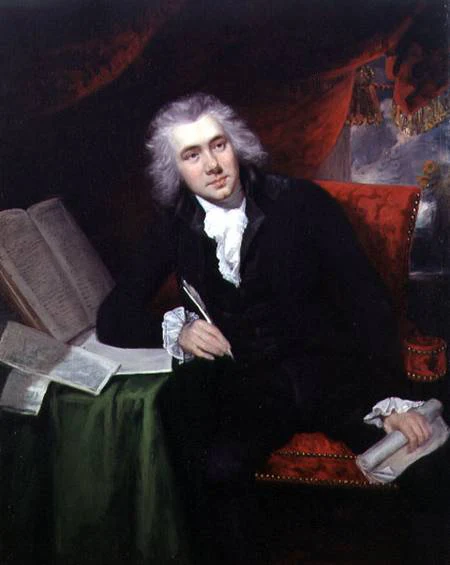
- 10. Wikimedia CommonsJohn Rising: Wilberforce painting, creator, licence and original file history
- 11. Creative CommonsPublic Domain Mark 1.0