
The short answer
The 1833 Act ended legal slavery across much of Britain’s colonial empire, but it did so through a settlement that protected enslavers’ interests and delayed control over labour for many formerly enslaved people. Its title alone does not describe how emancipation worked.
Chronology
A timeline of the turning points
Trade prohibition
The earlier Act addressed participation in the trade, not general emancipation.
A renewed emancipation organisation
Wilberforce and Buxton helped establish the society for mitigation and gradual abolition.
Wilberforce died
His death preceded Royal Assent and the operation of the new settlement.
Royal Assent
The final Act combined emancipation, apprenticeship and compensation.
Principal emancipation date
Many formerly enslaved people became apprentices rather than gaining immediate control of their labour.
Apprenticeship ended early
Pressure brought the remaining British Caribbean apprenticeship system to an end before the original agricultural deadline.
The legislation addressed a different problem from the 1807 ban
British prohibition of the slave trade had left slavery operating on colonial plantations. Campaigners therefore pursued a further legal change: the end of the status that allowed people to be held as property and compelled to work. The 1833 Act’s long title expressly combined abolition, regulation of the labour of the manumitted and compensation for those previously entitled to their services.
Thomas Fowell Buxton carried parliamentary leadership after Wilberforce’s retirement. Wilberforce died on 29 July 1833, before Royal Assent on 28 August. His support belongs in the movement’s history, but he did not personally pass a law after his death. The final statute, rather than earlier ministerial proposals, establishes what Parliament enacted.
The principal starting date was not the same everywhere
The Act’s principal emancipation date was 1 August 1834. It also contained express limits. Section 64 excluded territories in the possession of the East India Company, Ceylon and Saint Helena. Calling it immediate abolition throughout every British possession therefore overstates the law’s reach and obscures people whose legal position followed other histories.
Section 65 further postponed the operation of the relevant provisions in the Cape of Good Hope by four months and Mauritius by six. Even within the covered empire, the calendar was not uniform. These territorial details are not minor exceptions to a simple story: they show why a legal claim must identify which jurisdiction, population and provision it describes.
Apprenticeship restricted freedom over labour
Many registered enslaved people aged six and above were converted into apprenticed labourers. The Act preserved their former enslavers’ entitlement to specified services. Agricultural apprenticeships were originally allowed to continue until August 1840; non-agricultural apprenticeships until August 1838. The original text also set conditions for labour and supervision.
This was a major change in legal status without immediate, unrestricted freedom to choose work. Historic England records the harsh discipline and poorly paid or unpaid labour associated with the scheme. Continued opposition brought the remaining British Caribbean apprenticeship system to an early end in 1838. The distinction between formal emancipation and control over one’s working life is essential to understanding why campaigning continued after 1834.
The compensation fund paid the people who had claimed ownership
The Act authorised a compensation fund of £20 million for the loss of services claimed by enslavers. It did not provide equivalent compensation to the people whose freedom had been denied and whose labour had been taken. The settlement thus treated the ending of asserted property rights as a public financial liability while leaving formerly enslaved people without a comparable payment.
UCL’s Legacies of British Slave-Ownership project uses the compensation commission’s records to trace owners and their connections. Those records reveal how slavery reached into British economic and social life beyond plantation locations. They are also records organised around ownership claims: they cannot alone supply a complete account of the enslaved people’s experiences or what they understood freedom to require.
Legal emancipation did not settle the whole legacy of slavery
The end of apprenticeship removed a further form of compulsory labour, but it did not automatically redistribute land, erase wealth accumulated through enslavement or eliminate colonial inequality. The sequence from 1807 to 1833, 1834 and 1838 is therefore more informative than a single anniversary labelled the end of slavery.
This history also challenges a story centred exclusively on Parliament’s generosity. Enslaved people’s resistance, campaigning outside Westminster and continuing scrutiny of the settlement shaped what freedom became in practice. The Act was consequential law, with a restricted geographical scope and unequal financial terms. Those features are part of the achievement’s meaning, not details to be removed from it.
Continue the chronology
Related history guides
Biography context
Explore United Kingdom through connected lives
Connected biographies
An earlier campaigner and the limits of personal attribution
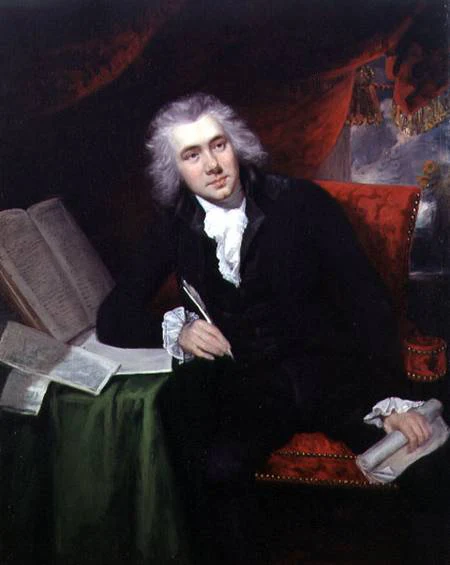
1759–1833
William Wilberforce
MP and abolition campaignerWilliam Wilberforce became the parliamentary voice of a broad movement against the British slave trade. His evangelical reform politics helped sustain the campaign, but the 1807 prohibition did not emancipate people already enslaved.Read biographyQuick answers
Common questions
- Did the Act operate everywhere in the British Empire?
- No. Section 64 excluded East India Company territories, Ceylon and Saint Helena. The Act also delayed the relevant provisions in the Cape and Mauritius.
- Why are both 1834 and 1838 used in emancipation history?
- 1 August 1834 was the principal emancipation date, but many people became compulsory apprentices. The remaining British Caribbean apprenticeship system ended in 1838.
- Who received the £20 million compensation?
- The fund compensated enslavers for the loss of claimed services. It did not compensate the formerly enslaved people for their enslavement.
Primary and institutional sources
How this history was checked
The original printed Act was read selectively for sections 1–6, 12, 24 and 64–65, including the final territorial exclusions and delayed Cape and Mauritius dates. It is not replaced by the incomplete later revised text or by preliminary parliamentary proposals. Historic England corroborates apprenticeship and the 1838 end; UCL explains compensation records. The National Archives education introduction was available as a returned extract, not a successful full-page fetch. Colonial implementation and individual compensation files were not comprehensively audited. This article was reviewed on 23 October 2026.
- The National Archives, legislation.gov.ukSlavery Abolition Act 1833, 3 & 4 Will IV c 73: original print
- Historic EnglandSlavery after 1807: apprenticeship and Buxton
- Oxford Bibliographies in Atlantic HistoryWilliam Wilberforce: public introduction to the research bibliography
- Westminster AbbeyWilliam Wilberforce and family: life dates and commemoration
- UK ParliamentThe West Indian colonies and emancipation
- University College LondonLegacies of British Slave-Ownership: compensation research and database scope
- The National ArchivesSlavery: education introduction on resistance, abolition and territorial limits
- Wikimedia CommonsJohn Rising: Wilberforce painting, creator, licence and original file history
- Creative CommonsPublic Domain Mark 1.0