
The short answer
The 1807 Act prohibited British participation in the slave trade under its detailed terms. It did not generally abolish the status of slavery in British colonies. The difference between preventing new trafficking and freeing people already enslaved is essential to understanding the achievement and its limits.
Chronology
A timeline of the turning points
An organising committee formed
Clarkson, Sharp and other campaigners established a London committee against the trade.
Wilberforce’s major parliamentary speech
He presented abolitionist arguments in the Commons as the movement expanded outside it.
Government backing brought a breakthrough
Abolition moved from repeatedly defeated advocacy towards successful government legislation.
The Act received Royal Assent
The original printed statute records the legal date.
Principal prohibitions took effect
The Act prohibited specified trading and the fitting out of vessels for the trade.
A different law addressed emancipation
A later Act changed enslaved status, with exclusions and apprenticeship.
The Act targeted trading, transportation and the vessels behind them
The original statute is dated 25 March 1807 and names 1 May for its principal prohibitions. Its first provisions cover buying, selling, transferring and transporting people for enslavement within the trade described by the law. They apply to British subjects and specified residents and operations; this was not a declaration with automatic jurisdiction over every foreign government.
The following provisions address the machinery of the trade. Fitting out, manning or navigating ships for prohibited purposes became unlawful, with forfeiture of vessels and monetary penalties among the sanctions. These details matter because commercial participation included investors, agents and shipping arrangements as well as the captain physically carrying captives across the Atlantic.
Sources for this section: [1]
A parliamentary victory depended on mobilisation beyond Parliament
William Wilberforce was the movement’s prominent parliamentary spokesman, but he did not supply all its evidence or leadership. Thomas Clarkson investigated the trade and committed himself to abolition; Granville Sharp participated in organising the 1787 London committee. Religious networks, local societies and petitions helped make the issue politically difficult to ignore.
Black authors challenged the assumptions sustaining enslavement. Equiano’s narrative reached British readers, while the experience and resistance of enslaved people contradicted claims that the system was benign. The campaign’s history therefore includes people excluded from Parliament itself. Reducing the outcome to the conscience of one MP gives an incomplete account of how political pressure was created.
Repeated proposals succeeded when political conditions changed
Wilberforce’s 1789 speech did not produce immediate prohibition. Parliamentary opposition was sustained by commercial interests, political resistance and the wider circumstances of war and revolution. Legislative advocacy continued over many years. The final breakthrough occurred when abolition became a government measure in 1806–1807, after the death of his ally William Pitt.
This distinction between a campaign and a government bill helps explain the chronology. A reform could attract moral support without securing the time, organisation and majorities needed to become law. Royal Assent marked the completion of the legislative process; it was the outcome of collective political work, rather than evidence that resistance to abolition had simply disappeared.
People already enslaved did not become generally free
The Act removed the legal basis for British participation in the prohibited trade. It did not generally remove enslavers’ power over people already working on colonial plantations. Sugar production and other forms of coerced labour continued, and abolitionists had to organise a further campaign against slavery itself.
The later Slavery Abolition Act belongs to 1833, with its principal commencement in 1834. Even that settlement imposed apprenticeship on many people and compensated enslavers. Remembering the two laws separately prevents the word abolition from disguising different legal objects: trading in people, holding them as property and controlling their labour were connected, but changing one did not automatically extinguish the others.
Prohibition required enforcement and did not end trafficking everywhere
A statute could define offences and authorise seizure; it could not by itself eliminate evasion or impose the same rules across the Atlantic world. British enforcement efforts and later diplomatic arrangements developed after 1807, while trafficking continued under other flags and through illicit operations. The continuing movement of enslaved Africans exposes the distance between enactment and universal prevention.
The right question is therefore what changed for particular actors and people, not whether one date ended the whole system. The law was a major constraint on British commercial participation. Its importance is compatible with recognising that colonial slavery endured and that freedom required further struggles by people whose lives were directly controlled by it.
Continue the chronology
Related history guides
Biography context
Explore United Kingdom through connected lives
Connected biographies
A parliamentary advocate within a wider movement
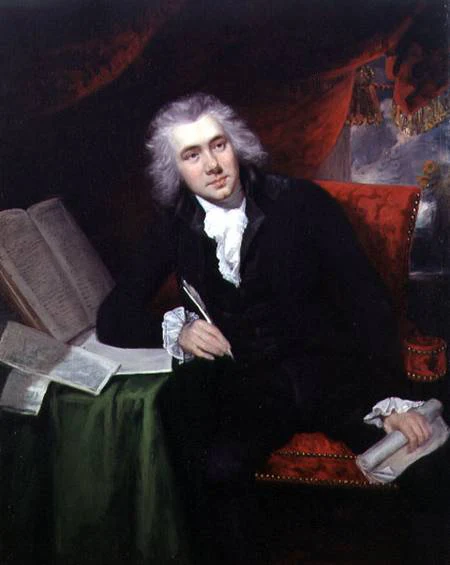
1759–1833
William Wilberforce
MP and abolition campaignerWilliam Wilberforce became the parliamentary voice of a broad movement against the British slave trade. His evangelical reform politics helped sustain the campaign, but the 1807 prohibition did not emancipate people already enslaved.Read biographyQuick answers
Common questions
- When did the Slave Trade Act become law?
- It received Royal Assent on 25 March 1807. Its principal prohibitions applied from 1 May, subject to the statute’s detailed terms.
- Did it free everyone enslaved in British colonies?
- No. It prohibited participation in the trade under its terms, while slavery continued in the colonies. Emancipation required later legislation and campaigns.
- Was Wilberforce the only abolitionist leader?
- No. Clarkson, Sharp, other organisers, religious and local networks, Black authors and enslaved people’s resistance all belong in the wider history.
Primary and institutional sources
How this history was checked
The opening provisions of the original 1807 printed Act control the account of its scope and principal starting date. Parliament and Historic England supply institutional context. Oxford’s publicly accessible introduction was read, not the subscription bibliography. The National Archives education extract was available, while its full page returned 403. No claim is made to have measured all enforcement outcomes or reviewed the complete shipping and colonial archives. This article was reviewed on 23 October 2026.
- The National Archives, legislation.gov.ukAn Act for the Abolition of the Slave Trade, 47 Geo III sess 1 c 36: original print, 1807
- The National Archives, legislation.gov.ukSlavery Abolition Act 1833, 3 & 4 Will IV c 73: original print
- UK ParliamentThe abolitionists: Wilberforce, Clarkson and the organising committee
- UK ParliamentThe West Indian colonies and emancipation
- Oxford Bibliographies in Atlantic HistoryWilliam Wilberforce: public introduction to the research bibliography
- The National ArchivesSlavery: education introduction on resistance, abolition and territorial limits
- Historic EnglandSlavery after 1807: apprenticeship and Buxton
- Wikimedia CommonsJohn Rising: Wilberforce painting, creator, licence and original file history
- Creative CommonsPublic Domain Mark 1.0