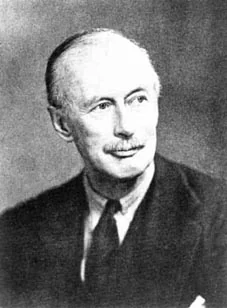
In this biography
Quick facts
- Born
- 1888
- Died
- 1971
- Birthplace
- Hampstead, London, England
- Country
- United Kingdom
- Nationality
- Not independently established
- Known for
- Founding Bentley Motors and continuing an engineering career through Rolls-Royce, Lagonda and Armstrong Siddeley
Why this life matters
Founding Bentley Motors and continuing an engineering career through Rolls-Royce, Lagonda and Armstrong Siddeley.
Timeline
Key moments
Birth
W. O. Bentley was born in Hampstead, London, England.
Motor business
The Bentley enterprise was established.
Ownership change
The business passed into Rolls-Royce ownership.
Death
W. O. Bentley died in 1971.
Railways and road vehicles supplied the training
Walter Owen Bentley was born in Hampstead, London, in 1888. He attended Clifton College before entering a Great Northern Railway apprenticeship at Doncaster. Further study at King’s College London and maintenance work with the National Motor Cab Company added theoretical and fleet experience. In 1912 he joined his brother Horace in a business selling French DFP cars. Improving those cars connected racing with practical modifications. The work placed him between design and operation: a component had to perform on a test run, while a commercial vehicle also needed to remain useful beyond the excitement of a single competition.
Wartime engines required a manufacturing network
During the First World War Bentley worked on aircraft engines through the Royal Naval Air Service and several manufacturers. The archives initiative identifies the development from Clerget-related work to the BR1 and BR2 and the coordination required to manufacture them. His contribution consequently included adapting ideas to factories and communicating with people using the engines. Recognition and an inventor’s award later helped provide resources for his own motor company. These records describe a technical career already established before the cars that made his surname internationally familiar.
A successful racing identity faced a financial crisis
Bentley Motors was founded in 1919, and its cars achieved a series of Le Mans victories during the 1920s. Frank Clement, John Duff and the wider circle of owners and drivers helped build its reputation. The business nevertheless entered receivership in 1931 and was acquired by Rolls-Royce. Racing achievement and financial resilience were different matters: a well-regarded product still required a market and continuing resources. The sale transferred a business and changed production arrangements. It did not end the existence of cars bearing the Bentley name or immediately end the founder’s engineering employment.
The designer’s later career followed another route
Bentley continued with Rolls-Royce before joining Lagonda as technical director in 1935. After further changes in that company’s ownership, he moved to Armstrong Siddeley in 1947 and retired in 1950. He died at Woking in 1971. His later work is important to the life story because it prevents a corporate failure from becoming a false personal ending. The name, company and engineer followed related but different paths. His significance rests on particular engine and vehicle work, the establishment of a marque and the skills that other businesses continued to use after the 1931 sale.
Quick answers
Frequently asked questions about W. O. Bentley
- Did Bentley stop engineering after the 1931 sale?
- No. He continued at Rolls-Royce before joining Lagonda in 1935 and later Armstrong Siddeley.
- Did a change in company ownership end the Bentley name?
- No. The museum’s corporate history records continued production under the new owner, including the move to Derby.
Keep exploring
Lives connected to this story
- Henry Royce
Explore Henry Royce’s separate career as electrical and mechanical engineer, manufacturer and rolls-royce co-founder; compare the work and institutions in context.
- Harry Ricardo
Read Harry Ricardo’s documented work and the related study: Ricardo’s Engine Research: Comparing Fuels.
- Claude Johnson
Read Claude Johnson’s documented work and the related study: Rolls-Royce in 1907: A Trial and a Public Claim.
Sources and further reading
Explore the evidence
These references support the biography and offer further reading. Official records, first-person accounts and independent reporting provide different perspectives; image records document attribution and licensing.
- 1. H. G. Pitt, Oxford Dictionary of National BiographyBentley, Walter Owen: accessible extract
- 2. Aviation and Aerospace Archives InitiativeBentley, Walter Owen
- 3. Science Museum GroupBentley Motors Ltd
- 4. Bentley MotorsThe extraordinary life of W.O. Bentley
- 5. Ed Wiseman, Bonhams MagazineBest of British, Spring 2019 Issue 58