In this biography
Quick facts
- Born
- 27 March 1863
- Died
- 22 April 1933
- Birthplace
- Alwalton, near Peterborough, England, United Kingdom
- Country
- United Kingdom
- Nationality
- English
- Known for
- Developing Rolls-Royce motor-car engineering and the company’s early aero engines
- First business
- F.H. Royce & Co., Manchester, 1884
- First motor cars
- 10-horsepower cars, 1904
- Company formation
- Rolls-Royce Ltd, 1906
- Aero-engine production
- Eagle programme during the First World War
Why this life matters
Royce’s work connects detailed engineering with the organization of a manufacturing business. His reputation for precision is best understood alongside the designers, test drivers, factory workers and commercial partners who turned drawings into reliable machines.
Timeline
Key moments
Born at Alwalton
Born on 27 March near Peterborough into a family facing financial hardship.
Railway apprenticeship
Begins training at the Great Northern Railway workshops with support from an aunt.
Manchester engineering business
Establishes F.H. Royce & Co.; the firm expands from electrical fittings into heavier equipment.
Cars and a commercial partner
Builds early 10-horsepower cars and meets Charles Rolls on 4 May.
Company and flagship car
Rolls-Royce Ltd is formed; the 40/50 model and Silver Ghost demonstrations establish a wider reputation.
Aero engines
The Eagle programme develops during war; Eagle engines power Alcock and Brown’s 1919 Atlantic flight.
Death
Dies on 22 April after continuing to guide engineering work despite recurring ill health.
Practical training after an insecure childhood
Frederick Henry Royce was born at Alwalton near Peterborough on 27 March 1863. His family experienced poverty and financial disruption, and he began earning money while still a child. Formal schooling was limited. His later standing as an engineer should not obscure the insecurity of these years or suggest that talent alone removed the need for help and opportunities.
An aunt supported an apprenticeship at the Great Northern Railway workshops in Peterborough from 1877. When her finances could no longer cover the fees, the training ended early. Royce subsequently entered electrical work in London and attended evening classes. Railway practice and the young electrical industry supplied different kinds of experience: workshop discipline, machinery, installation and the practical problem of making equipment function consistently.
Electrical manufacture came before motor cars
In 1884 Royce established F.H. Royce & Co. in Manchester. The business began with electrical fittings and progressed into cranes and other industrial equipment. Royce was therefore already an employer and manufacturer before the motor-car enterprise for which he became famous. The later company grew from an existing organization, rather than from a single isolated invention.
Competition from cheaper imported electrical machinery put the business under strain around 1902. The company’s heritage account also describes the toll of overwork on Royce’s health. His determination to improve products had commercial costs as well as technical benefits. Precision had to be supported by orders, working capital, suitable materials and people able to make the designs repeatedly.
Studying a car led to a manufacturing opportunity
Royce read about automobile construction and examined a French Decauville before producing his own early cars. Corporate histories challenge the familiar story that he bought an entirely worthless machine and simply repaired it. They describe a deliberate effort to study an advanced existing design and improve its details. This places his achievement within the exchange of engineering knowledge across borders.
The first 10-horsepower cars were built in 1904. The work involved a workshop, drawings and testing, with young employees such as Ernest Wooler contributing. Henry Edmunds drove one and recognized its commercial potential. His introduction of Royce to Charles Rolls on 4 May connected a Manchester manufacturer with a London dealer seeking a high-quality British car to sell.
A company and a disciplined design practice
Rolls-Royce Ltd was formed in 1906, two years after the founders’ first meeting. Royce led technical development while Rolls and Claude Johnson brought customers, organization and promotion. The 40/50-horsepower chassis became especially important. The 1907 Silver Ghost demonstration associated its smooth running with tested reliability, turning manufacturing performance into evidence that could support a demanding sales claim.
Royce developed a design team and retained final approval. Continuous alterations meant that improvement occurred through many small decisions as well as new models. Yet the company supplied rolling chassis, engines and drivetrains; independent coachbuilders created bodies to customers’ requirements. A finished luxury car consequently represented several kinds of authorship. The founder’s name on its radiator should not erase that distributed production.
Testing and aviation extended the enterprise
Testing was essential to the engineering process. Eric Platford began with engine and chassis work and became a trusted figure in car and aero-engine testing. His career makes the distinction between a design’s promise and demonstrated performance concrete. Mechanics and drivers identified problems under conditions a drawing office could not fully reproduce, and their findings fed back into development.
During the First World War the company entered aero-engine manufacture with the Eagle. In June 1919 two Eagle engines powered Alcock and Brown’s non-stop Atlantic flight in a Vickers Vimy. Platford helped prepare the installation. Royce’s influence thus extended beyond luxury motoring, through a business responding to military demand and then to aviation’s new possibilities. Charles Rolls, who died in 1910, did not participate in this later programme.
Health, later work and the limits of the perfectionist legend
Recurring ill health changed Royce’s working arrangements. He spent winters at Le Canadel in France and later lived at West Wittering in Sussex, maintaining influence over engineering away from the main factory. The 1922 Twenty and further car development show a career continuing beyond the original partnership. His death on 22 April 1933 ended decades of close technical involvement.
The label perfectionist captures a real commitment to detail but can become a misleading explanation for everything the business achieved. Surviving products and corporate histories show a system of design, manufacture, inspection, testing and sales. They do not prove that one person made every component or that every car was flawless. Royce’s lasting importance lies in the standards and organization he helped establish, alongside the people who applied and revised them.
Quick answers
Frequently asked questions about Henry Royce
- Was Henry Royce a car mechanic before founding Rolls-Royce?
- He had railway and electrical-engineering experience and ran a Manchester manufacturing business from 1884. He began producing motor cars before meeting Charles Rolls in 1904.
- Did he design the entire finished car?
- Rolls-Royce supplied rolling chassis with engines and drivetrains. Specialist coachbuilders supplied bodywork, so finished cars combined the work of several businesses.
- Is the portrait a photograph of Royce?
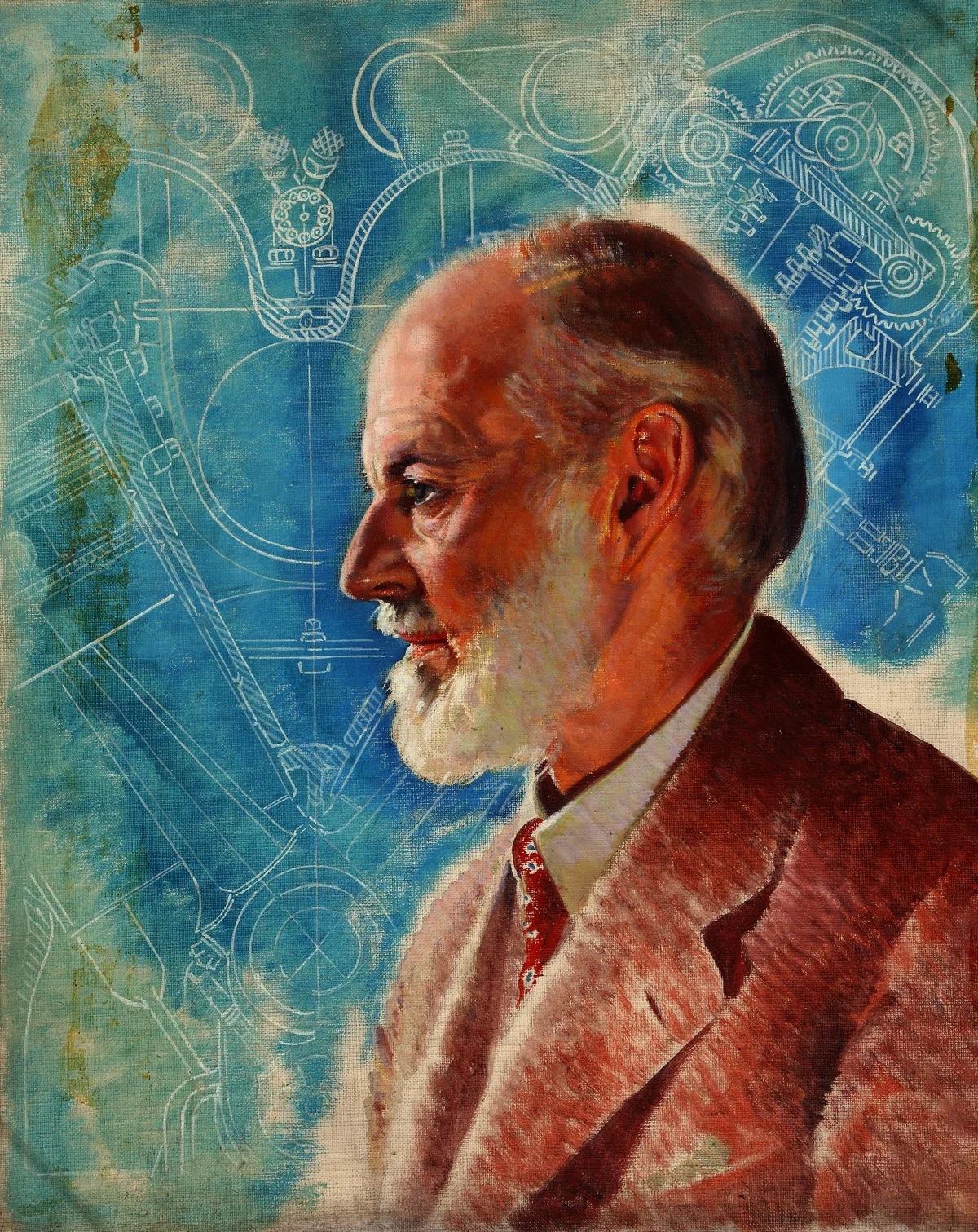
- No. It is a posthumous oil portrait dated 1939–1946 in The National Archives. Its date, medium and public-domain basis are stated in the credit.
Keep exploring
Lives connected to this story
- Charles Rolls
See how the dealership, social connections and technical interests of Royce’s partner complemented manufacturing.
- James Dyson
Compare a later product business through iteration, testing and the relationship between founder and engineering team.
Sources and further reading
Explore the evidence
These references support the biography and offer further reading. Official records, first-person accounts and independent reporting provide different perspectives; image records document attribution and licensing.
- 1. Rolls-Royce Motor CarsMakers of the Marque: Charles Stewart Rolls
- 2. Rolls-Royce Motor CarsMakers of the Marque: Henry Royce
Corporate biography provides early training and design-practice detail. Its celebratory language is not adopted as an independent measurement of engineering perfection.
- 3. Rolls-Royce Motor CarsShaping the World for 120 Years: engineering and early collaborators
- 4. Rolls-RoyceOur History: 1906 company formation and aero-engine milestones
Company chronology corroborates the 1884 electrical enterprise, 1904 partnership, 1906 formal company and later aviation milestones. These are distinct founding events.
- 5. Rolls-Royce Motor CarsHeritage: From 1904 to Today and Beyond
- 6. Rolls-Royce Motor CarsMakers of the Marque: Henry Edmunds
- 7. Rolls-Royce Motor CarsMakers of the Marque: Claude Goodman Johnson
- 8. Rolls-Royce Motor CarsMakers of the Marque: Eric Platford
- 9. Science and Industry MuseumIconic Duos: Rolls and Royce in Manchester
- 10. Rolls-Royce Motor CarsModels of the Marque: the 40/50 H.P. and Silver Ghost
- 11. National Motor MuseumRolls-Royce Silver Ghost: model history and the separate 1909 museum car
- 12. The National Archives / Wikimedia CommonsSir Henry Royce, INF3/4: 1939–1946 oil portrait, Crown copyright expiry and VRT record
Record, complete canvas image, PD-UKGov explanation and VRT ticket checked. The 1939–1946 artwork was created after Royce’s death and is labelled accordingly.