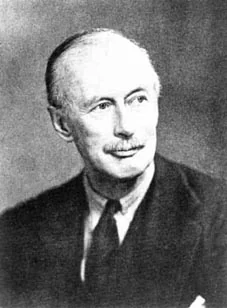
In this biography
Quick facts
- Born
- 1868
- Died
- 1946
- Birthplace
- Lewisham, London, England
- Country
- United Kingdom
- Nationality
- Not independently established
- Known for
- Developing Lanchester vehicles and connecting engine design with testing, manufacturing records and a wider consulting practice
Why this life matters
Developing Lanchester vehicles and connecting engine design with testing, manufacturing records and a wider consulting practice.
Timeline
Key moments
Birth
Frederick William Lanchester was born in Lewisham, London, England.
Industrial employment
Joined the Forward Gas Engine Company.
Motor enterprise
The Lanchester company connected family collaboration with production.
Death
Frederick William Lanchester died in 1946.
Education across classrooms and workshops
Frederick William Lanchester was born in Lewisham, London, in 1868. His father, Henry Jones Lanchester, was an architect and inventor, while his mother, Octavia, taught mathematics and Latin. Study at the Hartley Institution preceded a scholarship to the Normal School of Science. He also pursued technical learning at Finsbury and experimented in a laboratory at home. He left formal study without completing the final examinations. His later engineering reputation therefore developed through practical work and sustained independent investigation rather than an initial university degree.
A family enterprise in motor manufacture
In 1889 Lanchester joined the Forward Gas Engine Company in Birmingham. His brothers George and Frank became important collaborators as engine work expanded into vehicles and a motor business. The Lanchester Engine Company formed in 1899, and production cars followed. George’s technical responsibilities and Frank’s commercial work mattered to the enterprise alongside Frederick’s designs. Surviving records include component drawings, photographs and workshop notes. Together they show a manufacturing undertaking in which a promising idea had to be translated into parts, tools, testing and vehicles that could be supplied to customers.
Records connect invention with repeatable work
The Institution of Mechanical Engineers preserves a managerial notebook dated 1899–1901. Its description identifies material specifications, special tools, gear work, oil-metering calculations and logs of vehicle tests. It also identifies writing by George Lanchester and chief draughtsman Sidney Pinsent alongside Frederick’s. That is unusually concrete evidence of the range of work surrounding the cars. Later, Frederick advised other manufacturers, including Daimler, and founded a separate laboratory undertaking. His activity also extended into aerodynamics and sound equipment; the different subjects should remain distinct rather than becoming one claim of universal invention.
A career outlasted the original company arrangement
Lanchester published Aerodynamics in 1907 and Aerodonetics in 1908, continuing a parallel programme of investigation into flight. In 1931 the motor company passed into the BSA group, while his wider interests continued. He died in 1946. His significance includes both particular engineering designs and the methods by which ideas were developed into manufactured equipment. The archival record makes that contribution more tangible than a catalogue of superlatives: notebooks, component work and testing reveal how improvement depended on recorded detail and the contributions of other practitioners.
Quick answers
Frequently asked questions about Frederick William Lanchester
- Did Lanchester complete a university degree before his first engineering job?
- He left his early formal studies without completing the final examinations; his later honorary recognition was a different event.
- Who else contributed to the managerial notebook?
- The catalogue identifies George Herbert Lanchester and chief draughtsman Sidney Pinsent alongside Frederick.
Keep exploring
Lives connected to this story
- Henry Royce
Explore Henry Royce’s separate career as electrical and mechanical engineer, manufacturer and rolls-royce co-founder; compare the work and institutions in context.
- William Siemens
Explore William Siemens’s separate career as engineer, metallurgist and industrial entrepreneur; compare the work and institutions in context.
- Harry Ricardo
Read Harry Ricardo’s documented work and the related study: Ricardo’s Engine Research: Comparing Fuels.
- Claude Johnson
Read Claude Johnson’s documented work and the related study: Rolls-Royce in 1907: A Trial and a Public Claim.
Sources and further reading
Explore the evidence
These references support the biography and offer further reading. Official records, first-person accounts and independent reporting provide different perspectives; image records document attribution and licensing.
- 1. C. S. Clark, Oxford Dictionary of National BiographyLanchester, Frederick William: accessible extract
- 2. Coventry UniversityLanchester Interactive Archive: Timeline
- 3. Institution of Mechanical EngineersLanchester Motor Company
- 4. Institution of Mechanical EngineersManager’s Notebook 1899–1901
This discussion uses the inspected catalogue’s named contents and contributors; it does not claim a complete transcription of the notebook or measured results from its charts.
- 5. Institution of Mechanical EngineersAcceleration charts
- 6. Science Museum GroupFrederick William Lanchester