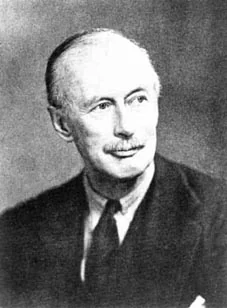
In this biography
Quick facts
- Born
- 1864
- Died
- 1926
- Birthplace
- Buckinghamshire, England
- Country
- United Kingdom
- Nationality
- Not independently established
- Known for
- Building motoring organisations and developing the commercial operations and publicity of early Rolls-Royce
Why this life matters
Building motoring organisations and developing the commercial operations and publicity of early Rolls-Royce.
Timeline
Key moments
Birth
Claude Johnson was born in Buckinghamshire, England.
Commercial responsibility
Became commercial director of the combined Rolls-Royce company.
Public trials
Worked around demonstrations of the 40/50hp car.
Death
Claude Johnson died in 1926.
Organising events before selling cars
Claude Goodman Johnson was born in Buckinghamshire in 1864. He studied at St Paul’s School and attended the Royal College of Art before developing a career in exhibition organisation. The 1896 Motors and their Appliances exhibition brought that experience into the emerging motoring world. His early contribution lay in assembling people, objects and an audience rather than designing an engine. That distinction helps explain why a business later celebrated for engineering needed someone with experience in administration and public demonstration as well as mechanical specialists.
Sources for this section: [1]
A club created an organising network
Johnson became the Automobile Club’s first secretary in 1897. The Royal Automobile Club’s history identifies his organisation of the Thousand Mile Trial in 1900 as an early public demonstration of motor vehicles’ practical possibilities. Trials required arrangements for routes, participants and publicity. They also connected manufacturers, owners and people who might otherwise know cars only as a novelty. In 1903 Johnson moved through an electric-car venture into C. S. Rolls’s sales business. Those appointments placed his organising experience within a market that relied on confidence as well as machinery.
A commercial role at Rolls-Royce
After Rolls met Henry Royce in 1904, the collaboration developed into the company established in 1906. Johnson became its commercial managing director. The archive’s administrative history distinguishes his continuing management from Royce’s technical work. A concrete example is the 1907 demonstration car that Johnson named The Silver Ghost. The observed runs gave that commercial work a specific practical focus. Such detail shows that publicity depended on a prepared and tested object, not merely on inventing an attractive phrase.
A company needed continuity beyond its founders’ meeting
Johnson’s work continued as Rolls-Royce developed its sales organisation and models. He commissioned Charles Sykes’s official mascot, which became known as the Spirit of Ecstasy, and remained central to the business through the years after Rolls’s death. He died in 1926. His career demonstrates a particular kind of contribution to industrial development: organising institutions, maintaining a business and turning technical performance into a public proposition. Recognising that work does not require making him the designer of Royce’s engines. The documentary record is stronger when commercial and engineering responsibilities remain connected but recognisable.
Quick answers
Frequently asked questions about Claude Johnson
- What did Johnson contribute to Rolls-Royce?
- He led commercial management and publicity, connecting sales, administration and demonstrations with Royce’s engineering work.
- Did The Silver Ghost originally name every 40/50 car?
- The inspected historians’ account identifies it as the name of the individual 1907 demonstration car before wider later use.
Keep exploring
Lives connected to this story
- Henry Royce
Explore Henry Royce’s separate career as electrical and mechanical engineer, manufacturer and rolls-royce co-founder; compare the work and institutions in context.
- Charles Rolls
Explore Charles Rolls’s separate career as motor dealer, engineer, racing driver, aviator and rolls-royce co-founder; compare the work and institutions in context.
- Frederick William Lanchester
Read Frederick William Lanchester’s documented work and the related study: Lanchester’s Notebook: Tests, Tools and Production.
- W. O. Bentley
Read W. O. Bentley’s documented work and the related study: Bentley in 1931: A Company Sold, a Designer Continued.
Sources and further reading
Explore the evidence
These references support the biography and offer further reading. Official records, first-person accounts and independent reporting provide different perspectives; image records document attribution and licensing.
- 1. Rolls-Royce Motor Cars, 2024Makers of the Marque: Claude Goodman Johnson
- 2. Society of Automotive Historians in BritainThe Silver Ghost on the 1907 Scottish Trial
The May observed journey and the later endurance programme are kept separate. Reader comments beneath the historians’ article are not treated as inspected contemporary reports.
- 3. Royal Automobile ClubHistory of the Club
- 4. The National Archives / Royal Automobile Club collections descriptionRolls-Royce records: administrative history