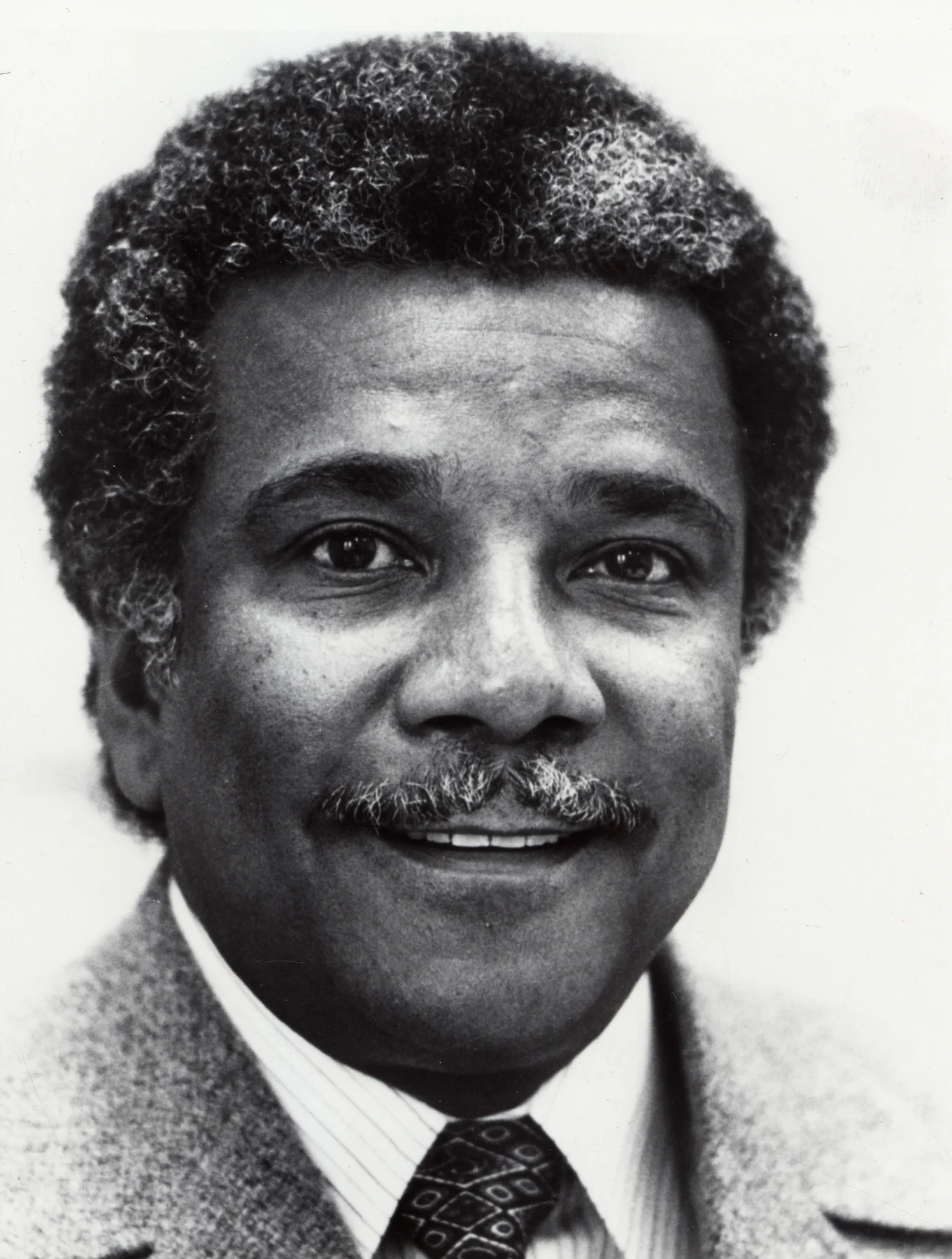
In this biography
Quick facts
- Born
- 4 February 1931
- Died
- 26 May 2003
- Birthplace
- Mombasa, Kenya
- Country
- Kenya
- Nationality
- Not independently established
- Known for
- Research on insect physiology and reproduction, founding leadership of icipe and advocacy for African scientific capacity
- Early education
- Maseno School and Makerere University College
- Doctorate
- Cambridge, insect physiology, 1965; supervised by Vincent Wigglesworth
- Early experimental publication
- Metabolic effects of corpus allatum hormone in the desert locust, Nature, 1965
- Institution building
- Founding director of icipe; founding fellow of TWAS and first president of the African Academy of Sciences
Why this life matters
He connected detailed experimental research with a sustained argument that Africa needed institutions able to train scientists and address locally important problems.
Timeline
Key moments
Born in Mombasa
Born on 4 February.
Study and agricultural research
Studies at Makerere and works in agricultural research in Kenya and Uganda before Cambridge.
Cambridge PhD
Completes doctoral work in insect physiology under Vincent Wigglesworth.
Locust experiments published
Publishes research on corpus allatum hormone, metabolism and movement.
Science and development
Publishes East Africa: Science for Development in Science.
icipe opens
Becomes founding director of the insect-science centre, developed with collaborators and academy sponsors.
Scientific academies
Helps establish TWAS and the African Academy of Sciences.
Death in Nairobi
Dies on 26 May.
From East African fieldwork to Cambridge
Thomas Risley Odhiambo was born in Mombasa, Kenya, on 4 February 1931. He attended Maseno School and studied botany and zoology at Makerere University College in Uganda. Agricultural research work followed in Kenya and Uganda. It brought him into contact with insects as subjects of classification and as practical problems for growers.
His early work identified new genera and species of East African Miridae bugs. That taxonomic research preceded the laboratory physiology for which he became better known. At Cambridge he completed a PhD in insect physiology in 1965 under Vincent Wigglesworth. The shift from describing insects to investigating their internal regulation broadened his research without removing its foundations in careful observation.
Testing the effects of an insect hormone
Odhiambo’s 1965 Nature communication investigated the corpus allatum hormone in the desert locust, Schistocerca gregaria. The question concerned the relationship between a hormone associated with reproductive development and the insect’s energy stores. This placed his work within an existing experimental debate, rather than making him the discoverer of insect hormones.
A fuller 1966 study examined spontaneous movement in adult male locusts. Removing the corpora allata produced persistent inactivity; implanting active glands could reverse it. Removing the reproductive organs did not produce the same effect. He proposed that the hormone influenced movement through the central nervous system and that reduced movement helped explain accumulated fat and glycogen. The proposed mechanism was an interpretation of the experiments, not a demonstrated universal rule for every insect.
Reproduction as a research problem
His research also examined the accessory reproductive glands of male desert locusts. A 1969 paper used microscopic and chemical staining techniques to distinguish nine gland types by their cells and secretions. The work linked anatomical structure to the different materials produced during reproduction, rather than treating all of the glands as interchangeable.
Tsetse flies raised another problem: a female retains her offspring as it develops from egg to larva. In a 1971 study of Glossina pallidipes, Odhiambo separated egg development from ovulation. Virgin females could mature eggs, but mating was needed to initiate ovulation. That distinction gave a specific experimental account of reproductive regulation. It also shows the substance of his scientific work beyond his better-known leadership of a research centre.
Research institutions for problems in Africa
After returning to Kenya he joined zoology at the University of Nairobi. His 1967 Science article, East Africa: Science for Development, argued for research capacity relevant to the region’s needs. icipe’s institutional history connects that argument with agricultural production, vector-borne disease and training African researchers.
The International Centre of Insect Physiology and Ecology opened in 1970. Odhiambo’s founding leadership worked alongside Carl Djerassi and supporters in national science academies. The institution sought to bring strong fundamental research into contact with practical questions about insects and livelihoods. Its later programmes and discoveries belong to successive teams; they should not all be assigned retrospectively to its founding director.
Sources for this section: [2]
Building a wider scientific public
Odhiambo helped create scientific networks beyond icipe. He was a founding fellow of the Third World Academy of Sciences, now the World Academy of Sciences, in 1983 and became the first president of the African Academy of Sciences, established in 1985. These organisations aimed to recognise researchers, support scientific work and strengthen institutions across national borders.
Publishing formed part of that effort. An African Academy case study describes the development of scholarly publishing and production capacity in Nairobi. TWAS’s memorial also records Odhiambo’s interest in books for children and in bringing scientists into discussion with political leaders. Such activities addressed the conditions in which research could circulate, gain support and become part of public life.
A scientific and institutional legacy
Odhiambo died in Nairobi on 26 May 2003. Contemporary scientific memorials remembered both his experimental work and his efforts to build African research capacity. Those dimensions reinforce each other: his argument for institutions came from experience of conducting research, while the institutions enabled other scientists to pursue problems he could not solve alone.
His career is therefore best followed through particular contributions: identifying insects, testing hormonal effects in locusts, investigating reproduction and creating settings for collaborative research. It offers a concrete account of scientific leadership, in which laboratory results, training, publishing and institutional negotiation each require their own evidence and their own share of credit.
Quick answers
Frequently asked questions about Thomas Odhiambo
- Who was Thomas Odhiambo?
- Thomas Odhiambo was an entomologist, insect physiologist and scientific institution builder. He connected detailed experimental research with a sustained argument that Africa needed institutions able to train scientists and address locally important problems.
- What is Thomas Odhiambo best known for?
- Thomas Odhiambo is best known for research on insect physiology and reproduction, founding leadership of icipe and advocacy for African scientific capacity.
- When and where was Thomas Odhiambo born?
- Thomas Odhiambo was born on 4 February 1931 in Mombasa, Kenya.
- When did Thomas Odhiambo die?
- Thomas Odhiambo died on 26 May 2003.
Keep exploring
Lives connected to this story
- Calestous Juma
Compare building an experimental research centre with creating an institute for science and technology policy.
- Wangari Maathai
Explore another Kenyan scientific career that developed into wider environmental and public work.
- Woo Jang-choon
Compare agricultural research institutions through a separate career in crop genetics and seed research.
- Shem Wandiga
Compare two Kenyan scientists’ research collaborations and institution-building careers.
Sources and further reading
Explore the evidence
These references support the biography and offer further reading. Official records, first-person accounts and independent reporting provide different perspectives; image records document attribution and licensing.
- 1. Rachel Galun and Onesmo K. ole-MoiYoi / NatureThomas Risley Odhiambo (1931–2003): accessible obituary preview, 11 September 2003
Only the openly accessible obituary preview and metadata were read, not the paywalled full article. The preview establishes the early agricultural-research and Miridae work; its praise is not adopted as a ranking.
- 2. icipe, International Centre of Insect Physiology and EcologyOur History: Cambridge training, 1967 article and 1970 opening
Institutional history verifies PhD in 1965 and icipe opening in 1970, with Djerassi and 21 academy sponsors. Some derivative accounts conflate a 1967 proposal or earlier groundwork with formal opening; later staff totals are not used.
- 3. Pontifical Academy of SciencesThomas Risley Odhiambo: life dates, research summary, bibliography and M. G. K. Menon commemoration
Academy record supplies life dates, a research summary and bibliography, plus a colleague’s commemoration. More specific reproductive findings are now cited to the original 1969 and 1971 article abstracts. The page’s mistaken ICIPE expansion in memorial prose is not used.
- 4. Thomas R. Odhiambo / NatureMetabolic Effects of the Corpus Allatum Hormone in the Desert Locust, 18 September 1965, DOI 10.1038/2071314b0
- 5. Thomas R. Odhiambo / Journal of Experimental Biology, The Company of BiologistsThe Metabolic Effects of the Corpus Allatum Hormone in the Male Desert Locust II: Spontaneous Locomotor Activity, 1966, DOI 10.1242/jeb.45.1.51
Publisher abstract and bibliographic record examined. Reported gland-removal/implantation results and the author’s proposed nervous-system mechanism are kept distinct. Full experimental data were not independently reanalysed.
- 6. Third World Academy of SciencesAfrica’s Science Statesman, TWAS Newsletter 15(3), July–September 2003, pp. 34–35
Contemporary memorial is useful for TWAS membership, public communication and children’s books. Its printed/OCR AAS date of 1995 conflicts with the 1985 academy record and National Academies history; 1995 is rejected. Director-retirement dates also vary, so the draft does not assert an exact final year.
- 7. National Academies PressBridge Builders: African Academy of Sciences desktop-publishing case study
Institutional case study is used for publishing capacity and the collective 1985 AAS establishment, not as direct evidence of every experimental discovery.
- 8. Thomas R. Odhiambo / Journal of Experimental Zoology, icipe institutional repositoryThe regulation of ovulation in the tsetse-fly, Glossina pallidipes Austen, 1971: original abstract, DOI 10.1002/jez.1401770406
Original article abstract read in icipe’s repository, with PubMed metadata cross-check. The repository’s 1 January 1971 date is a generic catalogue date; PubMed gives August 1971. Draft uses only the year, author and specific reported finding, not a claim of full-paper inspection.
- 9. Thomas R. Odhiambo / Tissue and Cell; PubMed bibliographic recordThe architecture of the accessory reproductive glands of the male desert locust I: types of glands and their secretions, 1969: original abstract, DOI 10.1016/S0040-8166(69)80010-8
Original author abstract examined in the indexed PubMed record. Direct page returned a browser challenge. The nine gland types are functional/histological classes, not a claim that only nine individual glands exist. No full-paper reading is claimed.