
The short answer
Building a research centre requires more than announcing a discovery. icipe’s early records connect an African scientist’s proposal with international partners, insect colonies, laboratory services and training. Comparing those records reveals what it took to turn a research agenda into an organisation.
Original source-reading aid
Proposal, administration and retrospective history
The records illuminate different parts of building and sustaining a centre.
| Record | Useful question | Limit |
|---|---|---|
| Academy finding aid | Who organised support and which files survive? | Describes records; does not reproduce every letter or meeting |
| 1979 annual report / 1980 director’s statement | What dates and activities did the centre record near its first decade? | An institutional report is not an independent evaluation |
| 2020 history | How did programmes and institutional status develop over time? | Later synthesis should be checked against earlier records |
Chronology
A timeline of the turning points
From proposals to correspondence
Odhiambo’s research-centre proposal intersects with Djerassi’s international discussions.
Legal establishment
Odhiambo’s March 1980 director’s report gives this date under Kenyan law.
Programmes and training
Scientific support services, visiting research directors and training help sustain investigations.
Changing institutional status
The later history distinguishes full international status from conversion through an intergovernmental charter.
A Kenyan proposal and an international network
Thomas Odhiambo wanted a centre that could connect advanced insect research with African agricultural and health problems. The American Academy’s archival finding aid places that ambition beside Carl Djerassi’s 1967 Pugwash proposal for research centres in developing countries. It describes correspondence, scientific committees and funding contacts that helped establish icipe.
The finding aid is a map of an archive, not the correspondence itself. Its description nevertheless identifies a network rather than a solitary act: Odhiambo, international academies, funding organisations and universities. Those connections supplied support while the first director and researchers had to create a functioning centre in Nairobi.
Sources for this section: [1]
Which date marks the foundation?
The seventh annual report is a report for 1979 prepared during the tenth-anniversary period. On printed page 2, Odhiambo dates legal establishment under Kenyan law to 7 April 1970. His signature below is dated 14 March 1980. The reporting year, statement date and anniversary being discussed therefore have different meanings.
The 2020 history separately identifies international status in 1977 and an intergovernmental charter in 1986. Neither later milestone should silently replace 1970 as the founding year. A centre can begin work, acquire a new legal status and move headquarters at different times without those records being contradictory.
The less visible infrastructure of insect research
The retrospective lists an early portfolio including tsetse, ticks, armyworm, termites and the yellow-fever mosquito. These were target groups, not five named insect species; ticks are arthropods but not insects. Work across physiology, chemistry, behaviour and ecology required shared scientific services as well as individual projects.
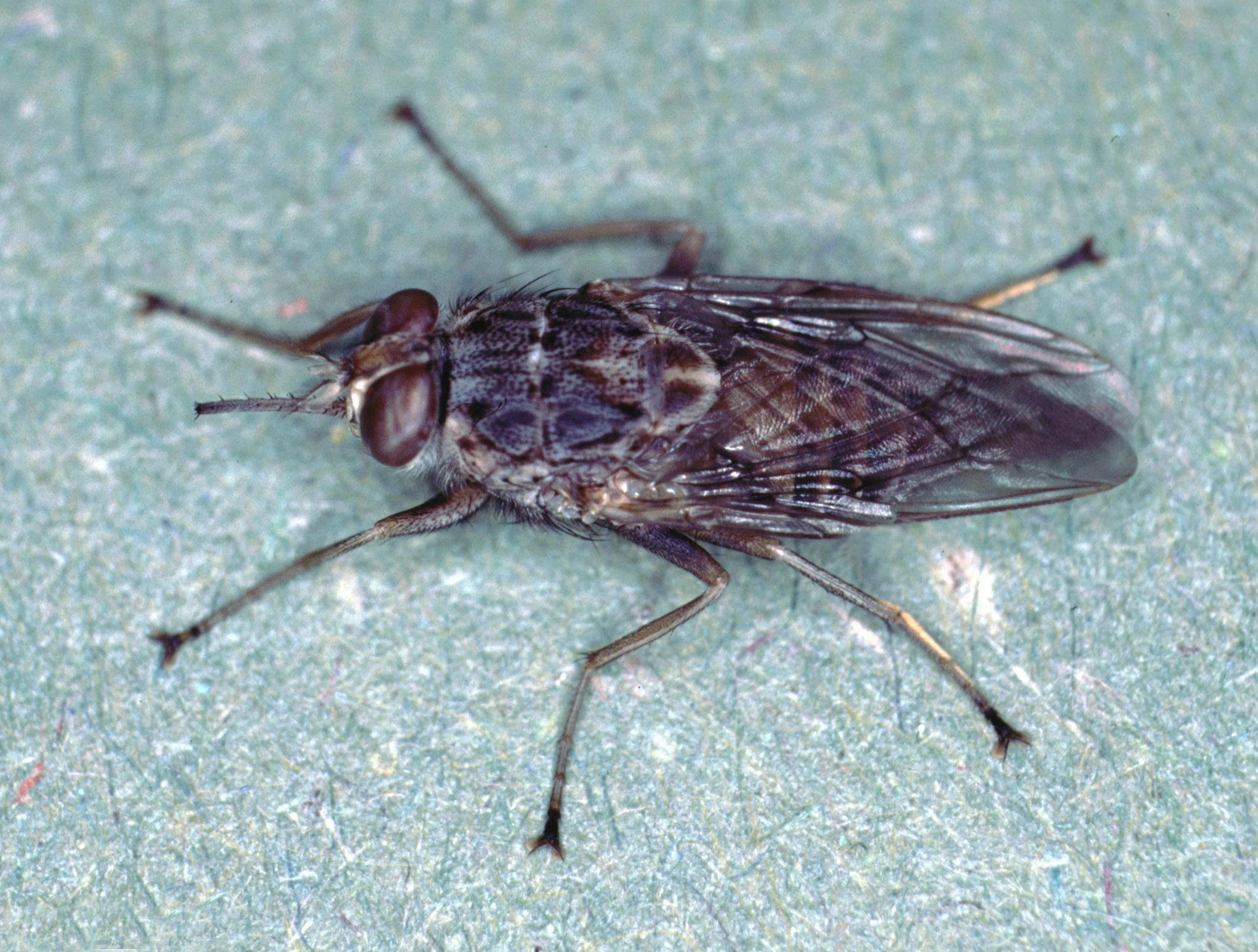
The insectary provided standardised material for experiments, alongside laboratory support and a library. These resources matter because a research proposal must become repeatable work. A photograph of a tsetse fly illustrates one research subject; it cannot establish which experiment was performed, when it occurred or whether a particular control method succeeded.
Sources for this section: [3]
Training was part of the institutional design
The academy finding aid describes research directors guiding associates and training African researchers, with links to laboratories abroad. Expertise was to circulate through an institution rather than disappear when a single visiting scientist left. The archive catalogue also identifies governing-board minutes, grant files and personnel records through which that arrangement could be investigated further.
The early annual report records several training routes and activities, including graduate work and technical skills. Such entries document provision, not an automatic measure of later scientific independence or farmer benefit. Evaluating those outcomes would require following trainees, publications, field results and adoption over time.
An original record-comparison exercise
Assess this claim: an international charter created icipe in 1986, so its scientific work and training could not have begun in 1970. Use the signed early report, archive finding aid and later history. Identify the strongest evidence for chronology and one further record needed to assess results.
Suggested answer: the early director’s report explicitly dates legal establishment to 1970, while the later history identifies the charter as a change of status. The finding aid describes a committee established in 1970 and earlier preparatory records. A claim about the effectiveness of a pest-control technique would need experimental or field evidence; none of these institutional dates alone proves it.
Continue the chronology
Related history guides
Connected biographies
Different approaches to African research capacity
1931–2003
Thomas Odhiambo
Entomologist, insect physiologist and scientific institution builderThomas Risley Odhiambo was a Kenyan entomologist who studied insect physiology and helped build research institutions in Africa. His work ranged from East African bugs to hormonal control in locusts and reproduction in tsetse flies, alongside founding leadership of icipe.Read biography1953–2017
Calestous Juma
Science, technology and development-policy scholarCalestous Juma was a Kenyan scholar who studied how technological change interacts with institutions, education and economic development. His career connected teaching and science journalism with an African policy institute, the biodiversity convention secretariat and Harvard.Read biographyQuick answers
Common questions
- What does icipe stand for?
- International Centre of Insect Physiology and Ecology.
- Was icipe founded in 1970 or 1986?
- The early director’s report dates legal establishment to 7 April 1970. The 2020 history identifies 1986 as a later intergovernmental-charter milestone.
- Did Calestous Juma found icipe?
- No. Thomas Odhiambo was its founding director. Juma later founded the different African Centre for Technology Studies.
Primary and institutional sources
How this history was checked
Read the academy finding aid through its indexed institutional text, relevant pages of the digitised early report and the 2020 history. Rendered scans checked for the legal-establishment date and the later account of programme infrastructure. The archive files themselves, original charter and experiment notebooks were not inspected. The comparison and exercise are original editorial work, not an efficacy study. This article was reviewed on 27 October 2026.
- American Academy of Arts and Sciences ArchivesRG XXI-B: joint committee for icipe, 1968–1985, finding aid
- icipe / Thomas R. OdhiamboSeventh annual report, 1979: tenth anniversary, director’s statement dated 14 March 1980
- Liz Ng’ang’a / icipeInsects for Life: A Brief History of icipe at 50, 2020, opening institutional chapters
- Alan R Walker / Wikimedia CommonsGlossina-morsitans.jpg: subject photograph and CC BY-SA 3.0 record