In this biography
Quick facts
- Born
- 30 July 1973
- Birthplace
- Faridabad, Haryana, India
- Country
- India
- Nationality
- Indian
- Known for
- Hindi and Kannada playback, Sa Re Ga Ma, Deewana and the Kal Ho Naa Ho title song
- Musical teachers
- Mohd Tahir in Delhi and Ustad Ghulam Mustafa Khan in Mumbai
- Television
- Associated with Sa Re Ga Ma from its 1995 beginnings
- Film award
- Best Male Playback Singer, 51st National Film Awards, for Kal Ho Naa Ho
- Civilian honour
- Padma Shri, 2022
Why this life matters
His career joins technical vocal control with character-specific restraint, while television and concerts make the playback singer visible beyond the screen actor.
Timeline
Key moments
Born in Faridabad
A singing household and childhood stage appearances preceded film work.
Working in Mumbai
He sought recording work after years of performing with his father.
Sa Re Ga Ma
Television made the young singer a familiar presenter.
Playback and pop recordings
Film songs developed alongside albums including Deewana.
Kal Ho Naa Ho
The 2003 song received recognition at the following year’s 51st National Film Awards.
Padma Shri
The national civilian honour recognised his contribution to art.
A Kannada-language controversy and apologies
Remarks at a Bengaluru concert prompted a police case, criticism and renewed apology in October 2026.
A performer’s childhood and a musical education
Sonu Nigam was born on 30 July 1973 in Faridabad. His father, Agam Kumar Nigam, was a singer, and his own stage work began in childhood. The National Film Awards catalogue and the 2022 Padma profile place that early performing experience before an adult recording career.
The Padma account names Mohd Tahir in Delhi and Ustad Ghulam Mustafa Khan in Mumbai as teachers. Nigam has publicly credited his gurus for what he knows. This is a musical education through training and performance; an unsupported university degree is not required to make the career legible.
Mumbai recording work and a television audience
Nigam moved to Mumbai as a young adult and sought work across an industry in which singing skill alone did not guarantee an assignment. In a September 2026 Billboard India interview, he recalled the intensity of those early recording years and his willingness to accept work. It is his retrospective account of effort, rather than an independently measured daily productivity record.
Sa Re Ga Ma, associated with him from 1995, made his face familiar alongside his voice. Television placed an emerging singer between established musicians and new contestants. That public role complemented playback, where an audience ordinarily sees the actor performing to a singer’s recording.
Film songs, pop albums and different vocal assignments
His career expanded through Hindi film songs, Kannada work and recordings beyond cinema. Deewana belongs to the pop-album side of that career, while playback requires attention to a composer’s tune and a screen character’s situation. The categories overlap in audiences but ask different things of the performer.
The 51st National Film Awards recognised his singing of the Kal Ho Naa Ho title song. That performance is especially useful because its emotional weight does not depend on displaying every possible embellishment. The composer’s account describes a deliberate move towards simpler singing.
Kal Ho Naa Ho and the craft of doing less
Shankar–Ehsaan–Loy composed the song, Javed Akhtar wrote its words and Nigam sang for Shah Rukh Khan’s screen presence. In the composers’ later interview, Ehsaan Noorani recalled that Nigam asked to record it again with a simpler delivery. The testimony points to an artistic decision rather than a claim that an effortless-sounding take required no work.
Director Nikkhil Advani’s recollection links the recurring theme with Aman’s mortality and the film’s final emotional effect. Singer, actor, writer, composer and director contribute at different stages. Describing the achievement as only one performer’s success would obscure the collaboration that gives the recording its dramatic job.
Multilingual popularity and a damaging public remark
Kannada music is a substantial part of Nigam’s professional identity. That context made his April 2025 Bengaluru concert remarks particularly consequential: after objecting to a demand for a Kannada song, he made a comparison with the Pahalgam attack. A complaint led to an FIR; he said his criticism concerned particular audience members and later apologised.
The disagreement persisted into October 2026. The Indian Express reported a renewed video apology and the withdrawal of a threatened protest before a scheduled Bengaluru concert. These are dated public statements and reported police proceedings, not a finding of guilt or a verified account of how the later concert ultimately unfolded.
Recognition and an ongoing stage career
Nigam received the Padma Shri in 2022. The civilian honour and his National Film Award recognise different kinds of achievement and belong to different dates. The 2026 Billboard interview places him in an active period of touring and reflection on a career that also includes acting and other experiments.
His significance lies in the changing relations among studio, television and stage: the invisible playback voice can become a presenter, a pop-recording artist or the centre of a concert. Following those roles separately makes both his musical decisions and the consequences of public speech easier to understand.
Quick answers
Frequently asked questions about Sonu Nigam
- Who sang the Kal Ho Naa Ho title song?
- Sonu Nigam, with music by Shankar–Ehsaan–Loy and words by Javed Akhtar. Shah Rukh Khan is the principal screen performer in its video.
- Was his National Film Award in 2003 or 2004?
- It recognised the 2003 film’s song at the 51st National Film Awards, held in 2004. Film year and award ceremony year are different.
- Does he sing only in Hindi?
- No. Kannada is another major part of his career, alongside work in several other languages and non-film recordings.
Keep exploring
Lives connected to this story
- Shah Rukh Khan
Read about the actor whose screen performance carries the Kal Ho Naa Ho title song.
- Shreya Ghoshal
Compare another singer’s training and character-specific playback work.
Sources and further reading
Explore the evidence
These references support the biography and offer further reading. Official records, first-person accounts and independent reporting provide different perspectives; image records document attribution and licensing.
- 1. Ministry of Home Affairs / PIB28 March 2022 Padma profile: date, training and television
Official profile supports birth date, teachers, television and 2022 honour. Its first-ever television claim and precise song/language totals are not repeated.
- 2. Directorate of Film Festivals51st National Film Awards catalogue: Sonu Nigam
National catalogue supports Faridabad and 51st awards; the 2003 film year is separated from the 2004 ceremony.
- 3. Anand Singh / Billboard India17 September 2026 interview on early work and touring
- 4. Cinema Express2022 statement crediting musical teachers
- 5. Sony Music IndiaKal Ho Naa Ho official title video: creative credits
- 6. The Hollywood Reporter India / Shankar–Ehsaan–Loy interview2024 recollection of a deliberately simpler vocal take
- 7. Roshmila Bhattacharya / Rediff2025 Nikkhil Advani interview: theme and film narrative
- 8. The Indian ExpressMay 2025 reporting: complaint and Nigam’s explanation
- 9. The Indian Express20 October 2026 apology and protest update
20 October 2026 report updates the 2025 dispute. No legal disposal or 24 October concert outcome is invented.
- 10. Wikimedia Commons / Vaikoovery2011 peace-rally photograph and dual-licence options
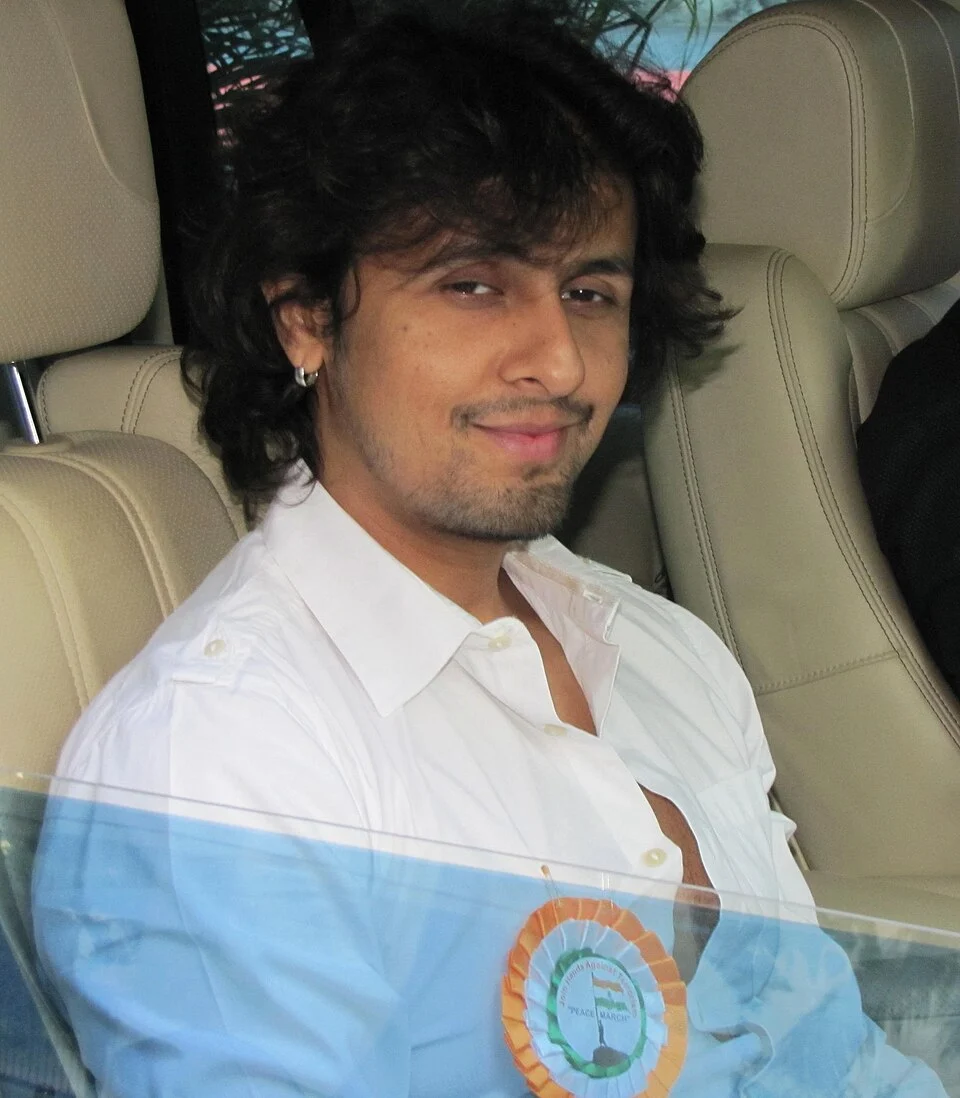
Photographer’s own-work CC BY 3.0 option selected. Complete same-record preview used after two original 429s, retaining badge and car window.