In this biography
Quick facts
- Born
- 25 June 1946
- Birthplace
- Denekamp, Netherlands
- Country
- Canada
- Nationality
- Canadian
- Known for
- Commanding UNAMIR during Rwanda’s 1994 genocide and advocating for children and veterans
- Military education
- Royal Military College graduate, 1969
- UNAMIR force commander
- October 1993–August 1994
- Senate service
- 2005–2014
- Later work
- Children in armed conflict and veterans’ mental health
Why this life matters
Dallaire made the limits of international protection and the lasting injuries of military service central subjects of Canadian public debate, while developing prevention work beyond his command career.
Timeline
Key moments
A Canadian military upbringing
Born in the Netherlands, grows up in Canada and graduates from the Royal Military College in 1969.
Artillery, brigade and training commands
Commands Canadian artillery and brigade formations and the military college at Saint-Jean.
United Nations command in Rwanda
Leads UNAMIR, sends warnings and remains during the genocide as the mission’s resources and mandate prove inadequate.
Military release and an account of Rwanda
Medically released in 2000; publishes Shake Hands with the Devil in 2003.
A senator for Quebec
Works on human rights, defence and veterans’ issues before resigning effective 17 June 2014.
Preventing children’s use in war
Develops the initiative that becomes the Dallaire Institute for Children, Peace and Security; continues writing and advocacy.
An overseas birth and education in Canada
Roméo Dallaire was born in Denekamp in the Netherlands on 25 June 1946, the son of a Canadian soldier and a Dutch mother. Raised and educated in Canada, he entered a family tradition of military service. His later public identity as a Canadian officer therefore began with a life connecting wartime Europe and postwar Canada.
He studied at the military colleges at Saint-Jean and Kingston, graduating from the Royal Military College in 1969 with a science degree. Further command and staff education in Canada and abroad prepared him for training and operational responsibilities. These years matter because his later Rwanda assignment followed an established professional career, rather than being his first encounter with military leadership.
Army command led to a difficult peacekeeping assignment
Dallaire’s Canadian appointments included command of the 5e Régiment d’artillerie légère du Canada, the 5th Canadian Mechanized Brigade Group and the military college at Saint-Jean. He worked in staff, training and command roles before United Nations service in Africa. He later reached lieutenant-general, reflecting a career wider than the rank he held during the Rwanda mission.
In 1993 he commanded the UN observer mission on the Uganda–Rwanda border and then the United Nations Assistance Mission for Rwanda, UNAMIR. The latter was intended to assist implementation of the Arusha peace agreement. The UN records his force command from October 1993 to August 1994, distinguishing it from the mission’s longer existence.
Warnings did not produce an adequate international response
On 11 January 1994 Dallaire relayed an informant’s warning about preparations to kill Tutsi and proposed action against weapons caches. UN headquarters rejected that operation as outside the mandate. When the genocide began in April, the mission faced killings, renewed war, broken command arrangements and the withdrawal of national contingents. A reduced UN force remained under his command.
The 1999 independent inquiry found failures throughout the UN system. It also said Dallaire should have sent the January warning to more senior recipients, while headquarters failed to inform the Secretary-General and Security Council. His efforts to protect people deserve attention alongside that institutional scrutiny. Neither individual heroism nor the weakness of one commander alone explains the international failure.
Returning home began a long struggle with injury
After Rwanda, Dallaire held further Canadian command responsibilities, but the psychological effects of the mission persisted. He was medically released from the military in 2000 because of post-traumatic stress disorder. Speaking publicly about that injury made recovery and the treatment of veterans part of his subsequent public service.
Shake Hands with the Devil, published in 2003, brought his account of Rwanda to a wide readership and won the Governor General’s nonfiction award in 2004. Later writing included Waiting for First Light and The Peace. His accounts connect memory with continuing treatment, relationships and advocacy. Recovery appears as an ongoing process, rather than a simple resolution achieved by leaving military life.
Senate work connected human rights with veterans’ needs
Appointed to the Senate in 2005, Dallaire represented Quebec until 2014. His work included human rights, Indigenous affairs, defence and anti-terrorism committees, as well as chairing the veterans subcommittee. These parliamentary responsibilities gave him another setting in which to question how public institutions treated people affected by violence and service.
Announcing his resignation on 28 May 2014, he said the demands of Senate duties were limiting the international causes he could pursue. The resignation took effect on 17 June. He promised to continue advocating for veterans and their families, while making the prevention of children’s use in war a leading international commitment. Leaving the chamber was a change of platform, not the end of public work.
Child protection became a programme of prevention
Founded in 2007, the initiative bearing Dallaire’s name developed into the Dalhousie-based Dallaire Institute for Children, Peace and Security. Its approach brings research, advocacy and military and police training to preventing the recruitment and use of children in armed violence. The institute co-developed the 2017 Vancouver Principles with the Canadian government.
This work connects lessons from Rwanda with changes to professional practice before another crisis. It also extends beyond one person: researchers, trainers, governments and affected communities carry the programme. Dallaire’s later career combines this prevention agenda with books and advocacy about veterans’ mental health. His lasting significance lies partly in keeping those responsibilities visible after the immediate attention to a military mission has faded.
Quick answers
Frequently asked questions about Roméo Dallaire
- Was Dallaire in command throughout UNAMIR’s existence?
- No. The UN lists his force command as October 1993–August 1994. UNAMIR continued under other commanders until 1996.
- Did the UN completely withdraw from Rwanda in April 1994?
- No. National contingents withdrew and the Security Council authorized a sharply reduced mission of 270 military personnel. A residual UN presence remained.
- When did Roméo Dallaire leave the Senate?
- He announced his resignation on 28 May 2014, effective 17 June 2014, to devote more time to humanitarian and other public work.
- What did Dallaire do after his military career?
- He wrote about Rwanda and psychological injury, served in the Senate, advocated for veterans and helped develop prevention work on children’s recruitment and use in armed conflict.
Keep exploring
Lives connected to this story
- Beverley McLachlin
Compare another Canadian career concerned with rights, public responsibility and the limits of institutional authority.
- Lester B. Pearson
Place the Rwanda mission beside the earlier development of United Nations peacekeeping during the Suez crisis.
- Agnes Macphail
Compare a different parliamentarian’s sustained scrutiny of how institutions treat vulnerable people.
Sources and further reading
Explore the evidence
These references support the biography and offer further reading. Official records, first-person accounts and independent reporting provide different perspectives; image records document attribution and licensing.
- 1. Roméo Dallaire Child Soldiers InitiativeFounder biography: Roméo A. Dallaire
The founder biography supplies the birth date, education and later advocacy. Its simplified description of total UN withdrawal is not adopted: the UN mission records and inquiry establish a continuing reduced presence.
- 2. Veterans Affairs CanadaRoméo Dallaire: military service, writing, recovery and advocacy, updated 24 February 2026
The dated institutional profile was read, including its recovery and later-life passages. It gives 1963 for joining and 1990–1993 for Saint-Jean command; another institutional biography gives different early-service dates. Those disputed dates are omitted rather than silently reconciled.
- 3. Senate of CanadaRoméo Antonius Dallaire: announcement of resignation, Hansard, 28 May 2014
- 4. Radio Canada InternationalLynn Desjardins: General who led in Rwanda, will quit Senate, 28 May 2014
The indexed article body was read; direct retrieval returned a cache miss. It independently corroborates the announced resignation and humanitarian and mental health work; its compressed withdrawal account is not used.
- 5. Dalhousie University / Dal NewsEmm Campbell: New $2M gift bolsters Dallaire Institute’s work to end recruitment of child soldiers, 3 November 2023
- 6. United Nations PeacekeepingUNAMIR: force commanders, authorized strength and mission duration
- 7. United Nations PeacekeepingUNAMIR: original and revised mandates under resolutions 872, 912 and 918
- 8. United Nations PeacekeepingUNAMIR: background and the April 1994 decision to retain a reduced mission
- 9. United Nations / Independent InquiryReport of the Independent Inquiry into UN actions during the 1994 genocide in Rwanda, S/1999/1257, 15 December 1999
The original 84-page PDF was downloaded. Its scanned pages 3–5 and 33–36 were rendered and read. The account preserves criticism of cable escalation, follow-up, engagement rules and command arrangements; this is a selected-page reading, not a claim to have read all 84 pages.
- 10. Human Rights Watch / International Federation of Human RightsAlison Des Forges: Leave None to Tell the Story, Warnings, March 1999
- 11. Wikimedia Commons / Mykola SwarnykRomeo Dallaire 2025: photographer’s own work under CC BY-SA 4.0
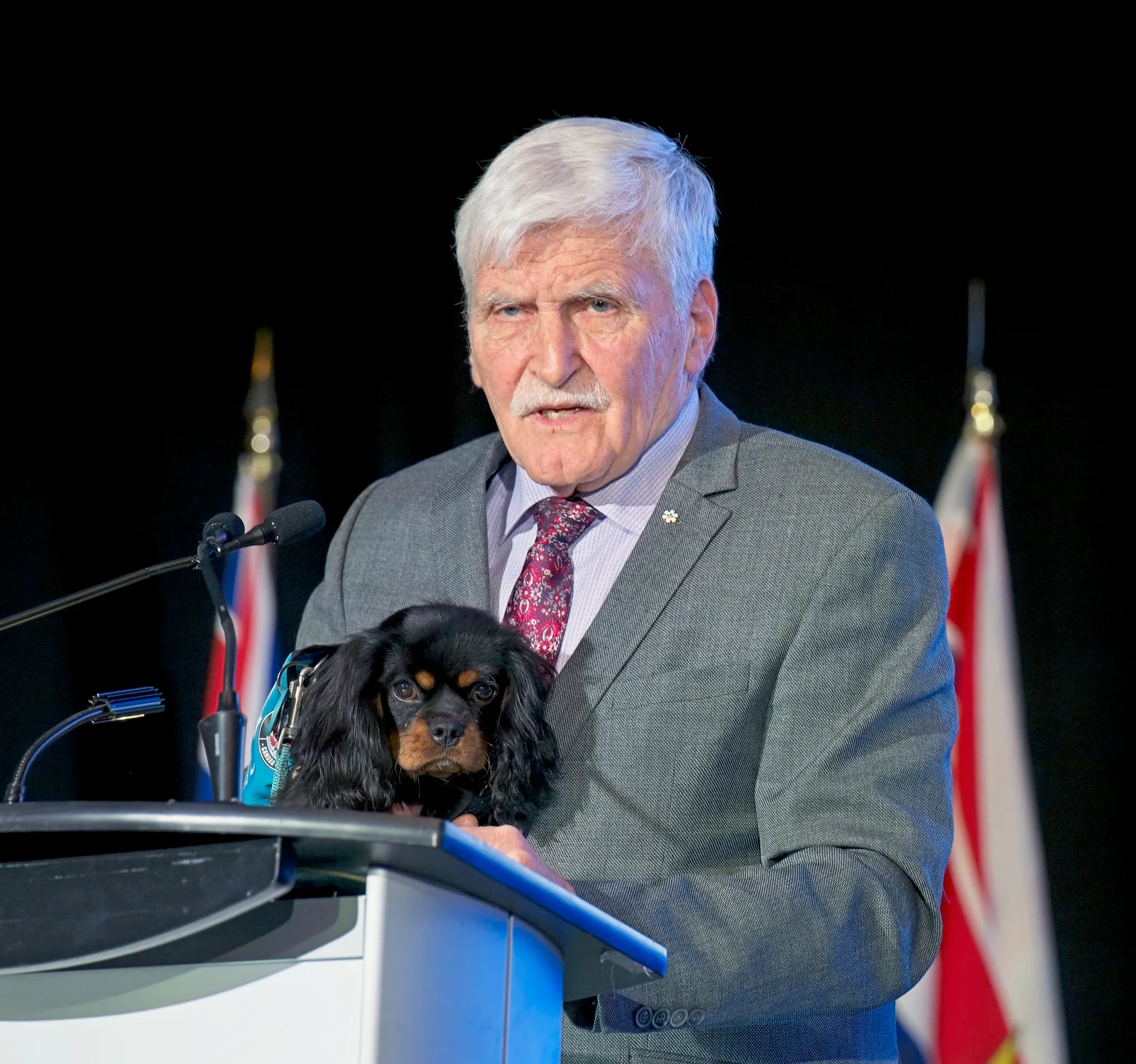
The photographer’s own-work self-licence and single complete supplied image version were read through the Commons API. The 2025 photograph is illustrative and does not depict the Rwanda mission.