In this biography
Quick facts
- Born
- 7 September 1943
- Birthplace
- Pincher Creek, Alberta
- Country
- Canada
- Nationality
- Canadian
- Known for
- Canada’s first woman chief justice and its longest-serving chief justice
- Education
- Philosophy and law, University of Alberta
- Supreme Court appointment
- 1989
- Chief Justice of Canada
- 2000–2017
- Hong Kong court service
- Non-permanent judge, 2018–2024
Why this life matters
McLachlin’s career connects women’s entry into senior legal office with constitutional interpretation, collegial court leadership and contested questions about judicial independence abroad.
Timeline
Key moments
Alberta upbringing and university
Grows up near Pincher Creek; earns a philosophy BA in 1965 and philosophy MA and law degree in 1968.
Practice and teaching
Called to the Alberta and British Columbia bars; begins teaching at the University of British Columbia in 1974.
A progression through British Columbia courts
Moves from the county court to provincial superior and appellate courts, then joins the Supreme Court of Canada in 1989.
Chief Justice of Canada
Becomes the first woman to hold the office and serves for nearly eighteen years.
The collective Carter judgment
Sits among the nine justices who unanimously decide the constitutional assisted-dying appeal.
International judging and books
Serves on Hong Kong’s Court of Final Appeal; publishes legal fiction and a memoir, with Proof appearing in 2024.
Philosophy and law grew from an Alberta upbringing
Beverley McLachlin was born in Pincher Creek, Alberta, on 7 September 1943 and grew up in a rural family near the town. Her parents encouraged education despite limited resources and the expectations facing women of her generation. Her later recollections connect that upbringing with an interest in people whose access to opportunity and justice was uncertain.
At the University of Alberta she completed an honours BA in philosophy in 1965, followed by both a philosophy MA and a law degree in 1968. Philosophy offered a way to test arguments; law joined those intellectual questions to decisions affecting actual lives. That combination preceded her movement into practice, teaching and the judiciary.
Practice and teaching preceded the judicial appointments
Called to the Alberta bar in 1969 and the British Columbia bar in 1971, McLachlin practised in both provinces. In 1974 she began seven years of teaching law at the University of British Columbia. Academic work was therefore a substantial part of her early career, alongside the experience of serving clients.
Her judicial career began in Vancouver County Court in April 1981. Appointment to the Supreme Court of British Columbia followed that September, to the provincial Court of Appeal in 1985 and to the chief justiceship of the provincial Supreme Court in 1988. Her appointment to Canada’s highest court in 1989 followed experience across several levels of judging.
Leading a court required more than individual judgments
On 7 January 2000 McLachlin became Chief Justice of Canada, the first woman to hold that office. Her tenure lasted until her December 2017 retirement and remains the longest in the office’s history. Its work ranged across criminal justice, Indigenous rights and the interpretation of constitutional guarantees.
Leadership also involved the institution around the judgments. She chaired the Canadian Judicial Council and the National Judicial Institute’s board, while encouraging discussion among colleagues who could disagree sharply about the law. Her university interview describes consensus as an ambition alongside willingness to dissent. The resulting decisions belonged to their participating judges, rather than automatically expressing one chief justice’s personal programme.
Carter illustrates both constitutional change and collective authorship
McLachlin was one of nine justices in Carter v. Canada, decided on 6 February 2015. The unanimous judgment held that the criminal prohibition on physician-assisted dying violated section 7 of the Charter within the circumstances defined by the Court. Its reasons were issued in the name of the Court, without identifying McLachlin as their individual author.
The declaration of invalidity was suspended for twelve months, leaving governments time to respond. This distinction between constitutional ruling and subsequent legislation is essential to understanding her public role. A chief justice participated in adjudication; Parliament and other institutions then faced separate responsibilities. The 2015 judgment is a historical milestone, rather than a complete statement of present eligibility rules.
Writing opened another form of public conversation
Retirement from Canada’s Supreme Court did not end McLachlin’s engagement with law or public audiences. Her fiction uses the courtroom as a setting for stories about evidence, judgment and human vulnerability. Full Disclosure introduced defence lawyer Jilly Truitt; Denial and Proof continued the series, with the publisher dating the cited Proof edition to September 2024.
Her memoir Truth Be Told appeared in 2019. It brought professional experiences together with the sexism, exclusion and personal losses described in her life story. Fiction and memoir broadened the ways readers encountered her after her judicial career. They also supplied different kinds of writing from the carefully reasoned institutional voice required in a court judgment.
Hong Kong service brought a disputed test of independence
McLachlin served as a non-permanent judge of Hong Kong’s Court of Final Appeal from 2018 to 2024. Overseas judges’ continued participation became controversial as critics questioned judicial independence under the territory’s national security framework. Her decision to remain exposed her to criticism over whether their presence protected legal institutions or lent them legitimacy.
In June 2024 she said she would finish her term in July, citing age and time with family while expressing confidence in the court’s members and independence. Other departing judges offered different assessments. Hong Kong’s official former-judge record confirms that her tenure ended in 2024. That later chapter belongs beside her Canadian achievements in any assessment of her career.
Quick answers
Frequently asked questions about Beverley McLachlin
- Was Beverley McLachlin Canada’s first woman chief justice?
- Yes. She became Chief Justice of Canada on 7 January 2000 and retired in December 2017, after the longest tenure in that office.
- Did McLachlin personally write the Carter judgment?
- The published 2015 reasons are attributed to the Court collectively. She was one of the nine participating justices; the judgment does not identify her as its individual author.
- Does McLachlin still sit on Hong Kong’s Court of Final Appeal?
- Her documented non-permanent tenure ended in 2024. The court lists her among its former judges.
- What did she write after leaving Canada’s Supreme Court?
- Her books include the memoir Truth Be Told and the Jilly Truitt legal novels Full Disclosure, Denial and Proof.
Keep exploring
Lives connected to this story
- Roméo Dallaire
Compare another Canadian public servant’s work on human rights and the responsibilities of institutions.
- Kim Campbell
Read about a different first woman to reach a leading Canadian public office.
- Pierre Trudeau
Follow the political history surrounding Canada’s 1982 Charter of Rights and Freedoms.
Sources and further reading
Explore the evidence
These references support the biography and offer further reading. Official records, first-person accounts and independent reporting provide different perspectives; image records document attribution and licensing.
- 1. Supreme Court of CanadaThe Right Honourable Beverley McLachlin: former judge biography
The official page distinguishes the appointment and swearing-in in 1989 and gives 14 December 2017 as the end of service in its heading while describing retirement on 15 December in the narrative. The biography uses years and December 2017 rather than conflating these milestones.
- 2. OCLC / WorldCat EntitiesBeverley McLachlin: authoritative entity, birth date and birthplace
- 3. University of Alberta / Faculty of LawCurtis Gillespie: A Justice For All, 12 August 2019
- 4. Hong Kong Court of Final AppealFormer Non-Permanent Judge: Beverley McLachlin, 2018–2024
- 5. Associated PressTop Canadian judge will step down from Hong Kong’s top court following other resignations, 10 June 2024
The indexed AP article body was read; direct page retrieval was blocked. It reports differing assessments by departing judges and McLachlin’s stated reasons, rather than proving any judge’s view of independence.
- 6. Simon and Schuster CanadaTruth Be Told memoir announcement, 13 March 2019
- 7. Simon and Schuster CanadaProof: official publisher page, 17 September 2024 edition
- 8. Supreme Court of CanadaCarter v. Canada (Attorney General), 2015 SCC 5, judgment of 6 February 2015
The Court’s original HTML reasons were read through its iframe URL, including the collective authorship table and selected factual, section 7 and remedy paragraphs. No present medical or legal eligibility advice is offered.
- 9. University of Toronto / David Asper Centre for Constitutional RightsCarter v. Canada: section 7, precedent and remedy
- 10. Department of Justice CanadaSupreme Court of Canada ruling: archived account of the suspension and 2016 response
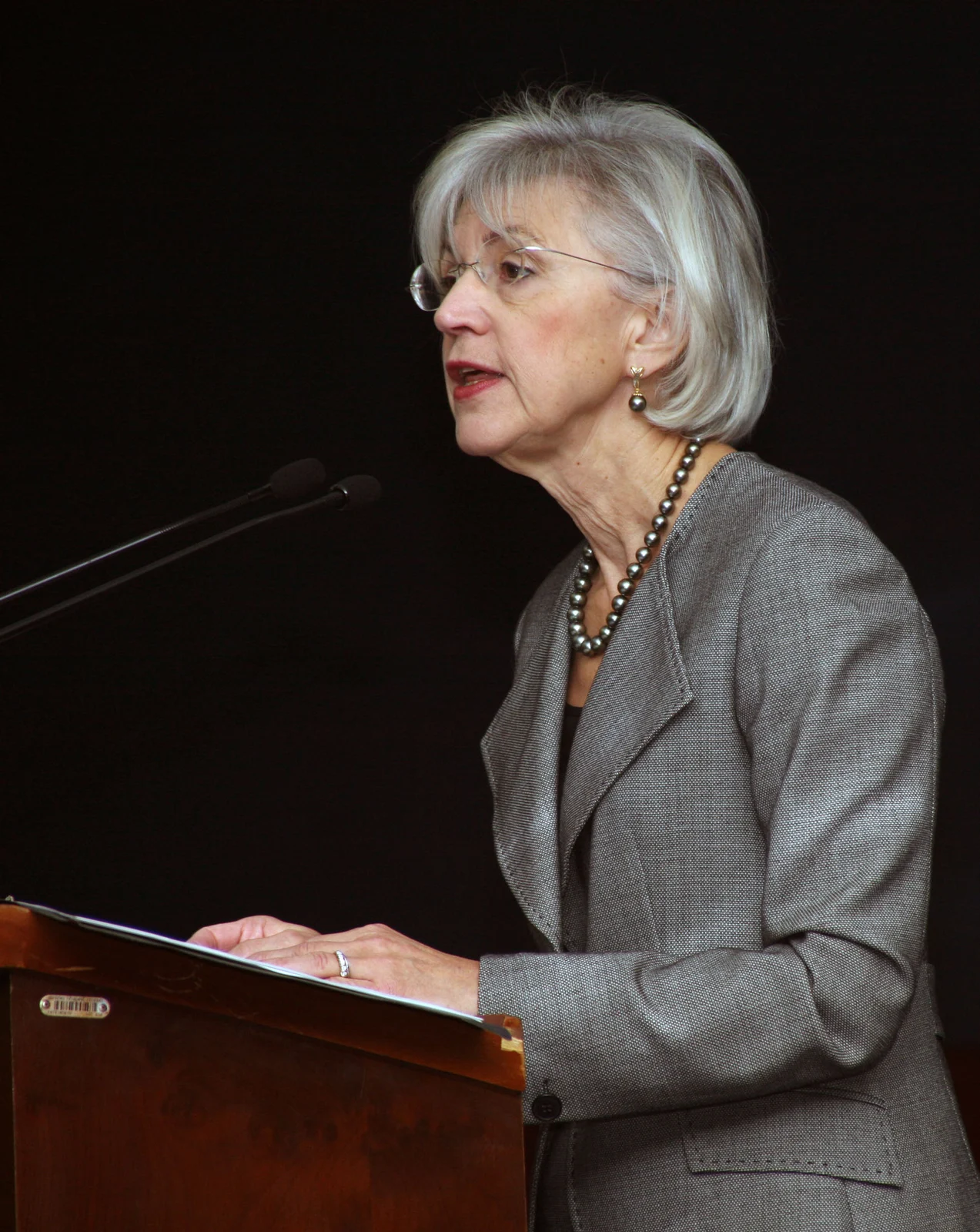
- 11. Wikimedia Commons / Agência BrasilGervásio Baptista: Beverley McLachlin, 20 November 2007; full original and file history
The complete 1772 by 2228 original frame was restored in the 2010 file history after a temporary crop. The agency’s archived positive CC BY 3.0 BR grant was read separately. This 2007 photograph does not depict the Carter hearing.
- 12. Agência Brasil / Internet ArchiveArchived publisher photo gallery with CC BY 3.0 Brazil grant, 27 December 2016