In this biography
Quick facts
- Born
- 13 April 1771
- Died
- 22 April 1833
- Birthplace
- Illogan, Cornwall, England
- Country
- United Kingdom
- Nationality
- English
- Known for
- High-pressure engines and the Penydarren steam locomotive of 1804
- Engineering background
- Cornish mines
- Road demonstration
- Puffing Devil, 1801
- Joint steam patent
- With Andrew Vivian, 1802
- Rail demonstration
- Penydarren, 21 February 1804
- South American venture
- Left for Peru in 1816
Why this life matters
Trevithick established practical possibilities for high-pressure steam that later engineers and manufacturers developed into more reliable transport and industrial systems.
Timeline
Key moments
Born in Cornwall
The son of a mine manager, he grew up around pumping engines.
Steam on the road
The Puffing Devil demonstration preceded a patent with Andrew Vivian.
Penydarren journey
A high-pressure locomotive hauled a load over the ironworks tramroad.
Demonstration and mine power
Catch Me Who Can preceded further work on Cornish pumping engines.
Overseas mining schemes
Work in Peru and Central America ended without lasting wealth.
Death at Dartford
Trevithick died on 22 April in financial difficulty.
Growing up among Cornish engines
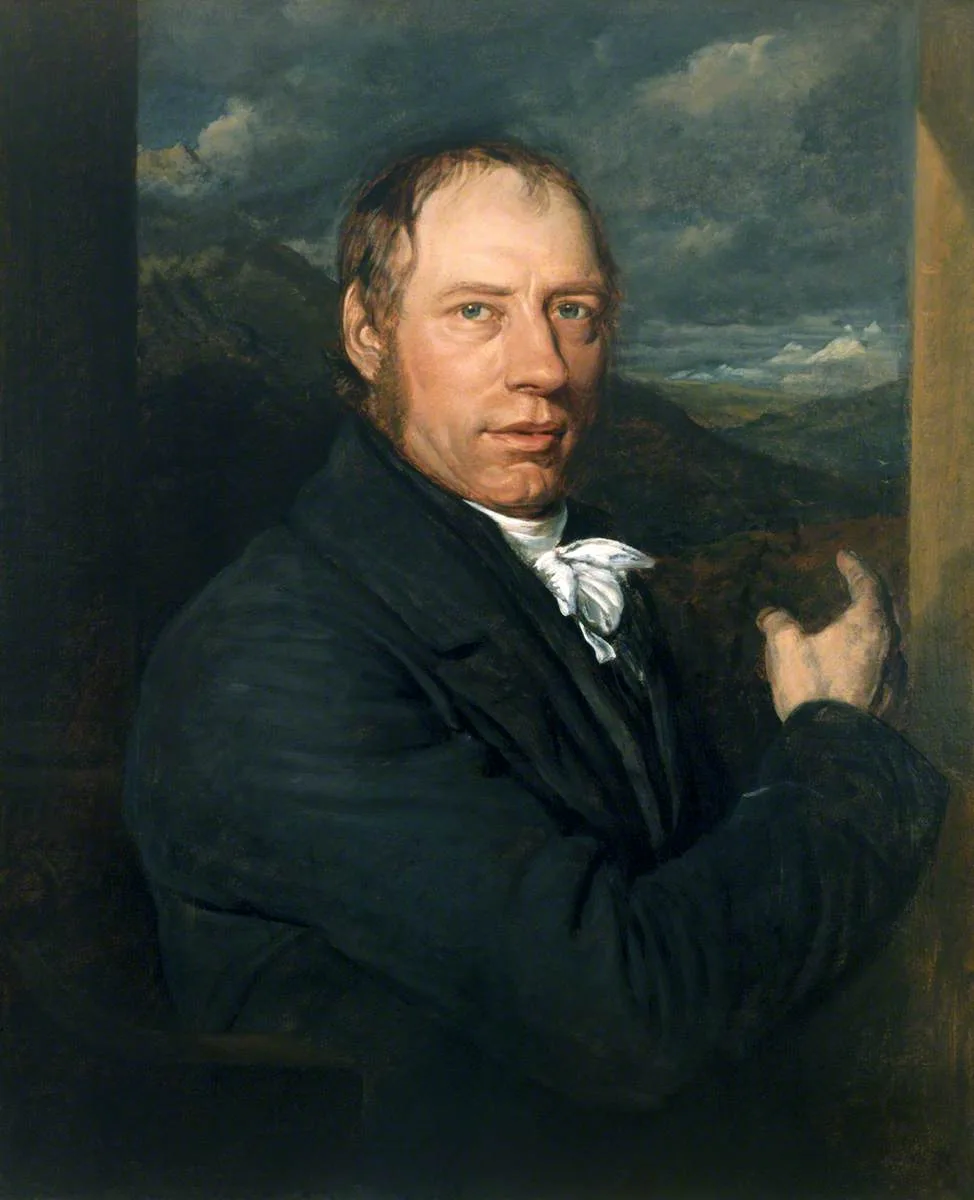
Richard Trevithick was born in Illogan, Cornwall, on 13 April 1771. His father managed mines, and the young Trevithick grew up where pumping, fuel consumption and engine patents had immediate commercial importance. He acquired practical mechanical knowledge through that working environment.
He worked on mine engines during the 1790s and married Jane Harvey, daughter of the Hayle foundry proprietor, in 1797. Mining connections and foundry capacity mattered to the development of his machinery. His career emerged from an established engineering community, with arguments over the respective merits of different engine systems.
Sources for this section: [1]
Why high-pressure steam mattered
Trevithick developed engines using steam at higher pressure than the familiar low-pressure condensing systems associated with Watt. An engine that could work without a large separate condenser offered possibilities for more compact machinery and mobile power.
He did not invent the idea of steam pressure in isolation. His contribution was to make practical arrangements that could be built and applied. Boilers, joints and operating practice also imposed demanding safety requirements: greater pressure was a useful source of power, not a guarantee of reliable operation.
Sources for this section: [1]
Road vehicles and the Penydarren demonstration
The Puffing Devil carried passengers during a road demonstration in Cornwall in 1801. Trevithick and Andrew Vivian obtained a steam-engine patent in 1802, and a further road carriage was demonstrated around London. Poor roads, breakdowns and uncertain finance limited the experiments.
At Samuel Homfray’s Penydarren ironworks in south Wales, Trevithick adapted high-pressure power for a tramroad locomotive. On 21 February 1804 it hauled a substantial load towards Abercynon. Museum Wales identifies this as the first recorded steam-hauled journey on rails. The achievement preceded the Stephensons’ public railway work by two decades.
A locomotive needed a compatible railway
Penydarren’s tramroad had been made for horse-drawn traffic. The locomotive’s weight damaged fragile iron plates, and successful steam movement did not immediately create an economical transport system. It was eventually used as a stationary engine.
Further designs followed, including Catch Me Who Can, which offered paid rides on a circular London track in 1808. It also failed to establish a continuing business. Trevithick demonstrated important possibilities, but locomotives needed track, maintenance, operating arrangements and sustained investment before they could become routine transport.
Mine engines and ventures across the Atlantic
His work extended to pumping, dredging, agricultural power and other machinery. A mine engine at Wheal Prosper in 1812 became an important step in the development of the Cornish engine. The railway experiments were only part of a wider effort to use steam economically.
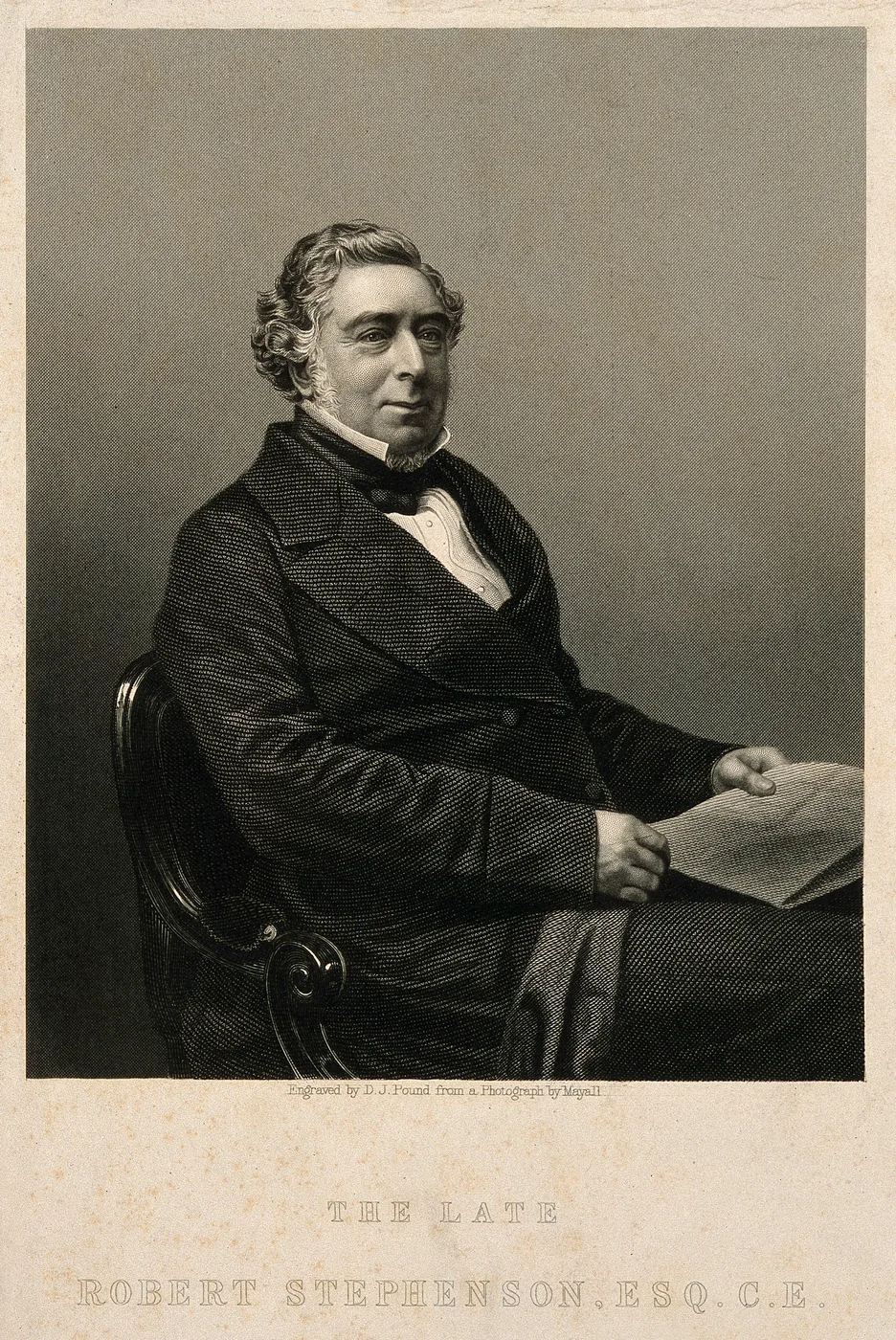
Trevithick sailed for Peru in 1816 to pursue mining projects. Machinery, political upheaval and financial uncertainty made the venture difficult. After further schemes in Central America, he returned to Britain in 1827 with help from Robert Stephenson, whom he encountered at Cartagena.
Sources for this section: [1]
An inventive career without lasting security
Back in Britain, Trevithick proposed further engines and mechanical schemes but did not recover durable financial security. He died at Dartford on 22 April 1833. Workmen contributed to his burial when his debts left no adequate provision.
Later accounts rightly restored attention to his role in high-pressure steam, yet claims to a single father of the railway obscure what followed. Trevithick’s demonstrations, the Stephensons’ manufacturing and railway work, and other engineers’ improvements addressed different stages in making steam transport dependable.
Quick answers
Frequently asked questions about Richard Trevithick
- Was Trevithick’s 1804 locomotive the same as Rocket?
- No. The Penydarren locomotive was Trevithick’s earlier high-pressure machine. Rocket was built at Robert Stephenson & Co for the 1829 Rainhill Trials.
- Why did the Penydarren locomotive not become a regular service?
- The tramroad’s fragile plates were poorly suited to its weight, and the wider operating and commercial system was not ready. Demonstrating steam haulage did not solve track and maintenance problems.
- Did Trevithick become wealthy from his inventions?
- He had periods of paid work and promising ventures but did not retain lasting wealth. His overseas mining schemes and other projects ended in financial difficulty, and he died in debt.
Keep exploring
Lives connected to this story
- James Watt
The low-pressure condensing engines that formed part of Trevithick’s technical background.
- George Stephenson
The later development of locomotives and an operating public railway.
- Robert Stephenson
A later locomotive manufacturer who helped him return from the Americas.
Sources and further reading
Explore the evidence
These references support the biography and offer further reading. Official records, first-person accounts and independent reporting provide different perspectives; image records document attribution and licensing.
- 1. Dictionary of National Biography / WikisourceTrevithick, Richard: historical biography
Read the career, family, overseas venture and death passages. Its 22 February 1804 date and unqualified first-passenger claims are corrected or narrowed against Museum Wales; anecdotal childhood and priority superlatives are omitted.
- 2. Amgueddfa Cymru – Museum WalesBirth of the Railway Locomotive (2020)
The 2020 curator account was read for 21 February 1804, track limitations and the conjectural character of the museum reconstruction.
- 3. Amgueddfa Cymru – Museum WalesRichard Trevithick’s steam locomotive (2009)
The 2009 museum account supplies Homfray and Penydarren context. Its father-of-railways rhetoric is not adopted.
- 4. Science Museum / Wikimedia CommonsLinnell: Richard Trevithick, image and revision record
- 5. Creative CommonsPublic Domain Mark 1.0