
The short answer
The railway opened on 27 September 1825 with a steam-hauled train carrying freight and passengers. Its significance was not that rails, locomotives or passenger travel had never existed before. It brought steam into a public railway enterprise whose daily operation still mixed technologies and required continuing improvement.
Chronology
A timeline of the turning points
Parliamentary authorisation
An Act enabled the railway scheme after earlier opposition and a failed bill.
Steam and passenger powers
A further Act authorised locomotives and passenger carriage, with route changes.
Opening procession
George Stephenson drove Locomotion on the public railway’s ceremonial train.
Early service difficulties
A broken wheel and limited locomotive availability required repairs and horse substitution.
Rebuilding and a different trial
Locomotion was rebuilt after a fatal explosion; Rocket competed at Rainhill in 1829.
Why coal and a route to the Tees mattered
The project sought to connect south-west Durham’s collieries with Darlington and the River Tees at Stockton. Coal movement was central to its commercial purpose. A route to water transport could open markets beyond the immediate mining district, while cheaper land carriage could alter the cost of supplying fuel.
A railway was not the only option considered. Canal proposals competed with rail schemes, and local promoters disagreed about routes and which towns would benefit. The outcome depended on subscriptions, land access, legal work and parliamentary authority as well as a locomotive capable of pulling wagons.
What public railway meant in the 1820s
Public did not mean state-owned. The line was a company undertaking authorised to provide access on payment of tolls, with arrangements that could accommodate independent users. Its legal foundations borrowed from earlier canals and turnpikes. Earlier public railways existed, including lines worked with horses.
The 1823 Act expressly allowed steam locomotion and passenger carriage. Edward Pease, Jonathan Backhouse, solicitors and other promoters helped secure capital and legal powers. The opening’s importance is best stated precisely: a steam-hauled passenger train operated on a public railway. Calling it the first railway of any kind erases important predecessors.
Sources for this section: [4]
Who did what: George, Robert and the Newcastle works
George Stephenson was the railway’s chief engineer and drove the locomotive at the opening. Robert had helped survey the route and was associated with the Newcastle manufacturing firm established in 1823. But he was working in Colombia during 1825, so he should not be placed at the controls or described as supervising the opening in person.
Robert Stephenson & Co built Locomotion No. 1. The company’s name denotes a manufacturing organisation, including partners and skilled workers. Rocket was a different locomotive, built under Robert’s direction for the Rainhill Trials in 1829. Mixing the two turns distinct stages of railway development into one misleading event.
The opening procession and everyday operation
On 27 September 1825 the procession carried coal, other freight and people towards Stockton. The crowd made it a public spectacle, but a successful day did not establish an immediately dependable all-steam service. Horses continued to haul many trains, while stationary engines and inclines also belonged to early railway practice.
The museum’s technical history records a broken locomotive wheel in early October and the use of horses during repairs. A second locomotive arrived before it was ready for satisfactory service. These difficulties explain why repair facilities, operating knowledge and Timothy Hackworth’s later improvements mattered to the railway’s continuing success.
An important beginning with earlier precedents and later costs
Richard Trevithick’s Penydarren locomotive had already demonstrated steam haulage on rails in 1804. It was an antecedent, not part of the 1825 project team. The Stockton and Darlington story concerns a different achievement: sustaining and developing steam within a public transport business.
The risks remained substantial. In 1828 Locomotion’s boiler exploded and killed its driver John Cree; the engine was rebuilt. The preserved locomotive consequently incorporates later work and is not an untouched snapshot of opening day. Railway history includes adaptation, maintenance and loss of life alongside the celebrated journey.
Continue the chronology
Related history guides
Biography context
Explore United Kingdom through connected lives
George Stephenson
The railway’s chief engineer and driver of the opening locomotive.
Explore the biographiesManufacturing and later railwaysRobert Stephenson
The works, overseas absence in 1825, Rocket and subsequent civil engineering.
Explore the biographiesEarlier antecedentRichard Trevithick
The separate 1804 steam-haulage demonstration at Penydarren.
Explore the biographiesConnected biographies
Engineers: project participants and an earlier antecedent
1781–1848
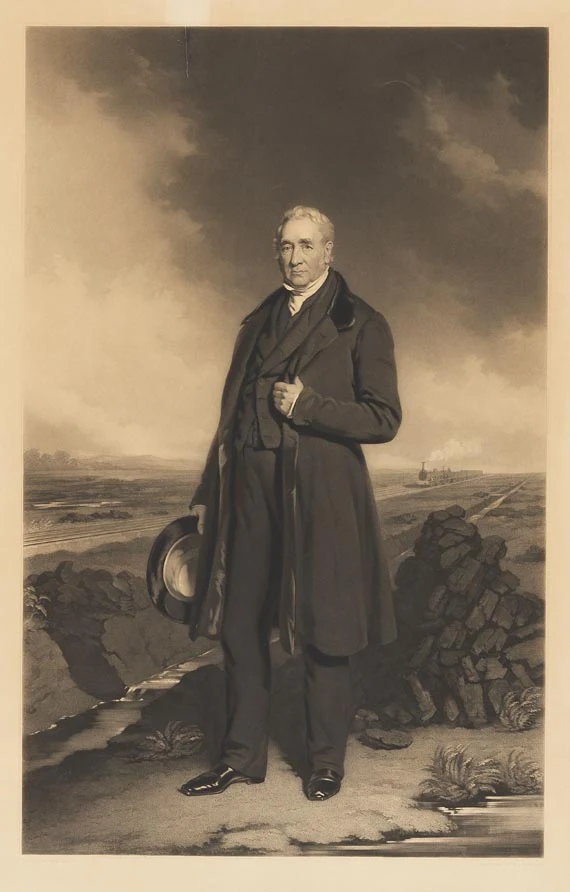
George Stephenson
Colliery engineer, railway engineer and locomotive manufacturerGeorge Stephenson moved from colliery work into engineering, locomotive manufacture and major railway construction. His work on the Stockton and Darlington and Liverpool and Manchester railways helped establish steam transport as a commercial system.Read biography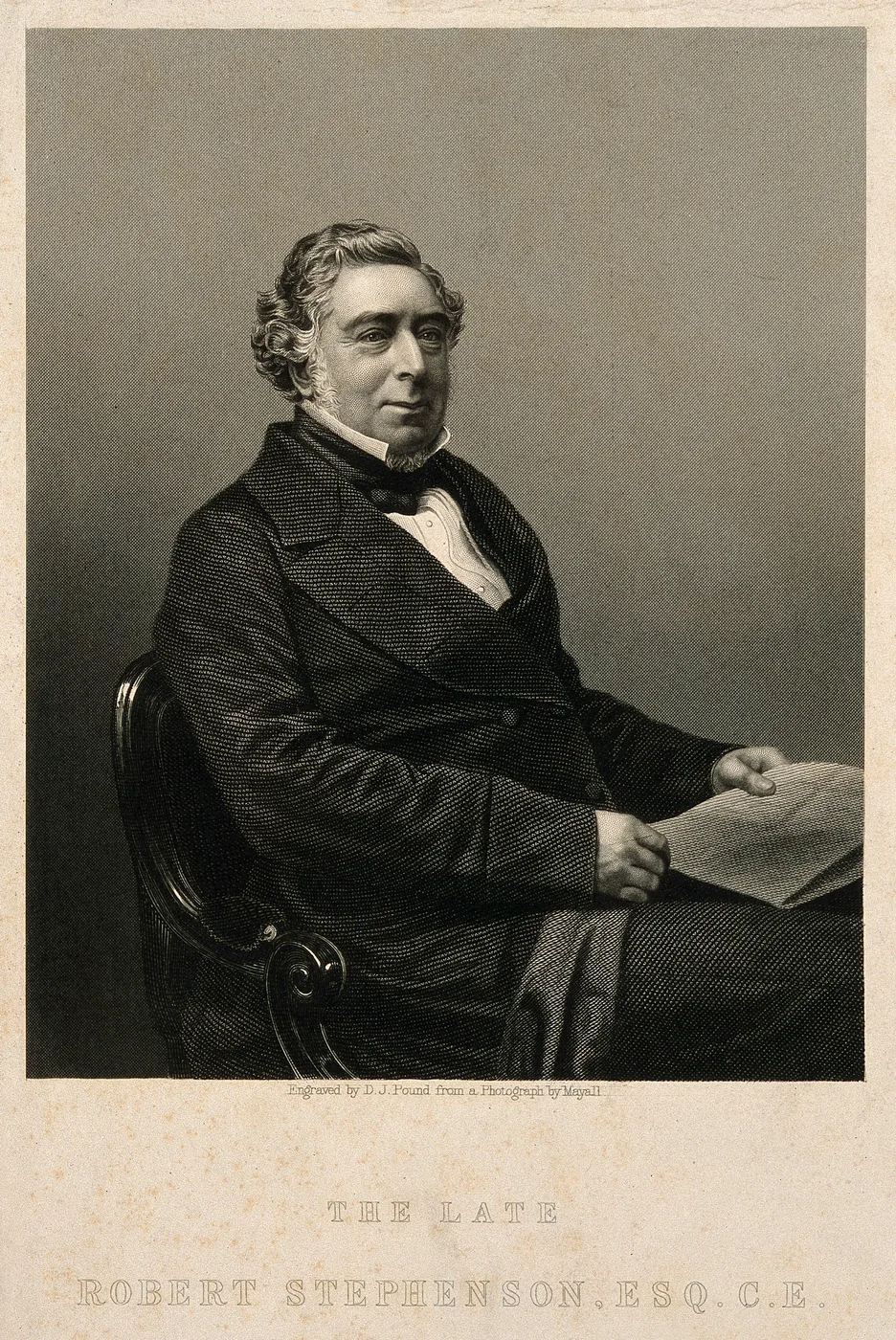
1803–1859
Robert Stephenson
Locomotive manufacturer and civil engineerRobert Stephenson helped turn railway engineering into a large manufacturing and construction enterprise. George Stephenson’s son, he directed locomotive production, led major railway works and designed ambitious bridges, while the fatal Dee bridge collapse exposed the consequences of structural failure.Read biography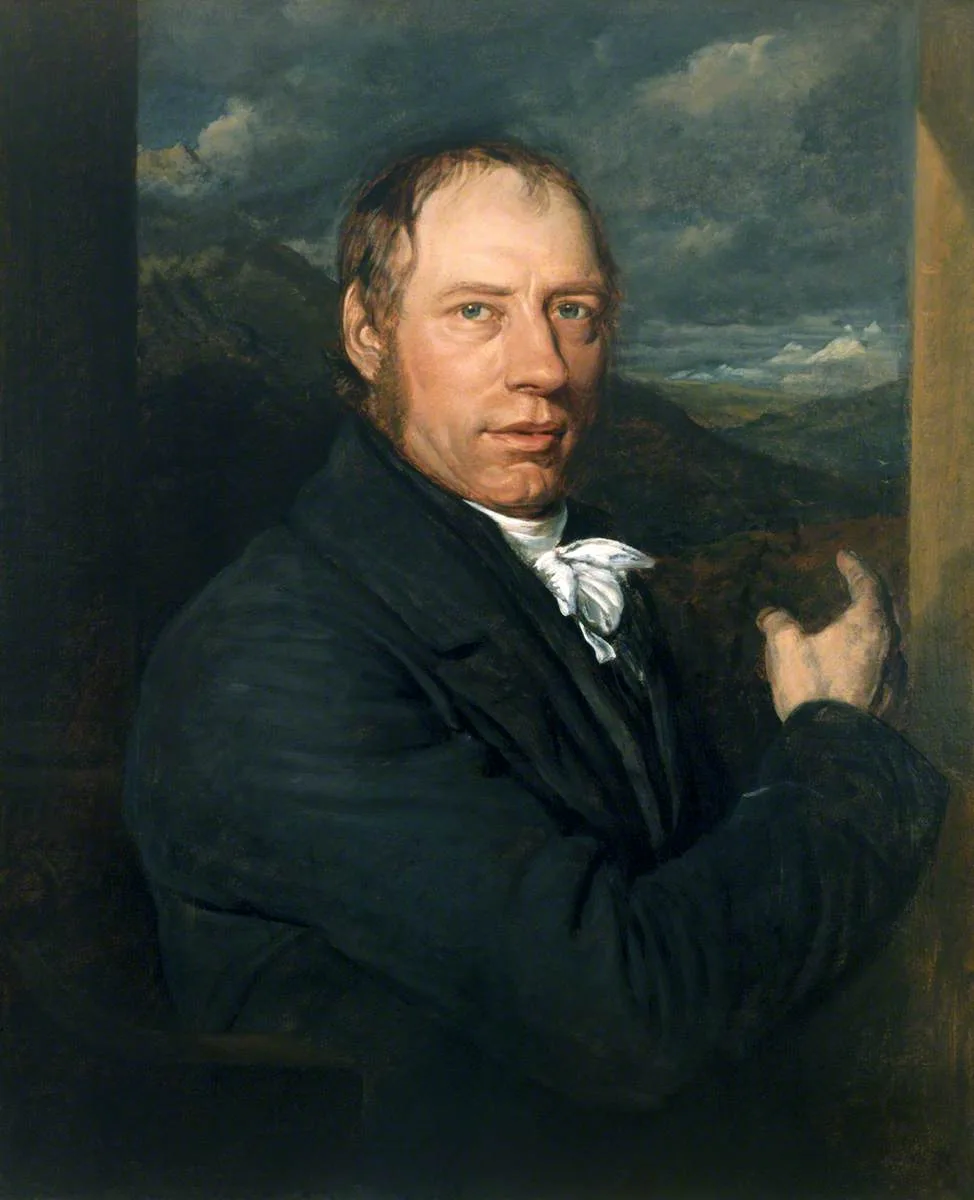
1771–1833
Richard Trevithick
Cornish engineer and high-pressure steam pioneerRichard Trevithick developed compact high-pressure steam engines for mines, roads and railways. His Penydarren locomotive demonstrated steam haulage in 1804, but weak track, uncertain backing and difficult ventures prevented him from building a durable railway business.Read biographyQuick answers
Common questions
- Was this the first railway ever built?
- No. Earlier waggonways and public horse railways existed. The 1825 opening is significant for a steam-hauled passenger train on a public railway.
- Was the opening locomotive Rocket?
- No. It was Locomotion No. 1. Rocket belongs to the Rainhill Trials of 1829.
- Did steam replace horses immediately?
- No. Horse haulage continued in normal service, including when locomotives were unavailable. Reliable railway operation developed over time.
- Was Robert Stephenson present at the opening?
- He was working in Colombia. His earlier surveying and the company’s locomotive manufacture connect him to the line, but George Stephenson drove the opening train.
Primary and institutional sources
How this history was checked
The National Railway Museum’s author accounts were read for the opening, company powers, financing, mixed haulage, Hackworth and the 1828 explosion; reader comments are not used as evidence. Only indexed early-service passages of the technical report were read, including the October wheel failure and horse substitution, not the entire component history or underlying archive. Robert’s Colombia chronology is checked against the 1911 entry and museum record. Trevithick appears solely as an earlier contextual figure. This article was reviewed on 23 October 2026.
- Science Museum GroupRobert Stephenson: biographical collection record
- Encyclopædia Britannica (1911) / WikisourceStephenson, Robert: historical biography
- National Railway MuseumShildon, the Cradle of the Railways and Locomotion No. 1
- National Railway MuseumLegal lines: Leonard Raisbeck and the Stockton & Darlington Railway
- National Railway MuseumLocomotion report, part 1: selected early service passages
- Amgueddfa Cymru – Museum WalesBirth of the Railway Locomotive (2020)
- Wellcome Library / Wikimedia CommonsPound after Mayall: Robert Stephenson, image and revision record
- Creative CommonsAttribution 4.0 International