In this biography
Quick facts
- Born
- 1948
- Birthplace
- St. Paul, MN, USA
- Country
- United States
- Nationality
- Not independently established
- Known for
- Genetic identification of components and stages in cellular secretion
Why this life matters
The associated guide uses those distinctions to show how a pathway order can be inferred rather than merely drawn.
Timeline
Key moments
Birth
Born in St. Paul, MN, USA.
Nobel recognition
Received the Nobel Prize in Physiology or Medicine.
A genetic approach to a cellular logistics problem
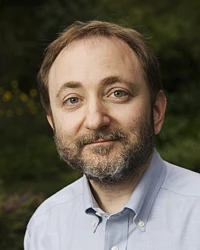
Randy Schekman was born in Saint Paul, Minnesota, in 1948. His official record describes study at UCLA, time at Edinburgh and doctoral research at Stanford. He joined Berkeley in 1976. His research used yeast to investigate how cells move material through a secretory pathway. Instead of starting with purified components alone, his group examined mutants whose secretion failed under specified conditions. A breakdown could expose an intermediate that normal cells processed too quickly to make the same question straightforward.
Accumulated cargo makes a pathway experimentally visible
Peter Novick and Schekman's 1979 paper described a temperature-sensitive secretion mutant in which proteins and vesicles accumulated under restrictive conditions. Restoring permissive conditions allowed accumulated material to be secreted. Later work by Novick, Susan Ferro and Schekman compared double mutants and different accumulated intermediates to infer an order among secretory stages. These studies connected genetic defects with cellular structures and cargo behaviour. A mutant's unusual appearance was therefore a starting observation whose interpretation depended on further comparisons.
A complementary route to membrane-traffic machinery
Schekman shared the 2013 medicine prize with James Rothman and Thomas Südhof. The shared subject does not erase the difference between genetic analysis, biochemical reconstitution and other approaches to transport. Schekman's yeast work helped identify requirements and order events in a pathway by examining where processing stopped. Its explanatory power rests on specified mutants and readouts, not on the assumption that every accumulation has the same cause. The associated guide uses those distinctions to show how a pathway order can be inferred rather than merely drawn.
Quick answers
Frequently asked questions about Randy W. Schekman
- What is Randy W. Schekman known for?
- Genetic identification of components and stages in cellular secretion.
Keep exploring
Lives connected to this story
- James E. Rothman
Compare the related experimental question and research career.
- Arthur Kornberg
Compare the related experimental question and research career.
Sources and further reading
Explore the evidence
These references support the biography and offer further reading. Official records, first-person accounts and independent reporting provide different perspectives; image records document attribution and licensing.
- 1. Nobel Prize OutreachRandy W. Schekman — Facts
Source scope: Birth/death and award metadata; short official work summary.
- 2. Nobel FoundationRandy W. Schekman — Biographical
Source scope: Selected historical passages, as recorded in the research evidence ledger; not a full-document reading claim.
- 3. Nobel FoundationRandy W. Schekman — Nobel lecture
Source scope: Selected historical passages, as recorded in the research evidence ledger; not a full-document reading claim.
- 4. Novick and Schekman / PNAS, 1979Secretion and cell-surface growth are blocked in a temperature-sensitive mutant of Saccharomyces cerevisiae
Source scope: Primary abstract and opening passages read: sec1-1 conditional block, vesicle/protein accumulation, reversible secretion and protein-synthesis-inhibition comparison.
- 5. Novick, Ferro and Schekman / Cell, 1981Order of events in the yeast secretory pathway
Source scope: Complete indexed primary abstract read: double-mutant ordering using invertase maturation and organelle morphology. No particular unexamined mutant pair assigned.