In this biography
Quick facts
- Born
- 29 March 1949
- Birthplace
- Quebec City, Quebec
- Country
- Canada
- Nationality
- Canadian
- Known for
- Quebec’s first woman premier, family policy, education reform and Parti Québécois leadership
- Education
- Social work, Université Laval, 1971; MBA, HEC Montréal, 1976
- First elected
- La Peltrie, 1981
- Quebec premier
- 19 September 2012–23 April 2014
- University service
- UQAM chancellor since 24 October 2024
Why this life matters
Marois’s career connects community services, the expansion of provincial social policy and the opportunities and constraints of a short minority premiership.
Timeline
Key moments
Social work and administration
Born in Quebec City; studies at Laval and HEC and works in community and social services.
Election, cabinet and a setback
Enters the legislature in 1981, loses her seat in 1985 and returns in 1989.
Senior policy responsibilities
Holds education, family, health and finance responsibilities and becomes deputy premier.
Parti Québécois leader
Returns after leaving the legislature in 2006 and wins the party leadership.
A minority premiership
Becomes Quebec’s first woman premier; the government and her own seat are lost in 2014.
UQAM chancellor
Begins a five-year university mandate on 24 October.
Community services shaped her route into politics
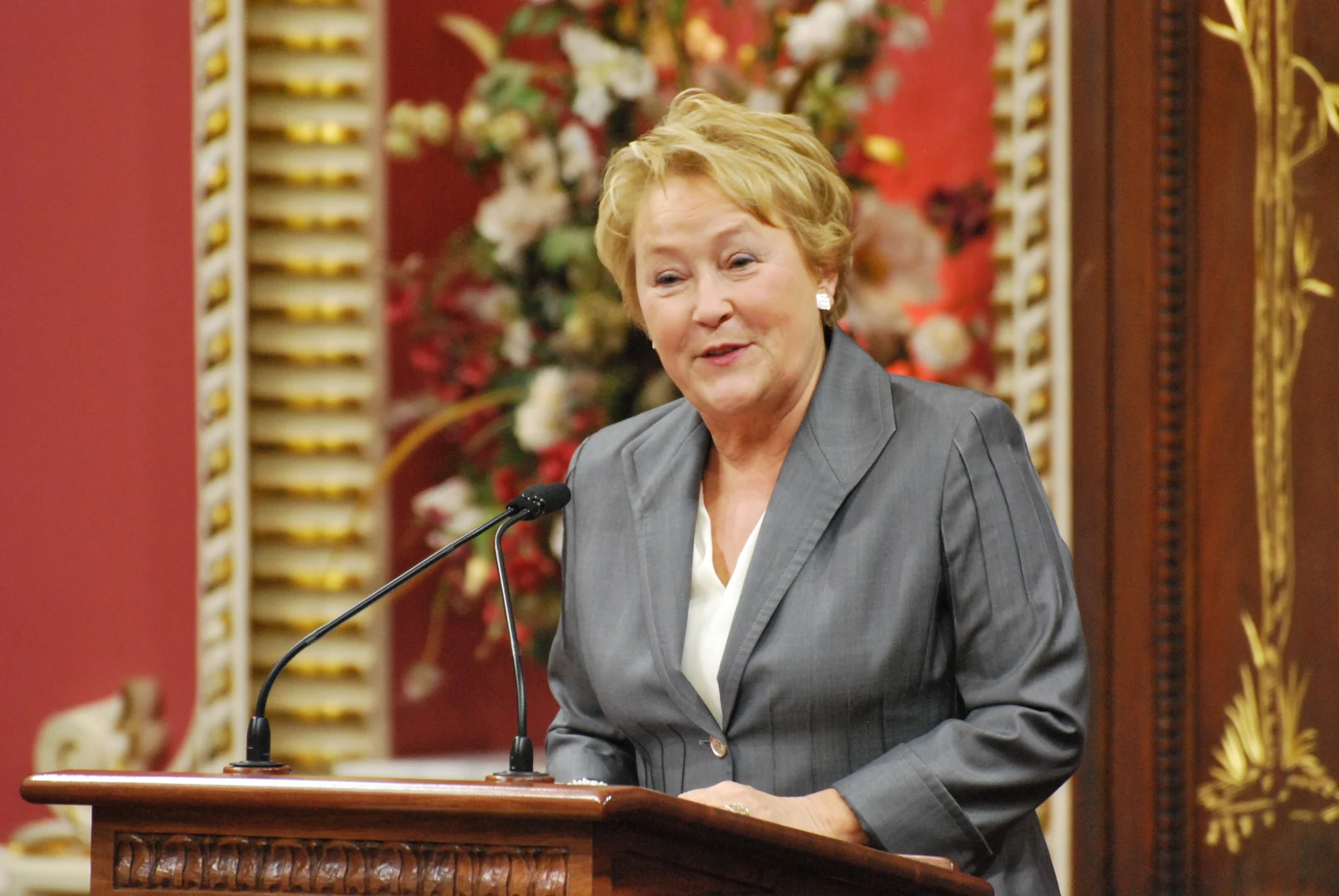
Pauline Marois was born in Quebec City on 29 March 1949. She earned a social-work degree at Université Laval in 1971 and an MBA at HEC Montréal in 1976. Her early work included family budgeting, community development and the administration of social services.
She helped establish the Outaouais family-economy cooperative and directed the Île-de-Hull community health and social-services centre. Later work concerned children’s services in metropolitan Montreal. These were practical responsibilities for organizations and service users, preceding her better-known career in cabinet.
Electoral setbacks interrupted a growing cabinet career
Marois entered the National Assembly for the Parti Québécois in 1981 and served in René Lévesque’s government. Her responsibilities included the status of women and income security. She contested the party leadership in 1985 but lost both that race and her legislative seat that year.
She returned to the Assembly in 1989 and later held senior portfolios under Jacques Parizeau, Lucien Bouchard and Bernard Landry. Landry appointed her deputy premier in 2001. The career developed through different governments and repeated reversals, rather than a continuous ascent to the premiership.
Education and childcare became enduring parts of her record
As education minister in Bouchard’s government, Marois helped introduce full-day kindergarten and the shift from denominational to language-based school boards. She also became a central minister in the development of Quebec’s reduced-fee childcare network. These reforms addressed different age groups and institutions, although they shared an interest in education and family life.
The childcare programme began with four-year-olds in September 1997 and expanded to younger children. Marois was education minister at its development and became minister of family and childhood in July 1997. Bouchard was premier. The CPE network involved nonprofit organizations and regulated home-based care; subsidized services were not all government-operated centres.
Party leadership brought a minority government
After another unsuccessful leadership bid in 2005, Marois left the legislature in 2006. She returned as Parti Québécois leader in 2007. The party’s victory in the September 2012 election made her Quebec’s first woman premier when she took office on 19 September.
The PQ won 54 of 125 seats, ahead of the Liberals’ 50 but short of a majority. This position permitted government formation while limiting the party’s ability to pass measures without support outside its caucus. The electoral breakthrough and its parliamentary constraints belong together in assessing the period.
The values-charter proposal remained unfinished at defeat
The government’s proposed values charter became a major controversy. Bernard Drainville introduced Bill 60 in November 2013, addressing state secularism, religious neutrality and accommodation. The Assembly’s record shows introduction and public consultations; the proposal did not become an enacted charter under Marois.
The April 2014 election returned a Liberal majority with 70 seats, while the PQ won 30. Marois also lost her constituency. Her premiership ended on 23 April. The contrast between proposing a change and securing its adoption is especially important here: a government announcement alone did not establish the proposed legal rules.
University service followed elected office
Marois continued public and philanthropic work after leaving politics. UQAM appointed her chancellor for a five-year term beginning on 24 October 2024. The university’s current mandate page confirms the role and identifies her as its first woman chancellor.
The position supports representation, advice and governance. It differs from the rector’s management responsibilities: the chancellor may represent the university when requested and advise its leadership. This later appointment extends her involvement in education without returning her to an elected government office.
Quick answers
Frequently asked questions about Pauline Marois
- Was Pauline Marois Quebec’s first woman premier?
- Yes. She served as premier from 19 September 2012 to 23 April 2014.
- Was she premier when reduced-fee childcare began?
- No. Lucien Bouchard was premier in 1997. Marois helped develop the policy as a minister and became minister of family and childhood that July.
- Did her government have a majority?
- No. The Parti Québécois won 54 of the National Assembly’s 125 seats in 2012.
- What is her university role?
- UQAM’s mandate page identifies her as chancellor, serving a five-year term that began on 24 October 2024.
Keep exploring
Lives connected to this story
- Jean Charest
Read about the Liberal premier whom Marois succeeded after the 2012 election.
- Jean Chrétien
Explore the federal prime minister’s wider constitutional record during the period of Quebec school-board reform.
Sources and further reading
Explore the evidence
These references support the biography and offer further reading. Official records, first-person accounts and independent reporting provide different perspectives; image records document attribution and licensing.
- 1. National Assembly of QuébecPauline Marois: parliamentary biography, updated November 2024
- 2. Canadian Parliamentary Guide 2005 / Encyclopedia.comMarois, Pauline, B.S.W., M.B.A. (Taillon): birth, education and early career
- 3. The Columbia Encyclopedia / Encyclopedia.comMarois, Pauline: biographical entry
- 4. Université LavalPauline Marois: honorary doctorate and public-service record
- 5. Women and Gender Equality CanadaPauline Marois: women of impact profile, 29 July 2025
- 6. Université du Québec à MontréalChancelière: mandate and biography of Pauline Marois
UQAM’s precise mandate begins on 24 October 2024. The federal commemorative page’s broader November wording reflects the public announcement rather than the legal start date.
- 7. Élections QuébecResults of the 4 September 2012 general election: province-wide party totals
- 8. Élections QuébecResults of the 7 April 2014 general election: province-wide party totals
- 9. National Assembly of QuébecBill 60: author, introduction and consultation stages, 2013–2014
Bill 60 is described as a proposal with consultations, not as an enacted law or as the later legislation of another government.
- 10. Policy Options / Institute for Research on Public PolicyPierre Lefebvre: Quebec’s innovative early childhood education and care policy and its weaknesses, March 2004
- 11. Wikimedia Commons / Simon VilleneuvePauline Marois01.jpg: complete original, file history and copyright-holder licence