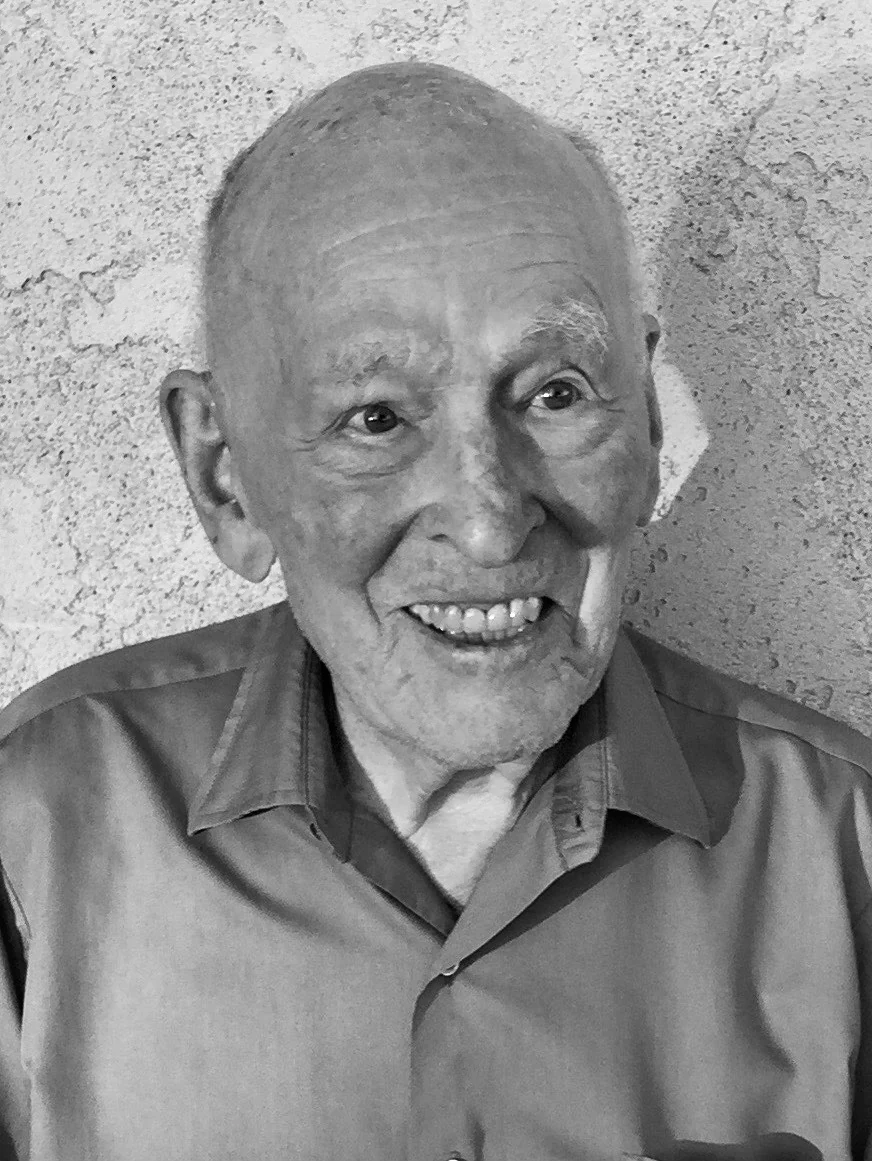
In this biography
Quick facts
- Born
- 7 January 1941
- Birthplace
- Halifax, United Kingdom
- Country
- United Kingdom
- Nationality
- Not independently established
- Known for
- Determining the asymmetric catalytic architecture of F1-ATPase
Why this life matters
Determining the asymmetric catalytic architecture of F1-ATPase
Timeline
Key moments
Birth
John E. Walker was born in Halifax, United Kingdom.
F1 structure
Coauthored the 2.8-ångström bovine F1-ATPase structure.
Nobel recognition
Received Nobel recognition for the work described in the official award record.
Chemistry training before molecular biology
John Ernest Walker was born in Halifax, Yorkshire, in 1941 and grew up in the Calder valley area. He studied chemistry at Oxford, graduating in 1964, and investigated peptide antibiotics with Edward Abraham for his doctorate, awarded in 1969. His autobiography recalls how John Kendrew’s broadcasts and lectures on protein structure expanded his scientific interests. The route into ATP synthase was therefore not an immediate undergraduate specialism; it grew from chemistry, peptide research and a developing appetite for molecular explanations.
A Cambridge encounter changed the direction of his work
Walker worked in Wisconsin and France before attending a Cambridge sequence-analysis meeting in 1974. A conversation with Frederick Sanger led to an opportunity in the Medical Research Council Laboratory of Molecular Biology. What began as a short visit became a much longer appointment. He worked on protein and mitochondrial sequences in an environment where sequence methods and structural questions were developing together. That setting helped connect a chemically trained researcher with the difficult task of investigating the molecular machinery of biological energy conversion.
Sources for this section: [4]
An asymmetric structure constrained an enzyme model
The 1994 Nature paper by Jan Pieter Abrahams, Andrew Leslie, René Lutter and Walker described bovine mitochondrial F1-ATPase at 2.8-ångström resolution. The three catalytic beta subunits differed in conformation and nucleotide occupancy. Those differences supported the idea that catalytic sites occupy different states during a reaction cycle. The result was not a complete structure of every ATP-synthase component, nor a direct observation of rotation. The MRC’s structural history notes unresolved delta and epsilon subunits and parts of gamma in that initial model.
Recognition linked complementary kinds of evidence
Walker shared the ATP-synthesis portion of the 1997 Nobel Prize in Chemistry with Paul Boyer. Their contributions joined structural and biochemical approaches, while the other half of the award recognised Jens Skou. Walker’s career shows why knowing an enzyme’s component sequences and determining its three-dimensional organisation answer related but distinct questions. The F1 result made unequal catalytic states visible in a structural model; interpreting how an operating enzyme moves between them required additional kinds of evidence. Its significance remains substantial without calling a crystallographic snapshot a film of the entire molecular motor.
Quick answers
Frequently asked questions about John E. Walker
- Who coauthored the 1994 F1 structure?
- Jan Pieter Abrahams, Andrew Leslie, René Lutter and John Walker.
- How did Walker meet Sanger?
- Their conversation at a 1974 Cambridge meeting helped lead him to the MRC laboratory.
Keep exploring
Lives connected to this story
- Frederick Sanger
Follow the mentor and laboratory setting that helped redirect Walker toward molecular biology.
Sources and further reading
Explore the evidence
These references support the biography and offer further reading. Official records, first-person accounts and independent reporting provide different perspectives; image records document attribution and licensing.
- 1. Abrahams, Leslie, Lutter and Walker, Nature, 1994Structure at 2.8 Å resolution of F1-ATPase from bovine heart mitochondria
- 2. MRC Mitochondrial Biology Unit, Walker GroupEvolution of the structure of ATP synthase
- 3. Nobel Prize OutreachJohn E. Walker — Facts
- 4. Nobel Prize OutreachJohn E. Walker — Biographical