In this biography
Quick facts
- Born
- 17 February 1951
- Birthplace
- Beaufort West, South Africa
- Country
- South Africa
- Nationality
- Not independently established
- Known for
- Trade-union and parliamentary work, founding the Independent Democrats and GOOD, and executive office
- Early employment
- Laboratory technician
- Labour organisation
- SACWU and NACTU
- First parliamentary party
- Pan Africanist Congress
- Independent Democrats
- Founded in 2003
- Cape Town mayor
- 2011–2018
- Dated current office
- Tourism minister, verified in October 2026
Why this life matters
Her career shows how opposition politics, coalition-building and executive responsibility can overlap without becoming the same task. Public allegations, party decisions, judicial review and media adjudication also require separate treatment; none should be substituted for another’s findings.
Timeline
Key moments
Beaufort West and workplace organisation
Schooling and laboratory work lead into trade-union responsibilities.
Parliament and the PAC
She serves in Parliament before establishing the Independent Democrats.
Party building and provincial office
Independent Democrat politics is followed by cooperation with the DA and provincial government.
Cape Town mayoralty
Water scarcity and a contested departure mark the later period.
GOOD and cabinet
A new party is followed by public-works service and a move to tourism.
Tourism and further political realignment
Reappointment follows the 2024 election; later alliance plans require dated qualification.
Workplace organisation preceded national political office
Born in Beaufort West on 17 February 1951, de Lille attended local schools before entering laboratory employment. She worked at Plascon Paints and developed trade-union responsibilities through the South African Chemical Workers’ Union, progressing from shop-steward work to wider organisational positions.
She became a national vice-president of NACTU in 1988. This was a route into politics through employment and labour representation, not a career beginning with a mayoral campaign. Her later public roles drew on experience negotiating collective interests, while also exposing her to responsibilities and scrutiny different from those of a workplace representative.
Parliamentary opposition led to independent party-building
After involvement in the transition, de Lille entered Parliament for the PAC in 1994 and chaired the transport committee during the first parliamentary term. Her public profile included raising concerns about the arms procurement programme. Identifying allegations for scrutiny was not itself a court’s determination of every procurement allegation.
In 2003 she founded the Independent Democrats. Cooperation with the DA followed in 2010, and the ID later ceased to operate separately. These changes show a career of building and changing political vehicles, not uninterrupted membership of one party. Parliamentary representation, party leadership and later executive appointments carried different mandates.
Mayoral leadership faced a city-wide water emergency
De Lille was Cape Town’s mayor from 2011 to 2018, following provincial social-development office. The final period included the prospect of Day Zero: extensive municipal supply shutoffs if stored water fell too far. Restrictions, changing consumption and drought conditions became immediate concerns for residents and businesses.
The threatened shutoffs were avoided, but neither credit nor responsibility belongs to one office-holder alone. The system involved city operations, national restrictions, regional water users and household behaviour. The companion guide examines those mechanisms. Avoiding a planned emergency also did not mean every community already enjoyed equal access to reliable water and sanitation.
A party dispute produced rulings with specific limits
In 2018 the DA sought to terminate her membership amid a prolonged political dispute and allegations about municipal management. On 27 June the High Court set aside the membership determination as unlawful and invalid, including because the party had not followed its own procedures. That ruling addressed the termination decision, not every allegation made during the conflict.
A separate Press Ombud ruling required apologies for aspects of reporting about alleged nepotism. The Ombud expressly did not decide guilt or innocence on the underlying accusation. A successful reporting complaint, a party disciplinary claim and judicial review must therefore remain distinct. Turning any one of them into comprehensive exoneration or a criminal conviction would misrepresent the evidence.
New party politics and cabinet service continued after the mayoralty
She established GOOD in 2018 and became public-works and infrastructure minister in 2019. The Tourism Department dates her move to its portfolio to March 2023, followed by reappointment after the 2024 election. An October 2026 ministerial speech confirms the later office rather than relying only on an old directory entry.
Political realignment also continued. GOOD joined the announcement of Unite for Change in October 2025; subsequent reporting said the parties would not contest the local election together as planned. An announced alliance should not be presented as an automatically completed merger. At the review date, her current description here is tourism minister, alongside accurately dated earlier offices and party-founding work.
Quick answers
Frequently asked questions about Patricia de Lille
- Did de Lille begin her career as a mayor?
- No. Laboratory work and trade unionism preceded Parliament and executive office.
- Did the 2018 membership ruling decide every misconduct allegation?
- No. It reviewed the party’s termination of membership.
- Did the Press Ombud determine guilt or innocence?
- No. The ruling concerned reporting standards, not the underlying accusation.
- Which ministry does she hold in this dated account?
- Tourism, verified through the department and an October 2026 address.
Keep exploring
Lives connected to this story
- Helen Suzman
Compare another parliamentary career involving public scrutiny.
- Trevor Manuel
Compare different paths from civic or labour organisation into government.
- Cyril Ramaphosa
Place her cabinet service within the appointing administration.
- Albie Sachs
Distinguish political responsibility from judicial rights protection.
Sources and further reading
Explore the evidence
These references support the biography and offer further reading. Official records, first-person accounts and independent reporting provide different perspectives; image records document attribution and licensing.
- 1. South African History OnlinePatricia de Lille: selected Beaufort West, laboratory, trade-union and party chronology
Selected chronology only. Beaufort West is retained without the erroneous Cape Town location suffix; stale mayoral and family-status wording is not treated as current.
- 2. New Climate Economy / World Resources Institute archivePatricia de Lille: historical trade-union, parliamentary and party profile
- 3. Department of Tourism, South AfricaMinister Patricia de Lille: cabinet and mayoral chronology
The department’s March 2023 portfolio change takes precedence over a conflicting government directory’s public-works end date.
- 4. Patricia de Lille / Polity speech archive1 October 2026 Tourism Investment Summit address: opening and office identification
- 5. Western Cape High Court / SAFLIIDe Lille v Democratic Alliance, 27 June 2018: indexed introduction and paragraphs 69–71
Indexed introduction and concluding order were read; direct SAFLII returned 403. Independent SABC reporting corroborates the result, without a full-docket claim.
- 6. SABC News27 June 2018: court sets aside termination of party membership
- 7. Press Council of South Africa31 May 2018: summary of the reporting complaint and limits of the Ombud’s finding
- 8. Koena Mashale / Sowetan5 October 2025: three parties announce Unite for Change
- 9. Ferial Haffajee / Daily Maverick15 April 2026: proposed electoral alliance will not contest together
- 10. City of Cape Town1 March 2018 water-crisis update: consumption, restrictions and changing projections
- 11. OECDWater Governance in Cape Town, 2021: selected crisis-response and recovery passages
- 12. Elisa Savelli and colleagues / Nature Sustainability2023 study: abstract and selected unequal domestic-consumption results
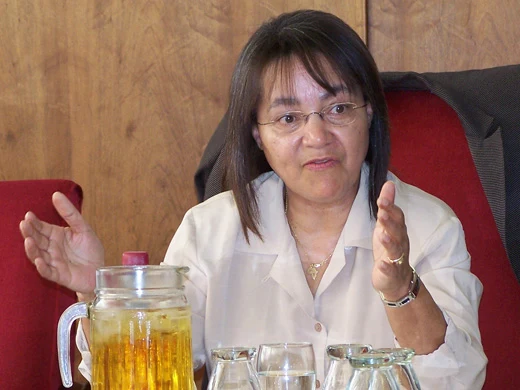
- 13. Morne / Wikimedia CommonsPatricia de Lille: unchanged author-public-domain photograph
Current named-author release verified; original Afrikaans description unavailable. Initial transfer credit was incomplete, so first-grant verification is not claimed.