
The short answer
Cape Town’s 2006 municipal election produced no single-party majority. Negotiations and council ballots gave Helen Zille the mayoralty, but creating a working administration required more than choosing its most visible office-holder. The episode also tested relations between the city and the ANC-led provincial government.
Chronology
A timeline of the turning points
No majority
The municipal election leaves several possible combinations in the council.
Negotiating offices
The DA, ID, ANC and smaller parties explore competing arrangements.
Council elections
Zille becomes mayor; separate ballots fill the deputy mayoralty and speakership.
Governance-system dispute
A provincial proposal would replace the executive mayoral system with an executive committee.
Intergovernmental compromise
The existing city administration remains; sub-council arrangements are adjusted.
Administrative programme
Revenue, staffing and infrastructure management become a later case-study focus.
The largest party still needed partners
The DA held 90 of the council’s 210 seats, the ANC 81 and the Independent Democrats 23. Smaller parties held the remainder. None could govern simply by pointing to its own election result; the distribution made cooperation and the conduct of smaller parties consequential.
The ID initially rejected joining a coalition. Its position mattered because an agreement with either larger party could change the arithmetic. Contemporary reporting therefore described a period of uncertainty, rather than an inevitable DA administration already decided by the electorate. The municipal result selected councillors; subsequent negotiations determined who could assemble support inside the chamber.
Sources for this section: [1]
Negotiations concerned power and structure, not only personalities
Reporting before the first council meeting described bargaining over the mayoralty and a possible division of executive positions. The ACDP sought the mayor’s office, while the DA insisted that its status as largest party supported Zille’s claim. The PAC’s withdrawal from an opposition pact complicated those talks.
The ID also questioned the executive mayoral arrangement and favoured broader representation in city leadership. These debates linked offices to the distribution of authority. A coalition agreement had to answer who would govern, how partners would share influence and which institutional form could accommodate them. Positions were therefore instruments of bargaining, not decorative titles.
Sources for this section: [2]
Separate council ballots filled separate offices
On 15 March, Zille defeated Nomaindia Mfeketo by 106 votes to 103. A separate deputy-mayor ballot elected the ACDP’s Andrew Arnolds by 105 to 104, while Freedom Front Plus councillor Dirk Smit became speaker. The differing totals are a useful reminder that these were individual council decisions.
The resulting seven-party administration was not a DA majority under another name. Smaller parties held visible responsibilities, and the ANC and ID remained outside that arrangement. The mayoral tally also should not be confused with the DA’s 90 council seats. Winning the leading office depended on support beyond the party’s own councillors.
A provincial proposal put the governing model in dispute
The ANC-led provincial government proposed replacing the executive mayoral system with an executive committee system. The Dullah Omar Institute’s account explains the consequence: the city would have had to include the ANC in its executive. A dispute over party control thus became an intergovernmental question about institutional design.
In October, mediation involving national minister Sydney Mufamadi produced a compromise. The existing city administration would remain, while the ANC gained additional sub-council chairmanships. The proposed system change was dropped. The settlement preserved executive control without eliminating opposition participation elsewhere in the council’s structures.
A governing coalition still needed a functioning municipality
The city’s 2006/07 annual-report foreword described organisational consolidation as a priority. The earlier merger into a single municipality had left administrative structures requiring further alignment. The administration linked infrastructure investment and service delivery to financial and managerial capacity.
A later Princeton case study, based on interviews conducted in 2011, examined staffing, local revenue and infrastructure reforms during 2006–2009. Its interpretation helps explain the distinction between political formation and administrative performance. Securing office opened the possibility of governing; maintaining partner cooperation, staffing systems and funding services remained continuing tasks. Coalition arithmetic alone cannot evaluate all those outcomes.
Continue the chronology
Related history guides
Biography context
Explore Cape Town, South Africa through connected lives
Helen Zille
Continue into journalism, civic activism, the premiership and later party politics.
Explore the biographiesThe Independent Democrats’ leaderPatricia de Lille
Explore the political trajectory behind a party central to the coalition arithmetic.
Explore the biographiesConnected biographies
Political careers around the council negotiations
1951–
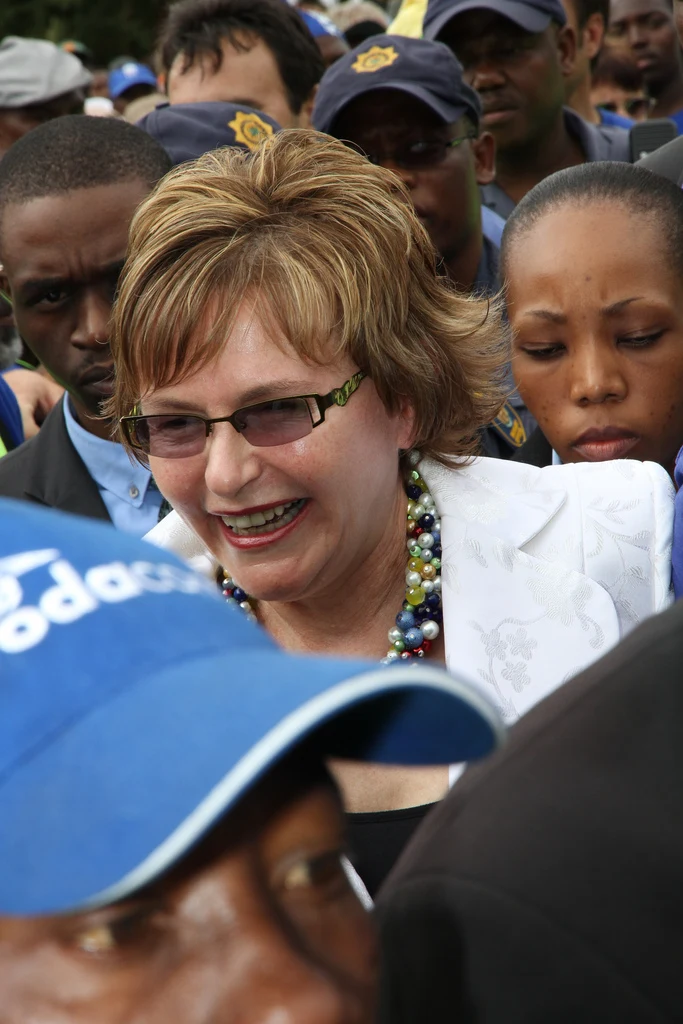
Helen Zille
Former mayor, premier and DA leader; Johannesburg mayoral candidateHelen Zille moved from journalism and anti-apartheid civic work into education policy, Parliament and executive government. She led Cape Town’s 2006 coalition, headed the Democratic Alliance and served two terms as Western Cape premier. Her later career includes party organisation, controversial public interventions and Johannesburg’s mayoral contest.Read biography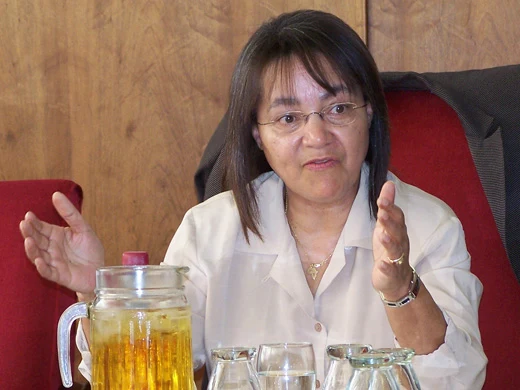
1951–
Patricia de Lille
Tourism minister, former Cape Town mayor and political-party founderPatricia de Lille moved from laboratory employment and trade unionism into Parliament, party leadership and government. Her career crosses PAC, Independent Democrat, DA and GOOD politics. Mayoral service included the water crisis and a bitter party dispute; later cabinet appointments brought public-works and tourism responsibilities.Read biographyQuick answers
Common questions
- Did the DA win an outright council majority?
- No. It held 90 of 210 seats and needed support beyond its own councillors.
- Were mayor, deputy mayor and speaker one combined election?
- No. The council filled those offices through separate decisions.
- Did the proposed executive committee replace the mayoral system in 2006?
- No. The October compromise kept the existing city administration in place.
- Did choosing a coalition complete municipal reform?
- No. The city and later research described continuing organisational, financial and service-delivery work.
Primary and institutional sources
How this history was checked
Contemporary reports were compared with the city’s selected indexed foreword, the Dullah Omar Institute publication introduction and the Princeton case abstract. Neither full report is claimed as read. The 2011 rally photograph illustrates Zille, not the 2006 council meeting. This article was reviewed on Reviewed 24 October 2026.
- Jacques Keet / Mail & Guardian4 March 2006: party seats and the Independent Democrats’ initial position
- Marianne Merten / Mail & Guardian10 March 2006: bargaining over offices in the hung council
- Sapa and I-Net Bridge / Mail & Guardian15 March 2006: separate elections for Cape Town council offices
- Dullah Omar Institute, University of the Western CapeThe Cape Storm: publication introduction on the governance-system dispute
- Donwald Pressly / I-Net Bridge / Mail & Guardian31 October 2006: city–province compromise and sub-council arrangements
- City of Cape Town2006/07 annual report: selected indexed mayoral foreword
- Michael Woldemariam / Princeton Innovations for Successful SocietiesJuly 2011 municipal-turnaround case: abstract and interview-method description
- The Democratic Alliance / Wikimedia CommonsHelen Zille at Mamelodi, April 2011: original photograph and rights history
- The Democratic Alliance / FlickrFreedom Day Rally – Mamelodi: exact author account and CC BY-SA 2.0 grant