In this biography
Quick facts
- Born
- 19 October 1958
- Birthplace
- Not independently established
- Country
- Brunei
- Nationality
- Bruneian
- Known for
- Finance administration, economic planning and the Primary Resources and Tourism ministry
- Date of birth
- 19 October 1958, in the government’s 2010 cabinet biography
- Documented origins
- Kampung Kuala Abang, Layong, Tutong; not independently verified as birthplace
- Economics degree
- BA Honours in Economics, University of Reading, 1983
- Management qualifications
- MBA and postgraduate management diploma, Imperial College, University of London
- Deputy PMO minister
- 18 November 2010–22 October 2015
- Primary Resources and Tourism minister
- 22 October 2015–7 June 2022
Why this life matters
His career links senior financial administration, investment planning and resource-sector policy during Brunei’s continuing search for a broader economic base.
Timeline
Key moments
Economics education
Completes a BA Honours in Economics at Reading.
Finance administration
Appointed Permanent Secretary in Finance on 21 October.
PMO administration
Moves to the PMO permanent-secretary role on 24 September.
Two deputy appointments
Appointed Deputy Development Minister on 29 May, then Deputy PMO Minister on 18 November.
Ministerial appointment
Becomes Primary Resources and Tourism Minister on 22 October.
End of ministerial term
Abdul Manaf Metussin replaces him from 7 June.
Tutong origins and economic education
Ali Apong was born on 19 October 1958, according to the government’s June 2010 cabinet biography. That record identifies his origins as Kampung Kuala Abang, Layong, in Tutong. An origin field is not necessarily a birthplace, so it should not be expanded into an unsupported statement about the location of his birth.
He studied economics at the University of Reading, completing a BA Honours in Economics in 1983. His later qualifications included an MBA and postgraduate management diploma from Imperial College of Science, Technology and Medicine, then part of the University of London. The combination of economics and management provided a foundation for a career in financial and public administration.
Finance and the permanent-secretary years
Ali’s institutional background included the Brunei Investment Agency and the Ministry of Finance. CIFOR’s conference biography also connects his work with the development of Islamic finance institutions. These roles placed him within the administration of investment and financial services before he became a full minister.
The 2010 government profile dates his appointment as Permanent Secretary in Finance to 21 October 2004 and his move to the Prime Minister’s Office to 24 September 2009. The two appointments were successive senior administrative posts. They should not be confused with the political deputy-minister appointments that followed in 2010.
Two deputy ministries and a productivity argument
On 29 May 2010, Ali was appointed Deputy Minister of Development. A subsequent royal statement transferred him to Deputy Minister at the Prime Minister’s Office from 18 November and appointed him chairman of the Brunei Economic Development Board. The brief Development posting and the longer PMO posting were separate stages, not interchangeable titles.
His 2013 commentary in the CSPS Strategy and Policy Journal framed productivity as important to sustainable growth. Written while he held economic-planning responsibilities, it sets out a policymaker’s argument about the conditions for development. It does not by itself measure the effects of his tenure or establish that diversification was achieved.
Primary resources, tourism and the 2022 transition
The royal cabinet announcement effective 22 October 2015 appointed Ali Minister of Primary Resources and Tourism. The portfolio brought together activities such as agriculture, fisheries, forestry and visitor development, sectors relevant to broadening an economy long associated with oil and gas. CIFOR’s historical speaker record places his ministerial work in that resource-policy setting.
His term ended on 7 June 2022, when a new royal announcement appointed Abdul Manaf Metussin in his place. Ali is therefore a former minister, even where older conference pages retain his then-current title. Manaf later moved into newly defined economic offices in the June 2026 cabinet; being Ali’s 2022 successor does not make him the current holder of the former portfolio.
Quick answers
Frequently asked questions about Ali Apong
- When was Ali Apong Minister of Primary Resources and Tourism?
- He held the ministry from 22 October 2015 until 7 June 2022, when Abdul Manaf Metussin was appointed in his place.
- Was Ali Apong also a deputy minister?
- Yes. He was appointed Deputy Minister of Development on 29 May 2010, then moved to Deputy Minister at the Prime Minister’s Office from 18 November 2010 until his October 2015 full-minister appointment.
- Where did Ali Apong study?
- He earned a BA Honours in Economics at Reading in 1983 and later an MBA and postgraduate management diploma at Imperial College, University of London.
- Is Kampung Kuala Abang his verified birthplace?
- The government biography lists Kampung Kuala Abang, Layong, Tutong as his origin. That wording does not independently establish a birthplace.
Keep exploring
Lives connected to this story
- Abu Bakar Apong
Distinguish Abu Bakar Apong’s separate health, communications, education and home-affairs portfolios from Ali Apong’s career.
- Abdul Manaf Metussin
Follow the career of Ali’s June 2022 ministerial successor, including Manaf’s different economic offices from 2026.
- Amin Liew Abdullah
Compare another Brunei policymaker’s finance and investment responsibilities.
- Timothy Ong
Explore a different Brunei business and economic-development career.
Sources and further reading
Explore the evidence
These references support the biography and offer further reading. Official records, first-person accounts and independent reporting provide different perspectives; image records document attribution and licensing.
- 1. Pelita Brunei · 12 June 2010, page 7Official cabinet biography: birthday, origin and administrative appointments
The government panel explicitly gives 19 October 1958. The relevant indexed panel text was inspected after direct PDF retrieval failed; its inconsistent printed age is not used. Asal is treated as origin, not verified birthplace.
- 2. CSPS Strategy and Policy Journal · December 2013Education, economic responsibilities and productivity commentary
The article establishes Ali’s own productivity argument and contemporary responsibilities, not an independent evaluation of policy outcomes.
- 3. CIFOR · historical summit speaker biographyFinance background, qualifications and resource-policy portfolio
This is a historical conference biography, not evidence that Ali remains a minister. Its generic economics-degree wording is refined using the CSPS record.
- 4. Borneo Bulletin via Sultanate · 18 November 2010Successive deputy appointments and BEDB chairmanship
- 5. Brunei royal cabinet announcement · 22 October 2015Appointment as Primary Resources and Tourism Minister
- 6. Brunei PMO · 7 June 2022 cabinet announcementReplacement by Abdul Manaf Metussin
- 7. Brunei PMO · 4 June 2026 cabinet announcementSuccessor’s later, distinct economic offices
- 8. Wikimedia Commons · original photograph and rights recordIdentified photograph, original creator, source and reuse terms
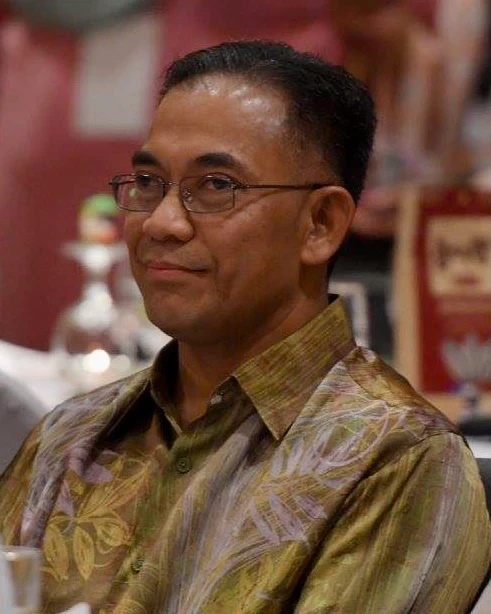
Commons identifies the creator and original Facebook source as the U.S. Embassy in Brunei Darussalam. PD-USGov is a U.S. government-work rationale; no universal personality-rights clearance is implied.