In this biography
Quick facts
- Born
- 7 November 1917
- Died
- 1 January 2009
- Birthplace
- Germiston, South Africa
- Country
- South Africa
- Nationality
- Not independently established
- Known for
- Challenging apartheid laws, investigating prison conditions and serving as the sole Progressive MP from 1961 to 1974
- Birth name
- Helen Gavronsky
- Education and work
- Economics and economic history; university lecturer
- Parliamentary service
- 1953–1989
- Sole Progressive MP
- 1961–1974, not the only opponent of apartheid in society
- Recognition
- United Nations Human Rights Award, 1978
- Later service
- Independent Electoral Commission for the 1994 election
Why this life matters
Her career shows both the practical possibilities and the limits of working inside an exclusionary institution. It connects scrutiny of ministers with direct attention to people harmed by state policy, without making parliamentary opposition a substitute for the broader struggle for democratic representation.
Timeline
Key moments
Study and professional work
Germiston childhood is followed by university study, statistics and teaching.
Election to Parliament
She enters the House of Assembly for the United Party.
A new party and electoral isolation
She joins the Progressives, then becomes their only returning MP.
Investigation and intervention
Prison visits and parliamentary questions challenge state treatment of people.
Work after parliamentary retirement
She leaves Parliament and later helps administer the democratic election.
Death and public tributes
She dies on 1 January; Parliament and former prisoners commemorate her work.
Economic study and teaching came before a parliamentary career
Suzman was born in Germiston on 7 November 1917 to an immigrant Jewish family. Her university studies were interrupted by marriage, then resumed. She worked in wartime statistics and subsequently lectured in economic history at the University of the Witwatersrand before entering electoral politics.
Her first parliamentary election in 1953 was as a United Party member. This beginning matters: she did not arrive representing a fully formed Progressive Party. A professional background, access to education and the privileges attached to being white helped make her route into an institution closed to most South Africans possible.
Sources for this section: [1]
Being the sole Progressive MP was a specific institutional position
Suzman joined the new Progressive Party in 1959. After the 1961 election she was its only MP, remaining so until 1974. The Foundation’s account emphasises her persistent challenges to discriminatory legislation and security laws, together with a practice of investigating circumstances directly.
Calling her a lone voice describes that parliamentary position, not the whole anti-apartheid movement. People outside Parliament were organising, resisting and suffering repression throughout those years. Her opportunities to question ministers arose from an unequal political system; using those opportunities against apartheid did not make that system representative.
Prison advocacy connected public debate with individual lives
Dikgang Moseneke’s memorial account recalls Suzman protesting the imprisonment of young activists, opposing Robert Sobukwe’s continued detention and supporting prisoners’ right to study. He remembered her insistence on seeing actual cells, rather than accepting an official description of conditions.
This testimony comes from someone who experienced imprisonment and later worked with her. It gives substance to an otherwise abstract reputation for courage. Parliamentary questions, visits and educational support were different forms of intervention, directed at particular harms. They did not free every prisoner, but could challenge the state’s control over information and its treatment of people in custody.
Opposing apartheid did not eliminate disagreement over sanctions
In the 1993 Fresh Air interview excerpt, Suzman acknowledged that sanctions had helped hasten apartheid’s end but maintained that their employment costs were too high. She argued that she would still have opposed economic sanctions. TIME’s obituary also identifies this as a source of conflict with other activists.
Her position should not be softened into agreement with the sanctions campaign, nor treated as endorsement of apartheid. It was a dispute over pressure and its consequences. Her own retrospective explanation is evidence of what she believed; it is not, by itself, a measurement of sanctions’ economic effects or a final answer to the argument.
Public service continued after she left Parliament
Retirement in 1989 did not end her involvement in public affairs. She served on the Independent Electoral Commission that administered the 1994 democratic election. Moseneke’s recollection places them together on that body, linking earlier concern for prisoners with a different institutional task during the transition.
Suzman died on 1 January 2009. Parliament’s tribute recognised her human-rights work and international honours. Remembering those achievements need not erase the qualified-franchise limits of the early Progressive programme, examined in the companion guide. Her life contains both consequential resistance within Parliament and political positions that must be assessed in their own terms.
Quick answers
Frequently asked questions about Helen Suzman
- Was Suzman the only person opposing apartheid?
- No. From 1961 to 1974 she was the only Progressive MP, a narrower claim.
- Did she support economic sanctions?
- No. She acknowledged their impact but continued to argue that their costs were too high.
- Did her public work end in 1989?
- No. After leaving Parliament she served on the commission administering the 1994 election.
- Did the early Progressives advocate universal adult suffrage?
- No. Their initial programme proposed a nonracial but qualified franchise.
Keep exploring
Lives connected to this story
- Nelson Mandela
Explore the life of a prisoner whose conditions she helped bring into public debate.
- Ahmed Kathrada
Compare prison experience, political education and later democratic institutions.
- Albert Luthuli
Set parliamentary opposition beside a different route through mass resistance.
Sources and further reading
Explore the evidence
These references support the biography and offer further reading. Official records, first-person accounts and independent reporting provide different perspectives; image records document attribution and licensing.
- 1. South African History OnlineHelen Suzman: selected early life and later public-service chronology
- 2. Helen Suzman FoundationHelen Suzman: parliamentary service and direct investigation
- 3. South African History OnlineProgressive Federal Party: constitutional programme and predecessor chronology
- 4. Dikgang Moseneke / Helen Suzman FoundationIn full flight: two-page memorial recollection
First-person memorial testimony is identified as recollection, not a neutral institutional audit.
- 5. WHYY Fresh Air ArchiveSuzman’s 1993 interview, excerpt rebroadcast on 2 January 2009
Only the Suzman transcript segment was used, not the unrelated interviews elsewhere on the episode page or her complete memoir.
- 6. Alex Perry / TIMEHelen Suzman, 8 January 2009
- 7. SAnews5 January 2009: Parliament pays tribute to Helen Suzman
- 8. Democratic Party / Truth and Reconciliation Commission20 August 1996 testimony: selected founding, franchise and parliamentary passages
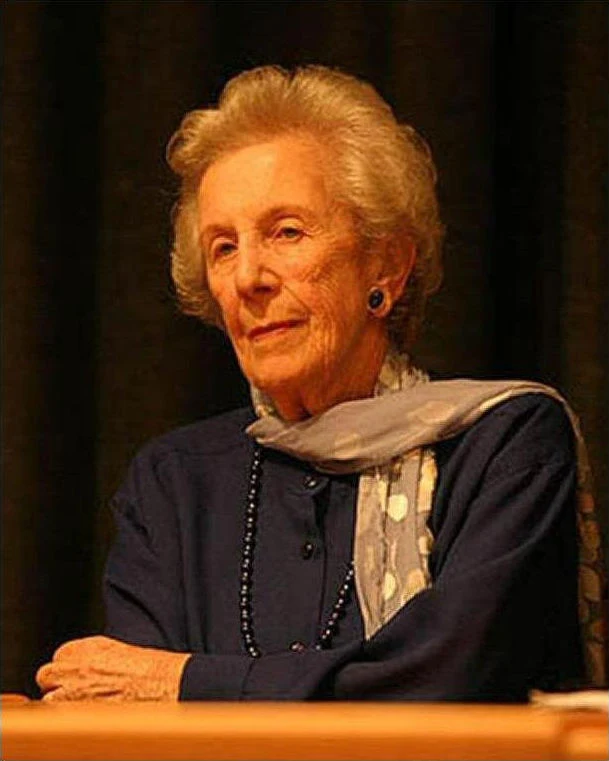
- 9. Robert Cutts / FlickrHelen Suzman: full supplied photographic frame
The author’s CC BY 2.0 grant is explicit. Conflicting displayed and embedded dates are not used to identify an event.