In this biography
Quick facts
- Born
- 1941
- Birthplace
- New York, NY, USA
- Country
- United States
- Nationality
- Not independently established
- Known for
- Discovery with Joseph Goldstein of receptor-mediated regulation of cholesterol metabolism
Why this life matters
That historical explanation does not turn one cell-culture result into a diagnosis for every person with elevated cholesterol, nor does it make the blood measurement interchangeable with the molecular cause.
Timeline
Key moments
Birth
Born in New York, NY, USA.
Nobel recognition
Received the Nobel Prize in Physiology or Medicine.
Medicine, chemistry and a lasting collaboration
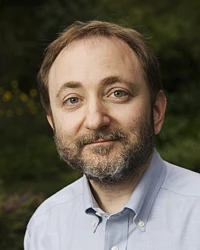
Michael Stuart Brown was born in New York in 1941 and grew up partly in Pennsylvania. He studied chemistry at the University of Pennsylvania, where he was also deeply involved in student journalism, and received his medical degree there in 1966. His subsequent scientific career became closely associated with Joseph Goldstein and the University of Texas Southwestern in Dallas. Their research asked how cells regulate cholesterol, using an inherited disorder as a way to expose a specific defect in the pathway.
Use cultured cells to make the defect accessible
Brown and Goldstein began their familial-hypercholesterolaemia programme in 1972. They studied cultured fibroblasts rather than treating the elevated blood-cholesterol measurement as a complete mechanism. A 1974 paper connected defective high-affinity lipoprotein binding with impaired regulation of a cholesterol-synthesis enzyme. The comparison made cell-surface recognition part of a feedback pathway. It also distinguished failure of a particular uptake route from the broader, misleading claim that affected cells could not interact with lipoproteins in any way.
Quick answers
Frequently asked questions about Michael S. Brown
- What is Michael S. Brown known for?
- Discovery with Joseph Goldstein of receptor-mediated regulation of cholesterol metabolism.
Keep exploring
Lives connected to this story
- Joseph L. Goldstein
Compare the related experimental question and research career.
- Alfred G. Gilman
Compare the related experimental question and research career.
- Thomas C. Südhof
Explore Thomas C. Südhof’s related research on synaptotagmin.
Sources and further reading
Explore the evidence
These references support the biography and offer further reading. Official records, first-person accounts and independent reporting provide different perspectives; image records document attribution and licensing.
- 1. Nobel Prize OutreachMichael S. Brown — Facts
Source scope: Birth/death and award metadata; short official work summary.
- 2. Nobel FoundationMichael S. Brown — Biographical
Source scope: Selected historical passages, as recorded in the research evidence ledger; not a full-document reading claim.
- 3. Nobel FoundationMichael S. Brown — Nobel lecture
Source scope: Selected historical passages, as recorded in the research evidence ledger; not a full-document reading claim.
- 4. Goldstein and Brown / Journal of Biological ChemistryBinding and degradation of LDL by cultured human fibroblasts
Source scope: First-page summary actually retrieved by web: high/low-affinity association, binding, degradation and feedback; no reanalysis of unexamined figures.