In this biography
Quick facts
- Born
- 12 May 1777
- Died
- 30 May 1855
- Birthplace
- Bury, Lancashire, England
- Country
- Australia
- Nationality
- Not independently established
- Known for
- Expanding a Sydney trading business after 1811 and later commemoration on Australia’s $20 banknote
- Birth name
- Molly Haydock
- Arrival in New South Wales
- Royal Admiral, October 1792
- Business-control transition
- 1811, after Thomas Reibey’s death
- Surviving portrait
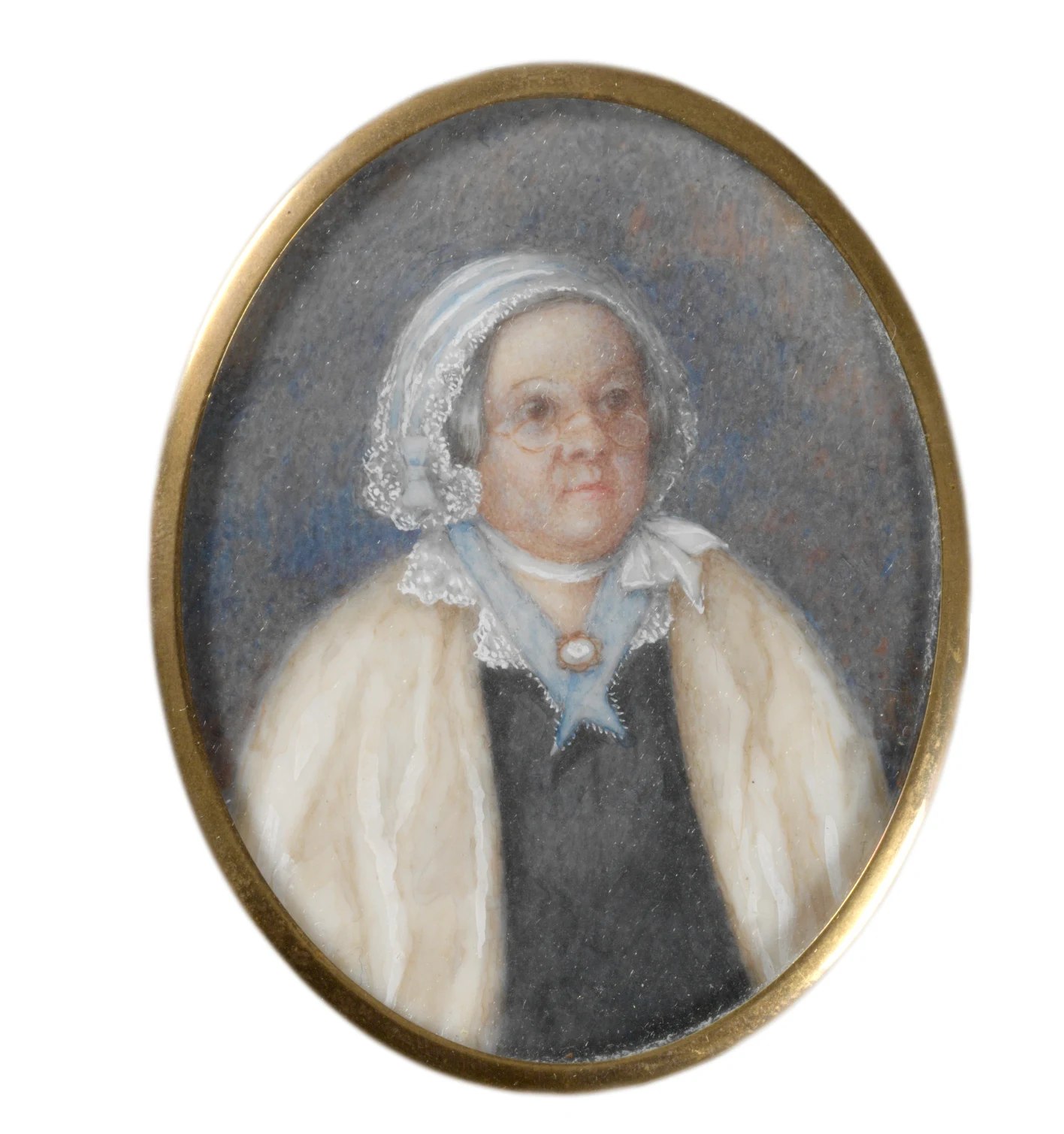
- Watercolour miniature, circa 1835, MIN 76
Why this life matters
Her career makes women’s work in early colonial commerce visible, while showing why a celebrated individual’s prosperity must be distinguished from the unequal opportunities and coercive institutions around it.
Timeline
Key moments
Born in Lancashire
Baptised Molly Haydock in Bury.
Transportation to New South Wales
Arrives under a seven-year sentence, not as a free business migrant.
Marriage and family enterprise
Marries Thomas Reibey; farming, transport and importing interests develop.
Experience before succession
Petitions over business premises while Thomas is overseas; later assumes wider control after his death.
Warehouse and shipping expansion
A new George Street warehouse and further vessels extend the enterprise.
Travel, property and later life
Visits England, invests in property and gradually withdraws from active commerce; dies at Newtown.
A new banknote design
The next-generation $20 retains her portrait and depicts her shipping story.
Transportation was coercion, not a chosen commercial beginning
Reibey was born in Bury, Lancashire, on 12 May 1777 and baptised Molly Haydock. As a young teenager she was convicted of horse stealing, having used a male alias. She arrived in Sydney aboard Royal Admiral in October 1792 under a seven-year transportation sentence. The reviewed accounts differ on the exact conviction date, so none is asserted here.
Her later prosperity should not turn that forced removal into a voluntary entrepreneurial journey. The Australian Dictionary of Biography records her assignment as a nursemaid in Major Francis Grose’s household. Work and movement in a penal colony began under constraints very different from the choices available to a free merchant.
Family enterprise gave her experience before widowhood
In 1794 she married Thomas Reibey, whose surname appeared in several spellings before Reibey became usual. The family’s activities developed from Hawkesbury farming and cargo transport to Sydney importing and shipping. Thomas’s commercial partnership with Edward Wills was part of that expansion; it was not an enterprise Mary founded alone after 1811.
She already handled affairs during Thomas’s absences. A January 1810 memorial preserved in the Colonial Secretary’s papers concerns a store and land beside the Government Wharf while he was overseas. The document makes her active role visible before the bereavement that dominates many short biographies.
The 1811 succession became a period of expansion
Thomas died in 1811 and Wills died soon afterwards. Mary, responsible for seven children, assumed control of numerous business interests. The change combined inherited assets and relationships with experience she already possessed. Neither an effortless inheritance story nor a claim that she started with nothing accurately describes this stage.
The Reserve Bank chronology records a new George Street warehouse in 1812 and additional vessels in 1817. The State Library’s exhibition account places her trading and property success within Macquarie’s emancipist society. Warehouses, ships and real estate performed different functions: storing goods, moving cargo and retaining or generating income from property.
Commercial determination also involved conflict and colonial power
The Dictionary of Biography records that in May 1817 she was found guilty of assaulting a debtor, John Walker, at Windsor. This is a specific adverse episode, not a basis for describing every debt collection as unlawful. It complicates an account confined to respectability and later charitable reputation.
Her dealings also operated inside colonial systems of land allocation and labour. Museums of History NSW identifies a later dispute over whether a man at her Burrier property could request assigned convict labour: she challenged his authority and the application was refused. A former convict could become a property owner dealing with the institutions of assignment. That history should not disappear behind a simple celebration of personal resilience.
Letters and property records extend the account beyond a legend
The State Library holds an 1818 letter to her cousin Alice Hope discussing family, business and preparations to visit England. Its catalogue also identifies later family correspondence and the 1820–1821 journey. These surviving records provide a way to examine a working life rather than relying only on a retrospective reputation.
She increasingly invested in urban property and withdrew from active trading. Her opportunities were not those of every transported woman. Leanne Johns’s study of colonial banking records finds other women in business and challenges the idea of one exceptional female entrepreneur standing outside an otherwise exclusively male commercial world.
Public commemoration selects parts of a larger life
Reibey supported education and church institutions, including service as a governor of the Free Grammar School in 1825. She died in Newtown on 30 May 1855. Her surviving miniature, dated around 1835 by costume, is an artwork by an unidentified artist, not a photograph and not a contemporary image of her arrival.
The Reserve Bank’s 2019 design announcement retained Reibey on the $20 banknote, accompanied by a schooner evoking her shipping enterprise. That later national recognition foregrounds commercial achievement and philanthropy. It does not remove transportation, business conflicts or the unequal colonial setting from a full biography.
Quick answers
Frequently asked questions about Mary Reibey
- Was Mary Reibey a free immigrant?
- No. She arrived in New South Wales in October 1792 under a seven-year transportation sentence following a conviction for horse stealing.
- Did she begin learning business only after 1811?
- No. She managed interests while Thomas was away; surviving evidence includes an 1810 memorial concerning business premises.
- Did she found the entire trading enterprise alone?
- No. She inherited and expanded existing family and partnership interests, bringing experience developed before widowhood.
- Is the familiar portrait a photograph?
- No. MIN 76 is a circa-1835 watercolour on ivory miniature by an unknown artist. The site uses the library-licensed digital reproduction with its full supplied frame.
Keep exploring
Lives connected to this story
- Ruslan Kogan
Compare a much later commerce career shaped by migration, distribution systems and a very different regulatory setting.
- Frank Lowy
Compare how another retail-related business biography separates personal initiative, partnerships and property ownership.
Sources and further reading
Explore the evidence
These references support the biography and offer further reading. Official records, first-person accounts and independent reporting provide different perspectives; image records document attribution and licensing.
- 1. Australian Dictionary of BiographyMary Reibey: life-summary identifiers, family names and dates
- 2. G. P. Walsh / Australian Dictionary of BiographyMary Reibey: selected business, voyage and court-history passages
The 1967 biography is a historical scholarly interpretation, not a modern endorsement of its paternalistic explanation of her childhood offence. Its exact trial date conflicts with the surviving muster described by MHNSW; the profile withholds a day and year of conviction.
- 3. Reserve Bank of AustraliaMary Reibey: trading, property, family and institutional chronology
- 4. Museums of History NSW7 September 2016: selected convict, memorial, land and court records
Selected curator descriptions of identified primary documents are used; no claim that every underlying manuscript was read. The 1810 memorial establishes activity before widowhood, and the labour dispute is not evidence that she personally employed every person mentioned in an application.
- 5. Leanne Johns / Australian National University2001 MPhil thesis: selected pages 7, 74 and 107 on women in colonial commerce
Only indexed title and selected passages are used, including other women in commerce and pre-1811 activity. No complete thesis review or exclusive female-founder claim.
- 6. State Library of New South WalesLetter to Alice Hope, 12 August 1818: catalogue description and historical context
- 7. State Library of New South WalesReibey family papers: correspondence, property and 1820–1821 voyage context
- 8. State Library of New South Wales2012 Macquarie exhibition: Reibey’s trading and property interests
- 9. Mitchell Library, State Library of New South WalesMIN 76: circa 1835 miniature, physical object and out-of-copyright copying status
The library marks the historical object out of copyright and dates it approximately by costume. The separate digital-reproduction grant is CC BY-SA 3.0 Australia; neither date nor licence is invented from a Commons footer.
- 10. Reserve Bank of Australia22 February 2019: next-generation $20 design announcement
- 11. State Library of New South Wales / Wikimedia CommonsMary Reibey State Library of NSW Min 76.jpg: full reproduction and institutional grant
- 12. Creative CommonsAttribution-ShareAlike 3.0 Australia licence