
The short answer
The death of Thomas Reibey in 1811 changed who controlled an existing trading enterprise. It did not mark Mary’s first encounter with business, nor did it automatically guarantee success. Evidence of her earlier activity, the assets and relationships she took over, and later expansion provides a more useful explanation than either a sole-founder myth or a claim that inheritance explains everything.
Chronology
A timeline of the turning points
Evidence predates succession
Johns identifies advertisements in Mary’s name as evidence of earlier commercial activity.
Government Wharf premises
Mary seeks confirmation of a lease while Thomas is overseas.
Deaths and continuity
Thomas and his partner Edward Wills die; Mary takes over existing interests.
Warehouse and debt recovery
Expansion in George Street accompanies documented action to recover payment.
Shipping and correspondence
Further vessels extend operations; a surviving letter discusses business and planned travel.
Property and gradual withdrawal
Urban holdings become increasingly important as she reduces active commercial involvement.
Succession changed control of a business already in motion
The family enterprise connected Hawkesbury farming, cargo transport, importing and coastal or Pacific shipping. Thomas’s partnership with Edward Wills was already established. Mary’s later control therefore involved existing assets, obligations and commercial contacts, not the creation of a wholly new business from an empty starting point.
The Reserve Bank biography identifies 1811 as the year she took responsibility for the enterprises after Thomas’s death. The State Library’s historical account corroborates the transition. Inheritance explains access to resources; it does not by itself explain the decisions needed to continue trading or expand.
The evidence does not support a sudden discovery of business ability
Johns’s study points to advertisements in Mary’s own name in December 1809. The government archive supplies a further concrete example: her January 1810 request concerning a store lease while Thomas was in China. These records place her within the working enterprise before widowhood.
This matters when interpreting the familiar statement that she took over in 1811. Wider authority after bereavement can coexist with years of prior experience. It is equally misleading to erase that earlier work or to treat Thomas’s contribution and the partnership as if they never existed. The sources support continuity and a change in control, not an exclusive-founder claim.
A warehouse and a ship solved different commercial problems
The new George Street warehouse opened in 1812, and her fleet later expanded through further purchases. A warehouse connected imported or local goods with storage and sale; a vessel made transport and access to trading routes possible. Ownership of one did not remove the need for the other.
The sequence illustrates active extension of the inherited enterprise. It does not establish uninterrupted profits on every voyage or that every building remained in the same ownership. The surviving record is stronger on particular transactions and holdings than on a complete annual balance sheet. Claims about permanent prosperity should respect that limit.
Commerce depended on collecting payment and dealing with institutions
Museums of History NSW describes an April 1812 civil case in which Reibey recovered payment for goods from Joseph Broadbent, with damages and costs. Such records reveal the practical work behind a prosperous reputation: completing a sale and actually receiving payment were different stages.
Johns’s analysis of early bank ledgers and minutes places her alongside other women conducting business. The evidence undermines the idea that she was the only woman participating in colonial commerce. Nor should later banking records be conflated: the Reserve Bank’s published example of her 1833 account belongs to the Savings Bank of New South Wales, not automatically every similarly named institution.
Business, household and later property investment remained connected
Mary was also raising seven children. Her 1818 letter to Alice Hope, as described by the library, addresses family and business together and anticipates a trip to England. That combination is evidence against separating the household from the commercial history as if they belonged to unrelated lives.
Her later urban investments and gradual withdrawal from active commerce changed the source and management of income. This was a transition within a working life, not a business frozen at its 1811 inheritance. The experience remains part of a penal and unequal colonial society; one woman’s commercial authority cannot demonstrate that transported women generally had equivalent freedom or resources.
Continue the chronology
Related history guides
Biography context
Explore Australia through connected lives
Connected biographies
The merchant during a change in control
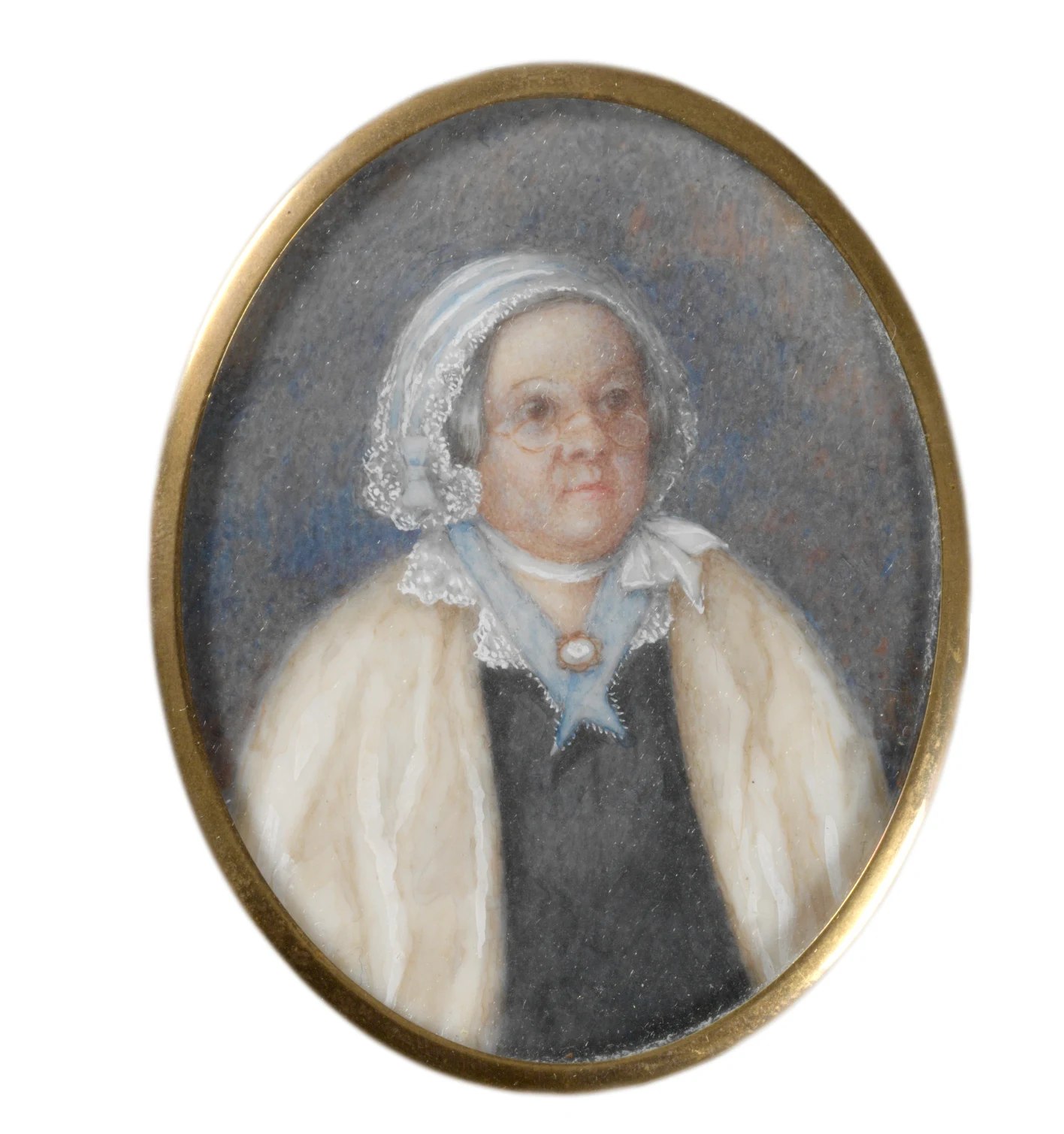
1777–1855
Mary Reibey
Colonial merchant, shipowner and property investorMary Reibey was transported to New South Wales as a young convict and later became a merchant with shipping and property interests. She helped manage the family business before her husband’s death in 1811, then assumed wider control and expanded it. Surviving business and government records reveal experience, inheritance, disputes and colonial institutions behind the familiar success story.Read biographyQuick answers
Common questions
- What changed in 1811?
- Thomas Reibey’s death left Mary with wider control of existing family business interests and responsibility for seven children. Edward Wills also died soon afterwards.
- Was Mary commercially active before that?
- Yes. Scholarship identifies advertisements in her name in 1809; the government archive describes her January 1810 business-premises memorial.
- What shows expansion rather than mere inheritance?
- The chronology records a new warehouse in 1812 and later vessel purchases, alongside continuing investment in property.
- Was she the colony’s only businesswoman?
- No. Research on early bank records identifies other women trading, managing enterprises and dealing with financial institutions.
Primary and institutional sources
How this history was checked
Institutional chronologies are read alongside identified government documents, library correspondence descriptions and selected scholarship on early bank records. This guide distinguishes direct evidence of earlier activity from later reputation, the operator’s work from inherited assets, and similarly named banks. Only the specified passages were read; no complete ledger, thesis, estate audit or universal conclusion about women’s legal rights is claimed. This article was reviewed on 24 October 2026.
- G. P. Walsh / Australian Dictionary of BiographyMary Reibey: selected business, voyage and court-history passages
- Reserve Bank of AustraliaMary Reibey: trading, property, family and institutional chronology
- State Library of New South Wales2012 Macquarie exhibition: Reibey’s trading and property interests
- Leanne Johns / Australian National University2001 MPhil thesis: selected pages 7, 74 and 107 on women in colonial commerce
- Museums of History NSW7 September 2016: selected convict, memorial, land and court records
- State Library of New South WalesReibey family papers: correspondence, property and 1820–1821 voyage context
- State Library of New South WalesLetter to Alice Hope, 12 August 1818: catalogue description and historical context
- Reserve Bank of AustraliaDecember 2019: colonial banking records and Reibey’s 1833 account
- State Library of New South Wales / Wikimedia CommonsMary Reibey State Library of NSW Min 76.jpg: full reproduction and institutional grant
- Mitchell Library, State Library of New South WalesMIN 76: circa 1835 miniature, physical object and out-of-copyright copying status
- Creative CommonsAttribution-ShareAlike 3.0 Australia licence