In this biography
Quick facts
- Born
- 4 August 1901
- Died
- 6 July 1971
- Birthplace
- New Orleans, Louisiana, United States
- Country
- United States
- Nationality
- American
- Known for
- Hot Five and Hot Seven recordings, the All Stars and an influential trumpet and vocal style
- Instruments and voice
- Cornet, trumpet and vocals
- Early mentor
- Joe 'King' Oliver
- Hot Five and Hot Seven
- Chicago recording groups, 1925–1928
- The All Stars
- Small performing group formed in 1947
- Home base
- Corona, Queens, from 1943
- Public criticism
- Spoke against the government's handling of Little Rock school integration in 1957
Why this life matters
His rhythmic phrasing, distinctive sound and expressive solo construction reshaped jazz, while his singing and public performances carried that musical imagination to audiences across the world.
Timeline
Key moments
Born in New Orleans
The date supported by the baptismal record cited by his museum; he personally celebrated an earlier date.
Oliver, Hardin and Henderson
Joined King Oliver in Chicago, recorded with him in 1923, married pianist Lil Hardin in 1924 and worked with Fletcher Henderson in New York.
The Hot Five and Hot Seven
Recorded in Chicago under his own name, producing influential ensemble, instrumental and vocal performances.
A home and a new performing group
Settled with Lucille in Corona, Queens, in 1943; formed the All Stars in 1947.
Public protest and popular success
Criticized the government's response to Little Rock in 1957; Hello, Dolly! became a major hit in 1964.
Death in Queens
Died at his Corona home after a career that continued into his final year.
A musical education in New Orleans
Louis Armstrong grew up in New Orleans amid poverty and a dense culture of street music, dancing and entertainment. His museum gives his birth date as 4 August 1901, following a baptismal certificate found decades after his death. Armstrong himself celebrated 4 July 1900. The distinction explains why older documents and some photograph catalogs assign him different life dates.
He worked while young and encountered music through the people and neighborhoods around him. At the Colored Waif's Home for Boys, Peter Davis helped him develop his cornet playing, and Armstrong became the institution's bandleader. After his release in 1914, he pursued professional work. Joe 'King' Oliver became an important mentor, and riverboat employment extended his musical experience beyond the city.
Chicago, New York and Lil Hardin's encouragement
In 1922 Armstrong joined Oliver's band in Chicago, and the two cornetists recorded together in 1923. The move connected New Orleans experience with a northern city becoming a major center for Black music. Pianist Lil Hardin, whom he married in 1924, encouraged him to develop an independent career rather than remain in Oliver's shadow.
He then worked with Fletcher Henderson's orchestra in New York before returning to Chicago in 1925. These settings exposed him to different ensemble demands, arrangements and audiences. He was not developing in isolation: fellow musicians, bandleaders and singers supplied the musical environments in which his powerful sound and rhythmic imagination could become increasingly individual. Recording under his own name created another setting for that development.
The recording studio and an expressive voice
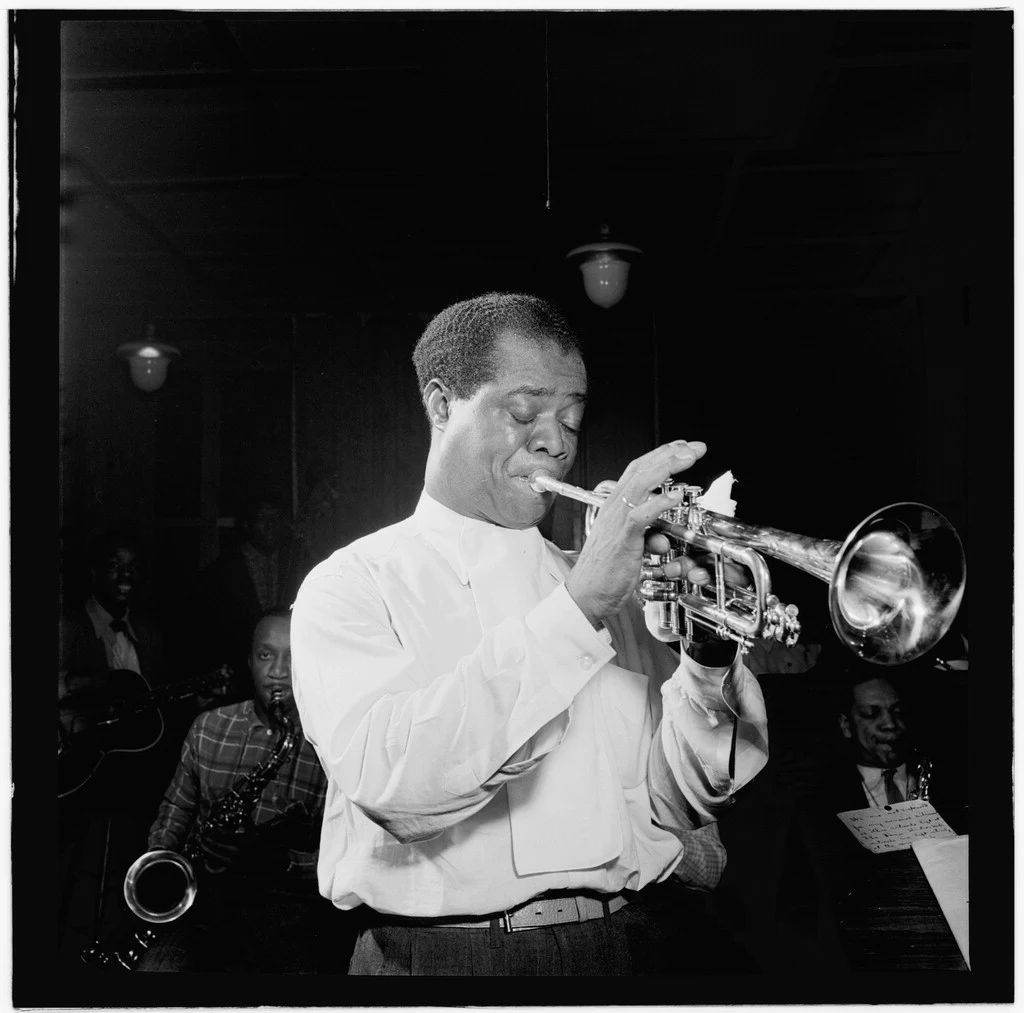
The Hot Five and Hot Seven recordings of 1925–1928 became central to Armstrong's reputation. Small ensembles made room for his solo ideas while preserving intricate collective playing. His phrasing helped establish improvisation as a sustained personal statement: a solo could develop direction, contrast and emotional shape rather than merely decorate a tune.
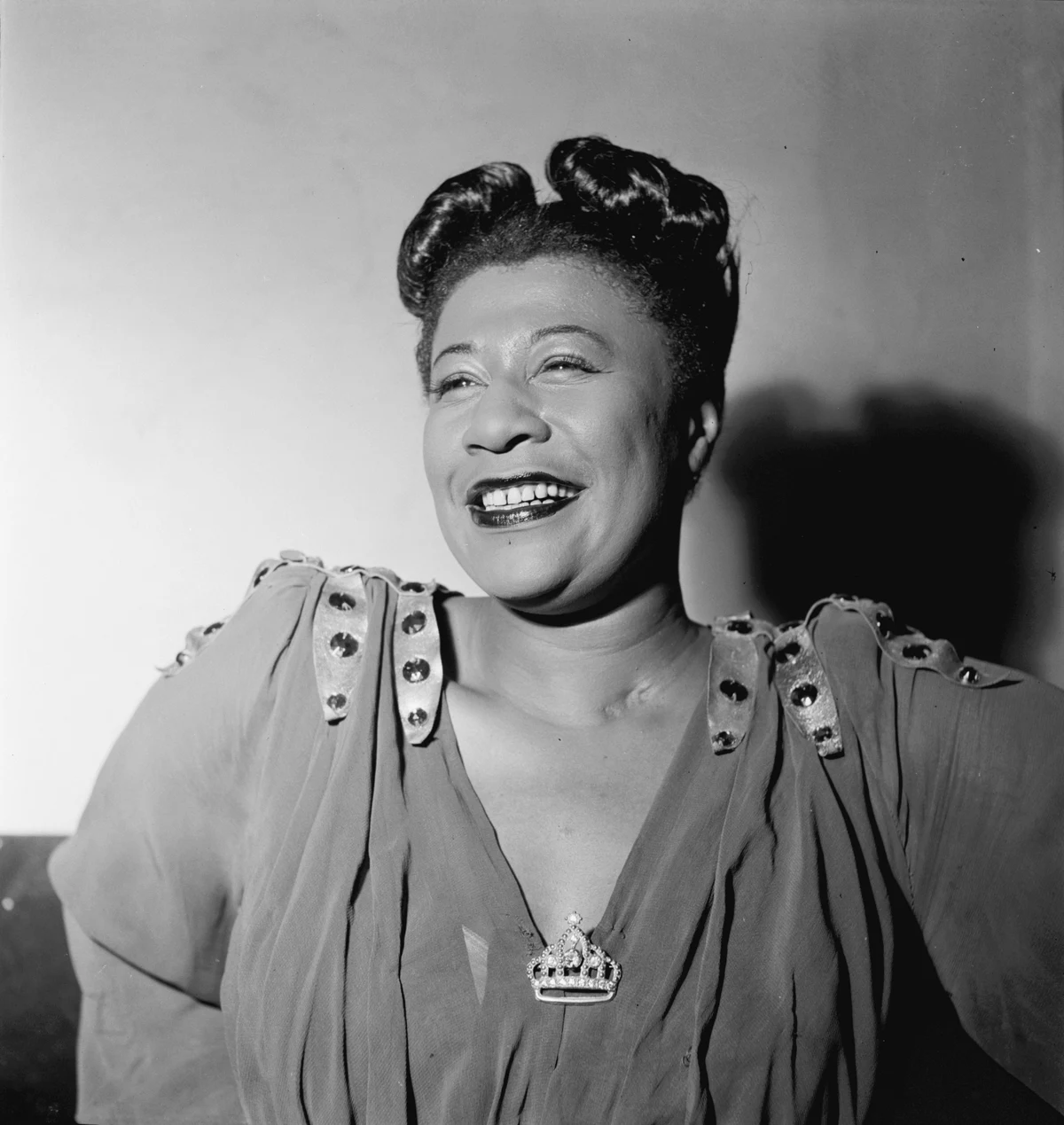
Singing was equally important. He treated a melody flexibly, altering its rhythmic placement and making wordless scat an expressive resource. The effect was not a separate novelty attached to trumpet playing; horn and voice shared a concern with timing and musical personality. His recorded career continued far beyond the twenties, encompassing big bands, collaborations with Ella Fitzgerald and other artists, and interpretations of popular songs.
The All Stars and an international audience
Armstrong formed the All Stars in 1947, returning to a small-group performing format after years associated with larger bands. Its personnel changed, but it became his main touring vehicle. This was a working performance ensemble, distinct from the Hot Five and Hot Seven record sessions of the twenties. His career joined concerts with radio, films and repeated visits overseas.
The nickname Ambassador Satch reflected the scale of that international recognition. Some travel also had official sponsorship, including an African tour in 1960 supported by the State Department. Yet Armstrong's appeal was not reducible to diplomacy. His ability to create a direct relationship with an audience, through a trumpet phrase, a song or stage presence, remained a defining part of his work.
Queens, public criticism and a lasting musical language
From 1943 Armstrong and his wife Lucille made their home in Corona, Queens. It remained a base through decades of travel. Fame did not protect him from the racial inequalities of American life, and his cheerful public persona did not mean that he avoided criticism. In 1957 he denounced the government's handling of the school-integration crisis in Little Rock, Arkansas.
Popular success continued, notably with Hello, Dolly! in 1964. He died at home on 6 July 1971. The preserved house, recordings and documentary collections reveal both an internationally recognizable entertainer and a working musician whose decisions changed the language of performance. His influence crosses a misleading divide between serious jazz innovation and the communication of pleasure to a broad public.
Quick answers
Frequently asked questions about Louis Armstrong
- When was Louis Armstrong born?
- His museum follows 4 August 1901, supported by a baptismal certificate discovered after his death. Armstrong himself believed and celebrated 4 July 1900, which explains the older date in some sources.
- What made his music influential?
- His distinctive tone, rhythmic phrasing and extended improvised solos reshaped jazz performance. His singing brought similarly flexible phrasing and expressive scat to popular song.
- Were the Hot Five and the All Stars the same band?
- No. The Hot Five and Hot Seven were twenties recording groups. The All Stars began in 1947 as a small performing ensemble with changing personnel.
- Did Armstrong speak publicly about racial injustice?
- Yes. A prominent example is his 1957 criticism of the government's handling of the Little Rock school-integration crisis.
Keep exploring
Lives connected to this story
- Ella Fitzgerald
Explore the singer's own improvisational voice and a major recording partnership with Armstrong.
- Duke Ellington
Compare another jazz musician's approach to distinctive sound, collaboration and a long public career.
Sources and further reading
Explore the evidence
These references support the biography and offer further reading. Official records, first-person accounts and independent reporting provide different perspectives; image records document attribution and licensing.
- 1. Louis Armstrong House MuseumLouis Armstrong Biography
- 2. Louis Armstrong House MuseumWhen is Louis Armstrong's birthday?
Museum explanation of the baptismal evidence governs the displayed birth date, rather than the 1900 heading still found in the photo catalog. No middle-name order is inferred from inconsistent later records.
- 3. Louis Armstrong House MuseumLouis Armstrong Music
- 4. New York City Landmarks Preservation CommissionThe Louis Armstrong House: Designation Report, 13 December 1988
Read the career synopsis and house history, especially the dated record of residence, All Stars touring and 1957 criticism. Its claim that Armstrong introduced scat and its later chart-year wording are not adopted as absolute firsts or recording dates.
- 5. National Endowment for the ArtsDan Morgenstern on Louis Armstrong — transcript
Read the posted transcript of Morgenstern's recollections; no claim to audio playback. Museum discography's reissue dates are not treated as original session dates.