
The short answer
Hot Five and Hot Seven name a landmark series of recordings, not one touring band with an unchanged roster. Louis Armstrong made the sessions in Chicago for OKeh while working in other performing ensembles. Following the musicians and dates reveals the creative roles of Lil Hardin Armstrong, Johnny Dodds, Earl Hines and others alongside the increasingly prominent soloist.
Representative session lineups
The names changed less neatly than the musicians
These selected lineups identify particular recording situations, not every variation or guest appearance across the series.
| Recording situation | Players and instruments | Recording example |
|---|---|---|
| Original Hot Five, 1925 | Louis Armstrong, cornet; Kid Ory, trombone; Johnny Dodds, clarinet; Lil Hardin Armstrong, piano; Johnny St. Cyr, banjo. | My Heart and Gut Bucket Blues, 12 November 1925. |
| Hot Seven, May 1927 | Armstrong, cornet; John Thomas, trombone; Johnny Dodds, clarinet; Lil Armstrong, piano; St. Cyr, banjo; Pete Briggs, tuba; Baby Dodds, drums. | Potato Head Blues, 10 May 1927. |
| New Hot Five, June 1928 | Armstrong, trumpet and vocals; Fred Robinson, trombone; Jimmy Strong, clarinet; Earl Hines, piano; Mancy Carr, banjo; Zutty Singleton, drums. | West End Blues, 28 June 1928. |
| Armstrong–Hines duet | Armstrong, trumpet; Hines, piano. | Weather Bird, 5 December 1928. |
Chronology
A timeline of the turning points
The first Hot Five session
Armstrong, Ory, Johnny Dodds, Lil Armstrong and St. Cyr record My Heart, Yes! I'm in the Barrel and Gut Bucket Blues.
Heebie Jeebies
A Hot Five session produces Heebie Jeebies and Cornet Chop Suey, important examples of Armstrong's vocal and instrumental work.
Potato Head Blues
The Hot Seven records the piece in Chicago with John Thomas on trombone, Pete Briggs on tuba and Baby Dodds on drums.
West End Blues
A new six-player Hot Five lineup records with Earl Hines at the piano and Armstrong on trumpet and vocals.
Weather Bird
Armstrong and Hines record a trumpet-and-piano duet, a different format from either Five or Seven.
National Recording Registry
The Hot Five and Hot Seven recordings of 1925–1928 are added to the United States National Recording Registry.
A recording identity alongside other working bands
The Hot Five began with a studio date on 12 November 1925. Armstrong had returned to Chicago after working with Fletcher Henderson in New York. Lil Hardin Armstrong helped arrange that return, while OKeh personnel developed the recording opportunity. The group's name put Louis before record buyers as a leader, but the sessions drew on musicians with shared New Orleans experience and substantial careers of their own.
These were chiefly recording groups, not Armstrong's regular touring organization. His Chicago work also included Erskine Tate's Vendome Theatre ensemble and Carroll Dickerson's orchestra at the Sunset Café. Keeping those jobs in view explains how a small record-making unit could coexist with a much larger nightly musical environment. Studio leadership and a working dance-band engagement were different activities.
The original five included a pianist and composer, not just a star
The original lineup placed Armstrong's cornet with Kid Ory's trombone and Johnny Dodds's clarinet, supported by Lil Hardin Armstrong at the piano and Johnny St. Cyr on banjo. Those instruments could sustain several melodic strands while maintaining a rhythmic foundation. Familiarity among the players mattered: the Hot Five combined preparation with the responsiveness of musicians who understood one another's styles.
Lil's My Heart was recorded at the first session, alongside Armstrong's Yes! I'm in the Barrel and Gut Bucket Blues. Her role therefore included original composition as well as piano and career support. Naming the contributors changes the historical picture. These records document a collaborative ensemble in which Armstrong's individuality grew, rather than anonymous accompaniment waiting for a famous solo.
Sources for this section: [1]
May 1927 brought the Hot Seven's expanded sound
For the May 1927 Hot Seven sessions, tuba and drums enlarged the rhythm section. Pete Briggs and Baby Dodds supplied those instruments, while John Thomas took the trombone place occupied by Ory in the original Five. Potato Head Blues, recorded on 10 May, provides a well-documented example of this personnel. Armstrong still played cornet, with Johnny Dodds, Lil Armstrong and St. Cyr continuing from the earlier group.
The title does not make Potato Head Blues a conventional twelve-bar blues. The university listening guide identifies an ABAC song structure and describes Armstrong's later stop-time solo, with punctuating ensemble chords leaving space around the lead line. The ensemble's coordinated restraint helps create the solo's prominence. Individual expression depends here on other musicians' decisions as well as the soloist's invention.
Sources for this section: [3]
The 1928 Hot Five was a different lineup—and sometimes six
West End Blues, recorded on 28 June 1928, belongs to a new lineup with Earl Hines on piano. Its six credited players show why the Hot Five label cannot reliably serve as a head count. Armstrong's trumpet introduction, the exchange between voice and clarinet, and Hines's piano contribution made this a particularly influential record. The musical relationship is different from simply adding two instruments to the original Five.
On 5 December, Armstrong and Hines recorded Weather Bird as a duet for trumpet and piano. That two-player encounter provides a useful contrast with both earlier ensembles. It also makes Hines's agency unmistakable: the pianist was a creative partner with his own musical language, not a replacement for Lil's role across all the earlier sessions.
Why the recordings changed ideas about jazz performance
Armstrong made the improvised solo feel like an extended personal statement, with phrasing and rhythmic placement giving it a developing shape. Yet the recordings also preserve tightly interwoven ensemble playing. Their historical importance lies partly in that coexistence: collective New Orleans practice and a new prominence for the individual voice can be encountered within the same body of work.
Heebie Jeebies, recorded on 26 February 1926, helped popularize Armstrong's scat singing. Wordless syllables treated the voice as a flexible musical instrument, and his vocal phrasing influenced performers beyond jazz trumpet. A useful comparison is to follow how attention moves between lead, accompaniment and response across a record. This reveals the musicians' interaction rather than making virtuosity the only subject.
Their reputation also has a release and reissue history
The original sides circulated in a segregated record market, commonly under the industry's Race Records category. Influence did not mean that everyone heard them, and contemporary critics did not agree on their value. By the mid-thirties, out-of-print originals attracted collectors; later reissues, including projects associated with producer George Avakian, helped bring the performances to new audiences and reshape their reputation.
The recordings entered the National Recording Registry in 2002. Modern compilations gather this history into convenient packages, but an album's release year is not the date of its component sessions. Use the timeline and lineup table to connect a track with its particular musicians. That approach preserves the changes across 1925, 1927 and 1928 instead of turning several creative partnerships into one timeless band.
Biography context
Explore United States through connected lives
Armstrong beyond the twenties
Follow his career from New Orleans to big bands, the All Stars and international performance.
Explore the biographiesExplore another improvising voiceElla Fitzgerald and vocal invention
Read about the singer's independent career and her later recording partnership with Armstrong.
Explore the biographiesConnected biographies
Explore jazz voices, bands and collaborations
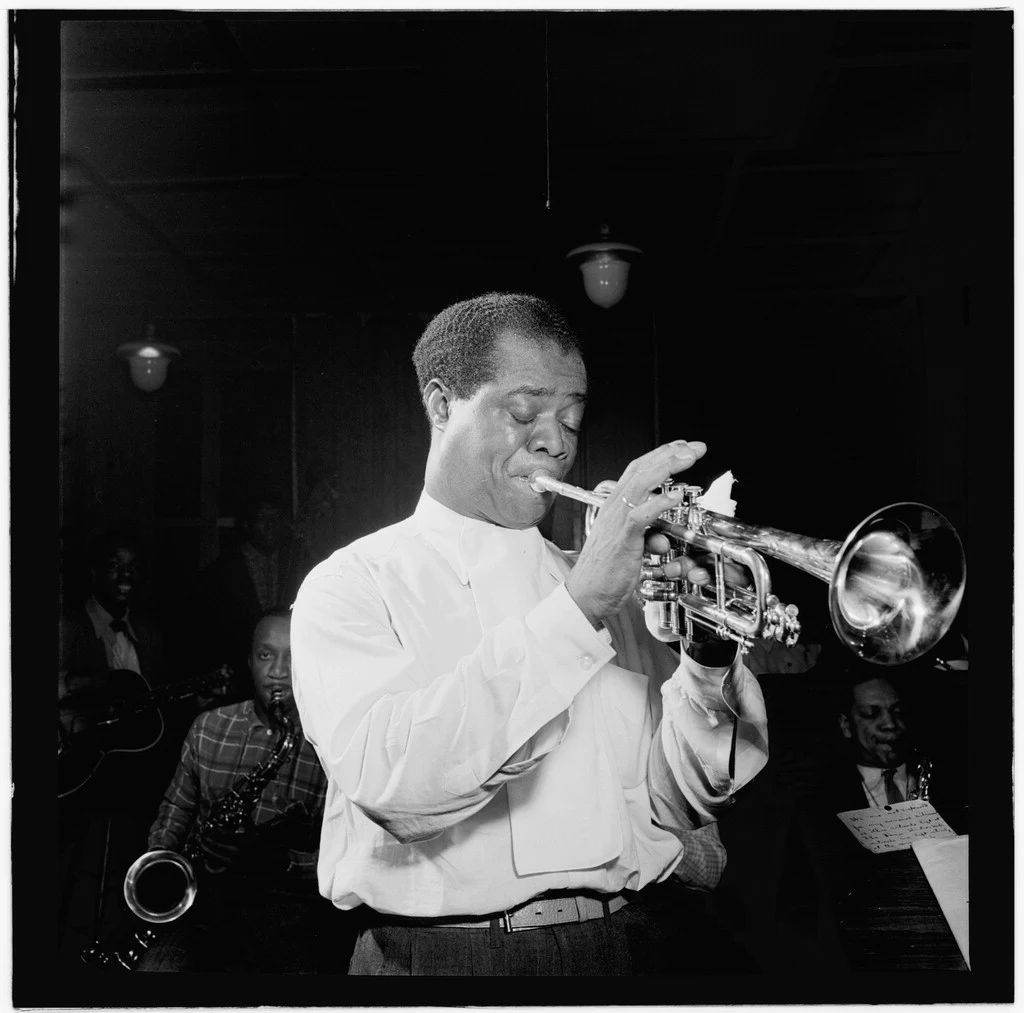
1901–1971
Louis Armstrong
Jazz trumpeter, singer and bandleaderKnown as Satchmo, Armstrong transformed jazz improvisation and popular singing through a career extending from New Orleans ensembles to recordings, international tours, radio and film.Read biography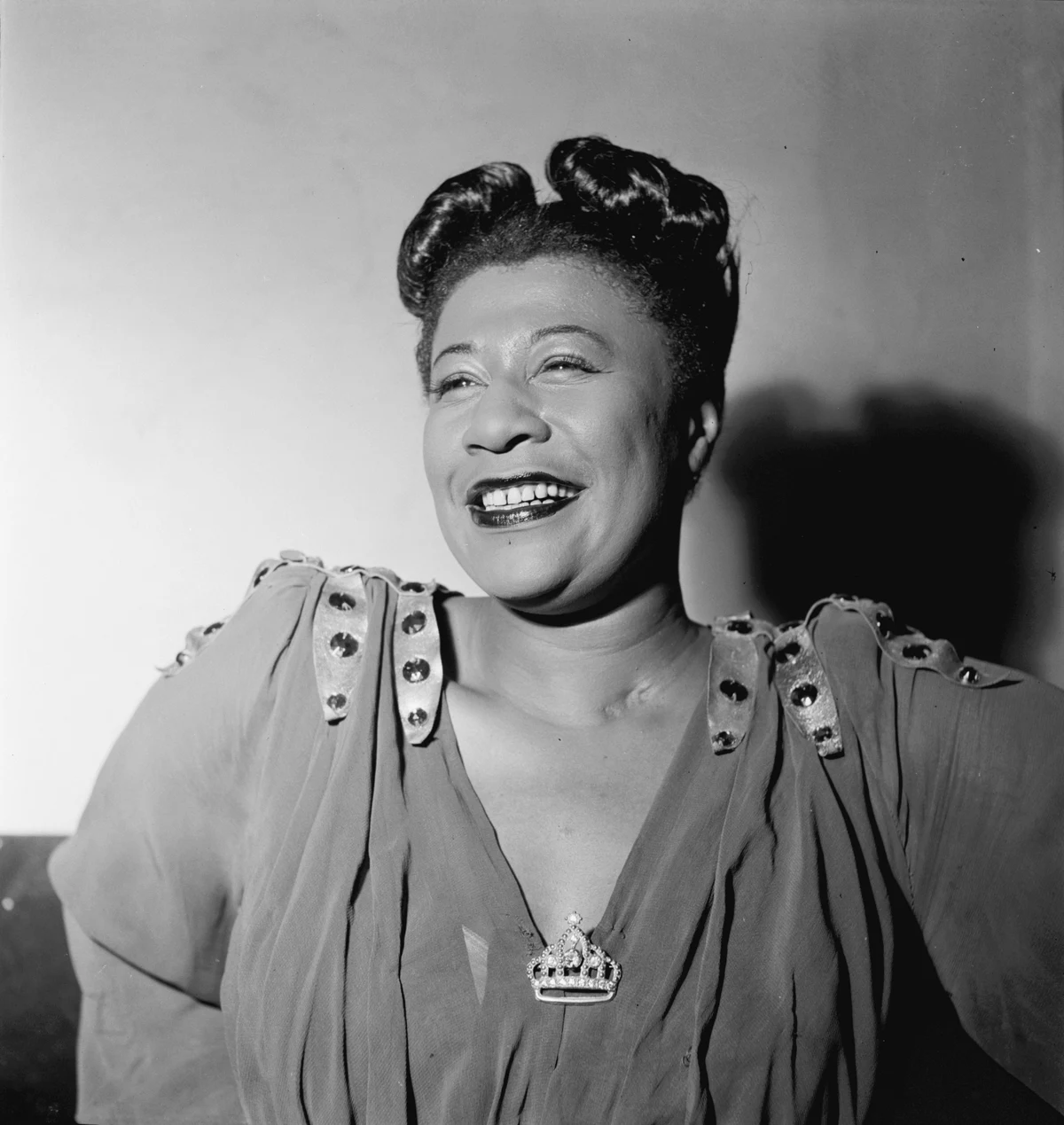
1917–1996
Ella Fitzgerald
Jazz singer and interpreter of American popular songA jazz singer whose rhythmic invention, precise phrasing and Song Book recordings made familiar popular songs vehicles for distinctive interpretation.Read biography
1899–1974
Duke Ellington
Composer, pianist, arranger and orchestra leaderAn American composer and pianist who made his orchestra a continuing creative workshop, developing a distinctive sound through individual players, arrangements and extended works.Read biographyQuick answers
Common questions
- Were the Hot Five and Hot Seven regular touring bands?
- They were principally recording groups. Armstrong performed with other working ensembles during the same Chicago years; the All Stars was a separate small performing group formed in 1947.
- Who added the extra instruments in the Hot Seven?
- In the May 1927 lineup, Pete Briggs played tuba and Baby Dodds played drums. John Thomas also occupied the trombone chair, rather than the original Five's Kid Ory.
- Did the Hot Five always contain five musicians?
- No. West End Blues on 28 June 1928 had six credited players, including Earl Hines and Zutty Singleton. The name does not fix one roster or head count across all sessions.
- Which dates should I use for these recordings?
- Use the original session dates, not a reissue album's release year. Examples are Potato Head Blues on 10 May 1927, West End Blues on 28 June 1928 and the Armstrong–Hines Weather Bird duet on 5 December 1928.
Primary and institutional sources
How this history was checked
The Armstrong Museum's archival exhibits explain the group's formation, collaborators and record circulation. Discographic liner notes and university teaching materials establish the selected sessions and instrumental roles. The Library of Congress supplies the Registry designation. This article was reviewed on 21 October 2026.
- Louis Armstrong House MuseumHot Five Centennial Celebration Part 1: Birth of the Hot
- Louis Armstrong House Museum1925–1928: Performing and recording timeline
- Arizona State University, School of MusicJazz Giants: Armstrong Listening Guides, printed pages 28–31
- Columbia/Legacy and Smithsonian Institution Press; transcript hosted by Texas State UniversityDan Morgenstern: Portrait of the Artist as a Young Man, 1923–1934 — selected discographic notes
- Louis Armstrong House MuseumI Got the Heebies! 100 Years of Heebie Jeebies
- Jazz at Lincoln Center, Blue Engine RecordsHot Fives and Hot Sevens: Dr. Michael White's contextual liner notes
- Louis Armstrong House MuseumHot Five Centennial Celebration Part 5: George Avakian and the Release of King Louis
- Library of Congress, National Recording Preservation BoardHot Five and Hot Seven Recordings: Registry essay and 2002 designation