In this biography
Quick facts
- Born
- 18 December 1972
- Birthplace
- Singapore
- Country
- Singapore
- Nationality
- Singaporean
- Known for
- Leading Singapore’s fourth-generation government after coordinating its COVID-19 response
- Office
- Prime Minister, since 15 May 2024
- Additional office
- Minister for Finance, since 2021
- Entered Parliament
- 2011
- Earlier career
- Civil servant and EMA chief executive
Why this life matters
Wong’s premiership is the first Singapore leadership transition outside the founding Lee–Goh–Lee sequence and a test of political renewal in a mature city-state.
Timeline
Key moments
Entered the civil service
Began a public-service career that included the finance and health ministries.
Led the Energy Market Authority
Became chief executive on 1 January, after joining the regulator as deputy chief executive in September 2008.
Entered Parliament
Was elected and appointed a minister of state.
Co-chaired the COVID-19 taskforce
Became a central public voice in Singapore’s pandemic response.
Became finance minister
Took over the finance portfolio on 15 May after serving as education minister.
Chosen to lead the fourth-generation team
Cabinet ministers and People’s Action Party MPs endorsed him as the 4G leader in April.
Became prime minister
Was sworn in as Singapore’s fourth prime minister on 15 May.
Won a general-election term
Was re-elected with the PAP’s four-person Marsiling–Yew Tee team in the 3 May election.
Economics, public service and the energy regulator
Lawrence Wong studied economics at the University of Wisconsin–Madison and the University of Michigan–Ann Arbor, then earned a public-administration degree at Harvard. His political career grew out of the civil service rather than a private-sector business. The Prime Minister’s Office records work across several ministries, and his earlier assignments included serving as principal private secretary to Prime Minister Lee Hsien Loong.
The Energy Market Authority gives a useful correction to a frequently compressed career timeline. Wong joined it as deputy chief executive in September 2008 and became chief executive on 1 January 2009. The regulator credits his tenure with work on energy-sector development and technology pilots, but those are its own institutional assessments rather than an independent evaluation of every outcome. He left the agency in April 2011 before standing for Parliament.
Parliament, the pandemic and finance
Wong first entered Parliament with the People’s Action Party’s West Coast group in the 2011 general election. He later held ministerial portfolios in culture, national development and education. Those different assignments mattered to the succession story: by the time he became finance minister in May 2021, he had worked on housing, schooling and economic policy as well as constituency politics.
During the COVID-19 emergency he co-chaired the government’s multi-ministry taskforce, initially alongside Health Minister Gan Kim Yong. Official statements and briefings show him explaining restrictions and reopening decisions, but the taskforce was a collective body; Singapore’s pandemic record cannot be assigned to one minister alone. His prominence in that role helped make him publicly familiar before the leadership change, while the long-term effects of the response remain a separate subject for evaluation.
Chosen for the fourth-generation handover
In April 2022, Cabinet ministers and PAP MPs endorsed Wong as leader of the party’s fourth-generation team after an internal consultation process. This was a political succession decision, not a direct public election for prime minister. He subsequently led the Forward Singapore engagement exercise, launched in June 2022, and presented its report in October 2023. The report set out proposals on education, work, families, ageing and social support; a proposed shift should not be described as an accomplished result.
Wong succeeded Lee Hsien Loong and was sworn in as Singapore’s fourth prime minister on 15 May 2024 while retaining the finance portfolio. His inaugural speech set out a more inclusive social and economic agenda, but it was a statement of intended direction. An independent Institute of Policy Studies analysis before the 2025 poll identified cost of living, immigration and the challenge of building a more inclusive society as tests of the new government. Those issues do not disappear because a handover was orderly.
The 2025 election and governing record
The 2025 general election was Wong’s first as sitting prime minister and PAP leader. The Elections Department records that the four-person PAP team including Wong won Marsiling–Yew Tee with 81,143 votes, or 73.48 per cent of valid votes cast for candidates, against 29,281 for the Singapore Democratic Party team. That is a group-constituency result, not a personal vote count for Wong. Nationwide, the PAP retained government; an Institute of Southeast Asian Studies review records 87 of the 97 parliamentary seats for the PAP and 10 for the Workers’ Party.
After the election, Wong announced a new cabinet in May 2025 and remained both prime minister and finance minister in the 2026 official roster. The next part of his biography is still being written: office titles and election returns establish who governs, but they do not by themselves prove the success of Forward Singapore or settle debates about representation and policy outcomes. This account therefore dates its claims and keeps future assessments open rather than presenting campaign promises as a completed legacy.
Quick answers
Frequently asked questions about Lawrence Wong
- When did Lawrence Wong become prime minister?
- He was sworn in as Singapore’s fourth prime minister on 15 May 2024, succeeding Lee Hsien Loong.
- Is Lawrence Wong also finance minister?
- Yes. The official cabinet biography consulted for the October 2026 review lists both roles. He became finance minister on 15 May 2021.
- What did Lawrence Wong do before entering politics?
- He worked in the civil service, including as the prime minister’s principal private secretary, and became Energy Market Authority chief executive on 1 January 2009 after joining as deputy in September 2008.
- Did Lawrence Wong personally receive 81,143 votes in 2025?
- That was the total for his four-person PAP team in Marsiling–Yew Tee, equal to 73.48 per cent of valid votes for candidates. It was not a separate personal vote count.
Keep exploring
Lives connected to this story
- Indranee Rajah
Read how Rajah’s finance, population and national-development responsibilities fit alongside Cabinet leadership.
- Gan Kim Yong
Read about the deputy premier appointed with Wong’s incoming administration in May 2024 and his separately dated trade responsibilities.
- Ng Eng Hen
Read about the former defence minister who retired during the 2025 Cabinet transition.
- Lee Hsien Loong
The predecessor who handed over the premiership in May 2024.
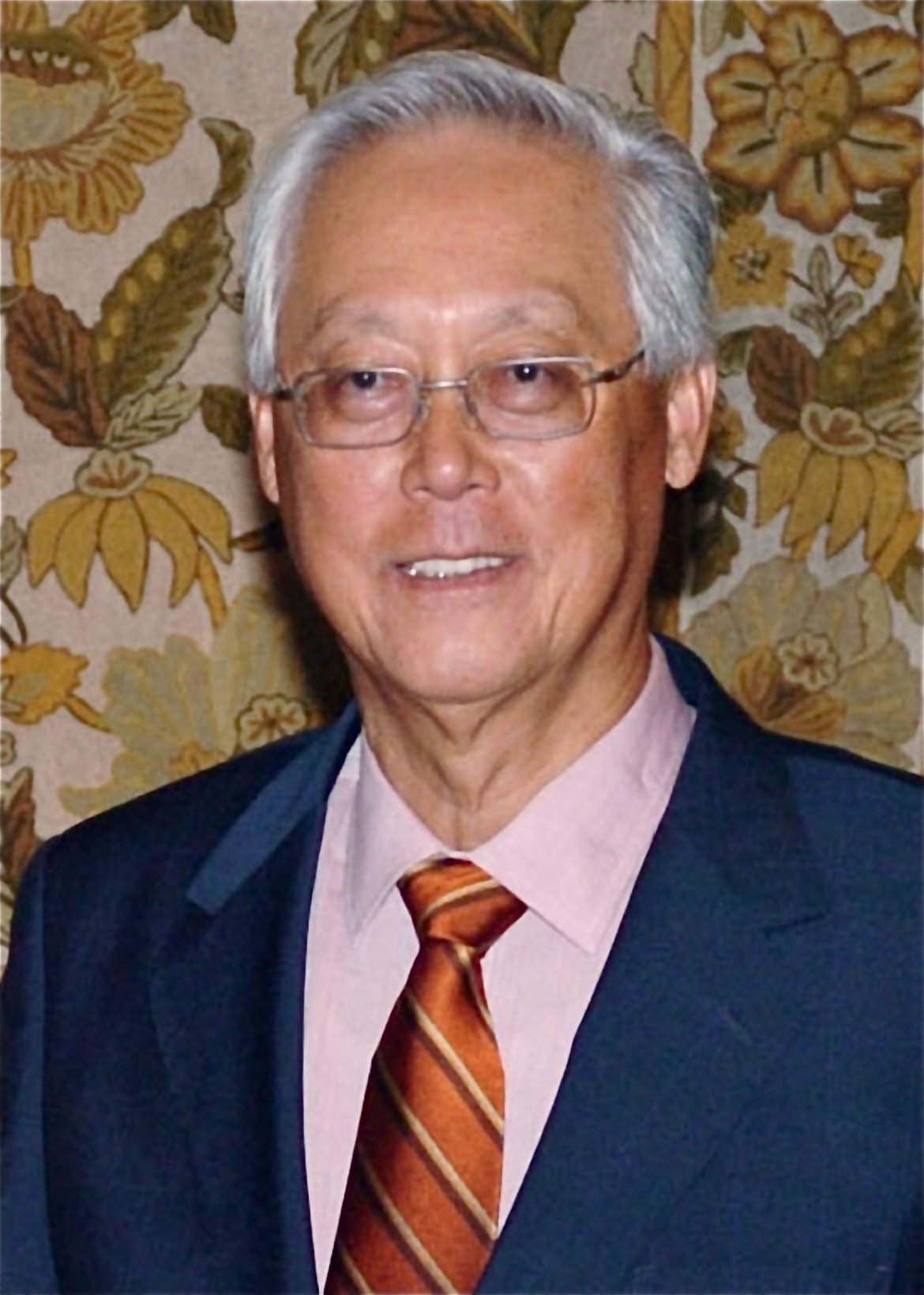
- Goh Chok Tong
An earlier Singapore leadership transition and its political context.
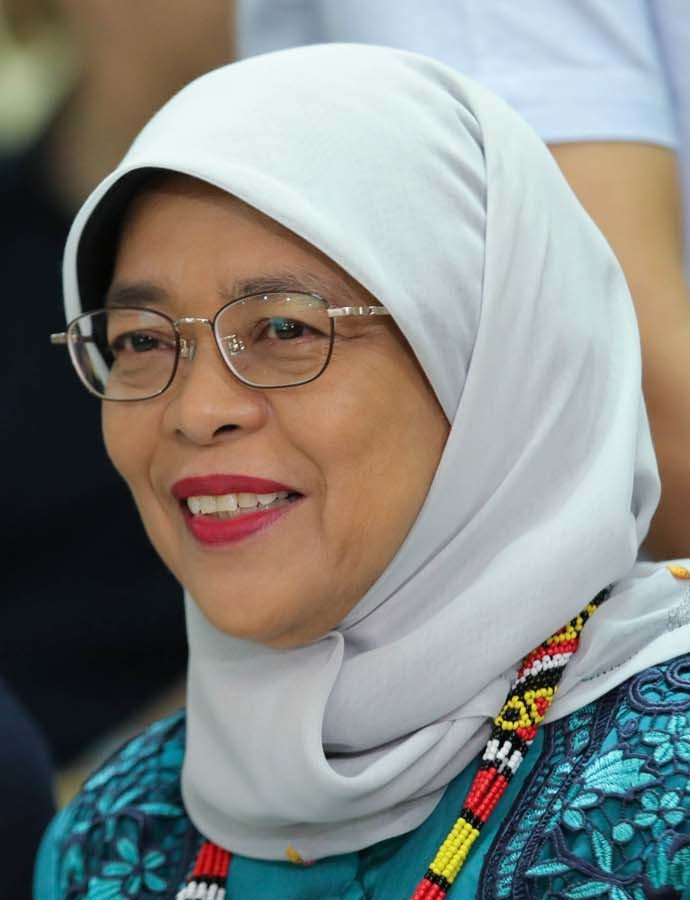
- Halimah Yacob
A separate account of Singapore’s presidency and constitutional offices.
Sources and further reading
Explore the evidence
These references support the biography and offer further reading. Official records, first-person accounts and independent reporting provide different perspectives; image records document attribution and licensing.
- 1. Prime Minister’s Office SingaporeMr Lawrence Wong
- 2. Energy Market Authority SingaporeNew Chief Executive at Energy Market Authority
EMA distinguishes Wong’s September 2008 start as deputy chief executive from his 1 January 2009 appointment as chief executive.
- 3. Elections Department Singapore2011 Parliamentary General Election Results
- 4. Ministry of Health SingaporeMinisterial statement on the whole-of-government COVID-19 response
- 5. Prime Minister’s Office SingaporeChanges to Cabinet and Other Appointments, April 2021
- 6. Prime Minister’s Office SingaporeStatement on fourth-generation leadership selection, April 2022
- 7. Forward SingaporeRelease of the Forward Singapore report, October 2023
- 8. Prime Minister’s Office SingaporeLawrence Wong at the swearing-in ceremony, May 2024
- 9. Lee Kuan Yew School of Public PolicySingapore’s political tests before the 2025 election
- 10. Elections Department Singapore2025 Parliamentary General Election Results
The Marsiling–Yew Tee percentages are votes for four-person party teams in a group constituency, not individual votes for Wong.
- 11. ISEAS – Yusof Ishak InstituteSoutheast Asian Affairs 2026 — Singapore election analysis
The ISEAS election figures and interpretation come from an academic publication abstract; they do not substitute for the Elections Department’s constituency-level official returns.
- 12. Prime Minister’s Office SingaporeChanges to Cabinet and Other Appointments, May 2025
- 13. Prime Minister’s Office SingaporeFrequently Asked Questions
- 14. Prime Minister’s Office SingaporeDPM Lawrence Wong’s Media Interview, May 2024
- 15. Wikimedia CommonsLawrence Wong, 2025 — image and licence record
- 16. U.S. Department of Defense via FlickrOriginal 30 May 2025 Department of Defense photo caption
The original U.S. Department of Defense caption identifies Wong at the Istana on 30 May 2025. The derivative Commons page uses a different venue in its summary and an unrelated Thai delegation in inherited image metadata; the portrait is credited to the original caption, not those conflicting fields.