In this biography
Quick facts
- Born
- 1930
- Died
- 2007
- Birthplace
- Not independently established
- Country
- United Kingdom
- Nationality
- Not independently established
- Known for
- Developing electron-microscopy approaches to virus identification and co-authoring the 1967 comparison of human respiratory viruses
Why this life matters
Her work demonstrates how technical expertise and carefully bounded visual comparisons can change a scientific classification.
Timeline
Key moments
Birth
Born in 1930; the reviewed institutional accounts describe her Glasgow upbringing.
Research collaboration
Published an electron-microscopy study with Bernhard Cinader and Allan Howatson.
Respiratory-virus comparison
Published a comparison of three viruses with David Tyrrell.
A laboratory route into research
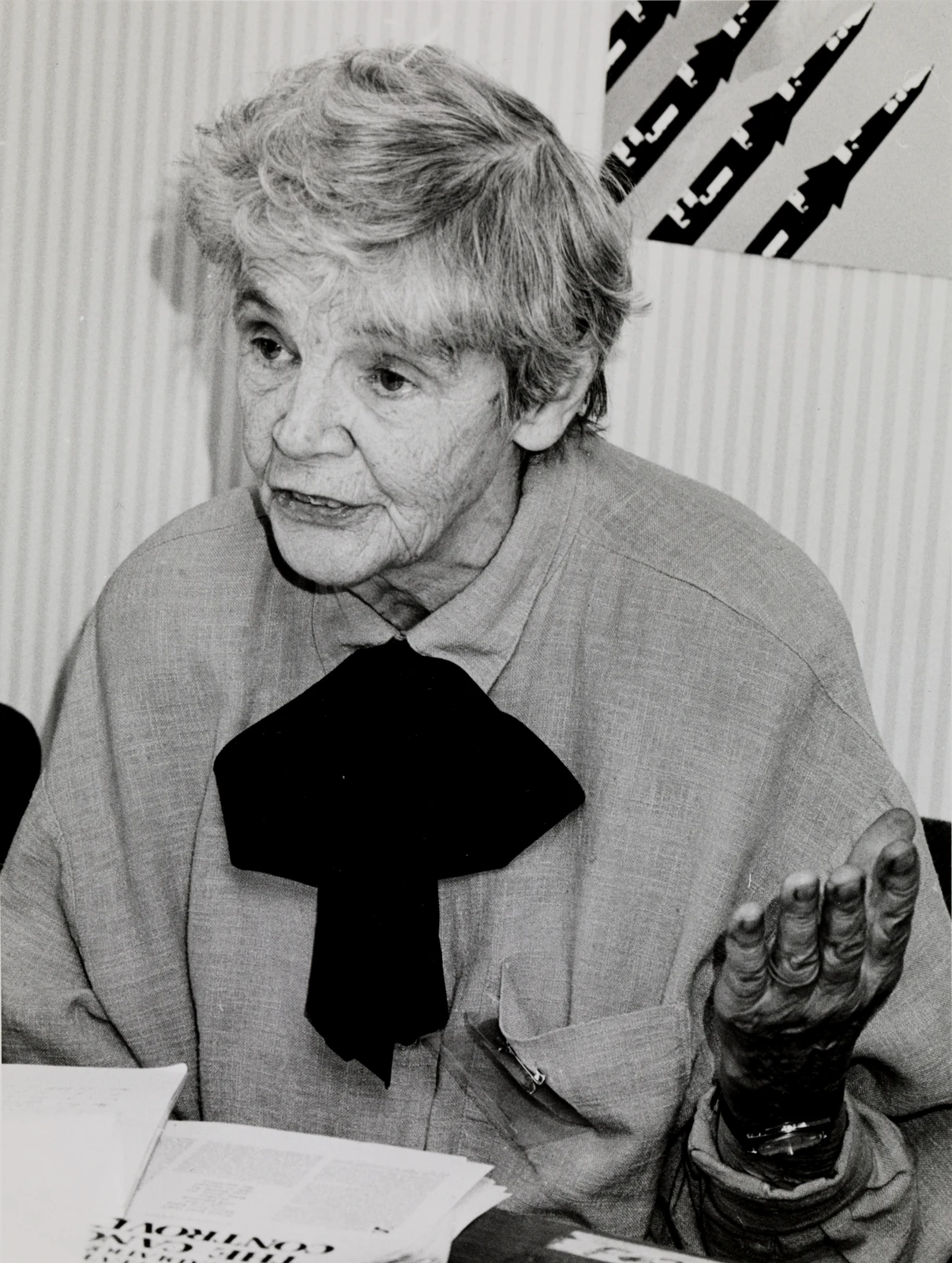
June Almeida was a virologist whose most important instrument was an electron microscope. Born in 1930, she grew up in Glasgow and left school at sixteen when university was financially out of reach. Her early work in histopathology at Glasgow Royal Infirmary, followed by employment in London, gave her practical laboratory experience. The route matters to her biography: technical employment became a foundation for scientific authorship, rather than merely a preliminary stage before an otherwise conventional university career.
Canada and a collaborative technique
After moving to Canada, Almeida worked at the Ontario Cancer Institute in Toronto. There she developed the microscopy skills that brought her into published research. A 1963 paper bears the names of Almeida, immunologist Bernhard Cinader and Allan Howatson. Its examination of virus–antibody aggregates connects imaging with immunology: recognising a particle and understanding its interaction with antibodies were related research questions. The author list also guards against presenting a laboratory method as the isolated achievement of one person.
What the respiratory-virus paper said
Back in Britain, Almeida collaborated with David Tyrrell on respiratory viruses grown in organ culture. Their 1967 paper compared three previously uncharacterised viruses. Its summary separates the results: two resembled avian infectious bronchitis virus, while the third resembled parainfluenza. That distinction is more informative than the familiar claim that she simply photographed a coronavirus. It records a comparison with different outcomes, showing how morphology could organise unfamiliar specimens without suggesting that every specimen belonged to the same group.
Sources for this section: [3]
A legacy that needs precise language
Guy’s and St Thomas’ commemorated Almeida by naming a laboratory after her in 2020. She had died in 2007, long before the COVID-19 pandemic. The naming honours a foundation in virus imaging; it does not make her a discoverer of SARS-CoV-2. Read together, her career and the original paper illustrate a lasting research skill: making a useful observation while preserving the boundary between an image, a proposed relationship and a conclusion that requires another kind of evidence.
Quick answers
Frequently asked questions about June Almeida
- What is June Almeida known for?
- Developing electron-microscopy approaches to virus identification and co-authoring the 1967 comparison of human respiratory viruses.
Keep exploring
Lives connected to this story
- Rosalind Franklin
Compare how structural images acquire meaning through other experimental records.
- Ruth Sager
Compare classification by appearance with classification by inheritance.
Sources and further reading
Explore the evidence
These references support the biography and offer further reading. Official records, first-person accounts and independent reporting provide different perspectives; image records document attribution and licensing.
- 1. Keele UniversityJune Almeida — Faces of Science
Career opening: Glasgow upbringing, laboratory employment, move to Canada and development of electron-microscopy expertise. Birthplace is not inferred from upbringing.
- 2. Guy’s and St Thomas’ NHS Foundation TrustGuy’s Hospital names COVID lab after pioneer
2020 commemorative account: St Thomas’ work during the 1960s, later laboratory naming and death in 2007. Does not identify the 1960s virus as SARS-CoV-2.
- 3. Journal of General VirologyThe morphology of three previously uncharacterized human respiratory viruses that grow in organ culture
1967 author, affiliation and date metadata and complete publisher summary: two viruses resemble avian infectious bronchitis virus; the third resembles parainfluenza. Full paid article was not read.
- 4. Journal of Experimental Medicine / PubMedThe structure of antigen-antibody complexes
1963 author/date metadata and abstract opening concerning negatively stained virus–antibody aggregates; not a review of its complete micrographs or measurements.
- 5. BMJJune Almeida (née Hart)
2008 obituary opening: leaving school at sixteen, 1947 histopathology employment, London and Ontario Cancer Institute move. Review stops at the accessible opening.