
In this biography
Quick facts
- Born
- 1851
- Died
- 1936
- Birthplace
- Clapham, London, England
- Country
- United Kingdom
- Nationality
- Not independently established
- Known for
- Co-founding Toynbee Hall and promoting Hampstead Garden Suburb through land, housing and educational institutions
Why this life matters
Co-founding Toynbee Hall and promoting Hampstead Garden Suburb through land, housing and educational institutions.
Timeline
Key moments
Birth
Henrietta Barnett was born in Clapham, London, England.
Whitechapel partnership
Married Samuel Barnett and developed reform work.
Garden suburb
The trust and building arrangements took shape.
Death
Henrietta Barnett died in 1936.
Parish work gave reform a practical setting
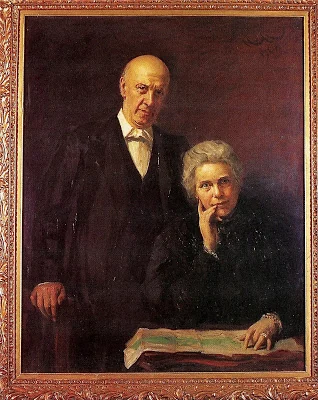
Henrietta Octavia Weston Rowland was born in Clapham, London, in 1851. Work with Octavia Hill in Marylebone brought her into contact with housing and the everyday administration of assistance. She married Samuel Barnett in 1873, and their work at St Jude’s in Whitechapel developed into a long partnership. Henrietta’s activities included service as a Poor Law guardian and support for young women entering domestic service. These were specific institutional responsibilities, not simply expressions of sympathy. They required continuing arrangements for people whose housing, employment and education were often insecure.
Education and community life were connected projects
The Barnetts founded Toynbee Hall in 1884, linking resident university graduates with social and educational work in East London. Henrietta also participated in programmes for children and in bringing art and learning within reach of working people. The partnership joined professional, religious and voluntary networks, but it did not make every activity one organisation. A settlement, a school, a holiday fund and a housing scheme needed different resources. Recognising those differences makes her organisational contribution more tangible than folding all the work into an undifferentiated charitable reputation.
Hampstead required land and an institutional framework
From the early 1900s Henrietta promoted the project that became Hampstead Garden Suburb. The prospect of development near the extended Underground helped give urgency to the protection and use of land around Hampstead Heath. A trust, land transactions, private legislation and work by Raymond Unwin, Barry Parker and Edwin Lutyens made the proposal buildable. The scheme’s ambition to accommodate different social groups remained central, although the heritage study also identifies neighbourhoods arranged by size and status. The intention of social variety should therefore be studied alongside the actual planned relationships among homes and spaces.
Housing and education continued into her later life
The Institute and the girls’ school in the suburb extended the educational side of her work. The school’s own history dates its foundation to 1911 and records her continuing involvement. Henrietta received the DBE in 1924 and died in 1936. Her significance lies in making social proposals durable through institutions, property arrangements and educational provision. That work involved persuasion and collaboration as well as a personal vision. The surviving suburb offers a physical record of some of those decisions, while the different organisations she helped build show why her career cannot be explained through a single building or her husband’s offices alone.
Quick answers
Frequently asked questions about Henrietta Barnett
- Was Henrietta Barnett only involved in housing?
- No. Her career also included Poor Law work, Toynbee Hall and educational institutions, including the girls’ school in Hampstead.
- Did the 1906 Act require exactly eight houses on every acre?
- No. The historical excerpt states an average across the suburb, a different condition from an identical count on each acre.
Keep exploring
Lives connected to this story
- Octavia Hill
Explore Octavia Hill’s separate career as housing reformer and national trust co-founder; compare the work and institutions in context.
- George Cadbury
Explore George Cadbury’s separate career as chocolate manufacturer, housing reformer and philanthropist; compare the work and institutions in context.
- Samuel Barnett
Read Samuel Barnett’s documented work and the related study: Toynbee Hall: Residence, Education and Access.
- Eleanor Rathbone
Read Eleanor Rathbone’s documented work and the related study: Family Allowances 1945: Entitlement and Payment.
Sources and further reading
Explore the evidence
These references support the biography and offer further reading. Official records, first-person accounts and independent reporting provide different perspectives; image records document attribution and licensing.
- 1. National Portrait Gallery, Later Victorian Portraits CatalogueDame Henrietta Octavia Weston Barnett
- 2. Westminster AbbeySamuel and Henrietta Barnett
- 3. Hampstead Garden Suburb historical accountDevelopment of the Garden Suburb
- 4. Hampstead Garden Suburb historical accountThe Hampstead Garden Suburb Act 1906
- 5. UK ParliamentThe birth of town planning
- 6. Mervyn Miller / Historic EnglandEnglish Garden Cities: An Introduction
- 7. The Henrietta Barnett SchoolHistory of the School
The school’s own history gives 1911 for its foundation; the 1918 date in the portrait catalogue is not used.