In this biography
Quick facts
- Born
- 27 November 1970
- Birthplace
- Gwangju, South Korea
- Country
- South Korea
- Nationality
- Not independently established
- Known for
- The Vegetarian, Human Acts, The White Book, Greek Lessons and We Do Not Part; the 2024 Nobel Prize in Literature
- Literary beginnings
- Poems in 1993; fiction contest recognition in 1994
- First story collection
- Yeosu, 1995
- International Booker
- The Vegetarian, translated by Deborah Smith, 2016
- Nobel Prize
- Literature, 2024
Why this life matters
She develops different narrative forms to approach bodily vulnerability and historical violence, with translation bringing that work into further literary communities.
Timeline
Key moments
Born in Gwangju
Born on 27 November; later grows up in Seoul.
Poetry and fiction
Publishes poems, receives recognition for Red Anchor and publishes her first story collection.
Iowa writing programme
Participates in the University of Iowa International Writing Program.
The Vegetarian
Publishes the Korean linked-story work.
Different forms
Korean publications include Greek Lessons, Human Acts and The White Book.
English translation and prize
Deborah Smith’s translation of The Vegetarian is published in the UK and wins the 2016 International Booker.
Nobel recognition
Awarded the Nobel Prize in Literature.
Further translated reception
We Do Not Part wins the 2025 NBCC fiction award, announced in March 2026.
Poetry before international recognition
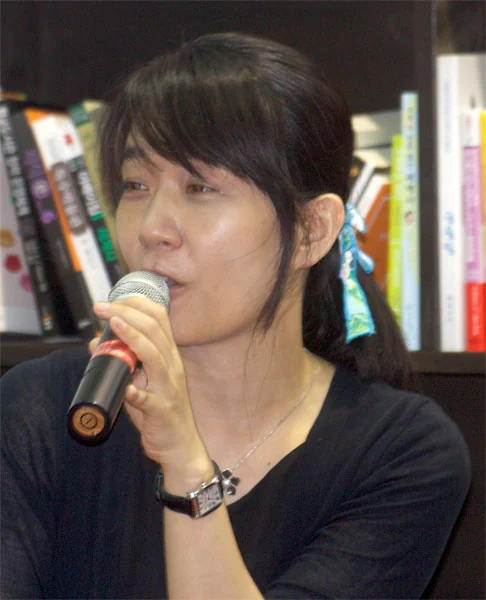
Han Kang was born in Gwangju on 27 November 1970 and grew up in Seoul after her family moved there during her childhood. She studied Korean literature at Yonsei University. Her career began through poems published in Literature and Society in 1993; recognition for the short story Red Anchor followed in the Seoul Shinmun spring competition in 1994.
Her first story collection, Yeosu, appeared in 1995. She participated in the University of Iowa International Writing Program in 1998. These beginnings matter because her later international visibility can make the English publication of The Vegetarian look like a debut. It followed years of writing in several forms for Korean readers.
The Vegetarian and the difficulty of understanding
The Vegetarian appeared in Korean in 2007. Its connected sections follow Yeong-hye through the perspectives of people close to her, while her refusal of meat develops into a more extreme wish to escape human violence. The work makes the distance between another person’s experience and the stories told about her part of its form.
Han has described its relationship to her earlier story The Fruit of My Woman. In her interview with the Booker Prize Foundation, she distinguishes the earlier story’s supernatural transformation from the later work’s brutal reality. Her explanation encourages attention to the book’s questions about innocence and human existence, alongside its depiction of power within a family.
Translation as a collaboration
Deborah Smith translated The Vegetarian into English, and Portobello Books published the UK edition in 2015. It won the 2016 Man Booker International Prize, the name then used for the International Booker. The award recognised the translated work and was shared by author and translator.
Editor Max Porter’s account describes acquiring a sample from Smith and developing the English manuscript with editorial discussion. Han’s later recollection places her own initial reading at the proof stage and says errors were subsequently corrected. These are participants’ accounts of a complex collaboration. Translation supplied new language, rhythm and readership; it did not erase the Korean work’s earlier publication history.
Historical violence in Human Acts
Human Acts, published in Korean in 2014, turns to the violence of the 1980 Gwangju uprising and its aftermath. Its connected lives approach the killing of a boy and the experiences of survivors, relatives and witnesses. Moving among them allows the narrative to explore what violence leaves in bodies and memories after an event ends.
The English edition was translated by Smith. The publisher’s author interview describes Han’s engagement with materials about May 1980. Her work here involves historical inquiry and imaginative construction together. A novel can create encounters with grief and responsibility without functioning as a comprehensive archive or a statistical account of everyone affected.
Language, loss and forms beyond one novel
Greek Lessons, first published in Korean in 2011, brings together a woman who has lost speech and a teacher losing his sight. Its English translation credits Deborah Smith and e. yaewon. The relationship makes language a material condition of contact: speaking, seeing, learning and listening become vulnerable activities rather than guaranteed possessions.
The White Book takes another approach, arranging reflections around white objects and loss. Poetry, short fiction and these different prose structures show why Han’s career cannot be reduced to a single shocking premise or an award list. She repeatedly changes the means of approaching questions about connection, memory and the fragility of life.
A body of work and continuing translated reception
The 2024 Nobel Prize in Literature recognised Han’s poetic prose and its treatment of historical trauma and human vulnerability. The prize concerned her literary achievement across works; it was not a second award specifically for The Vegetarian. That distinction also keeps the 2016 translated-book award in its proper place.
We Do Not Part follows a friendship and the recovery of a family history marked by the Jeju massacre. Its English translation by e. yaewon and Paige Aniyah Morris won the 2025 National Book Critics Circle fiction award, announced in March 2026 according to her literary agency. The translation credits demonstrate that the circulation of her writing continues through the work of different translators, editors and publishers.
Quick answers
Frequently asked questions about Han Kang
- Who is Han Kang?
- Han Kang is a novelist, short-story writer and poet. She develops different narrative forms to approach bodily vulnerability and historical violence, with translation bringing that work into further literary communities.
- What is Han Kang best known for?
- Han Kang is best known for the Vegetarian, Human Acts, The White Book, Greek Lessons and We Do Not Part; the 2024 Nobel Prize in Literature.
- When and where was Han Kang born?
- Han Kang was born on 27 November 1970 in Gwangju, South Korea.
Keep exploring
Lives connected to this story
- Park Wan-suh
Compare another writer’s treatment of war, family and historical memory through distinct narrative forms.
- Ngũgĩ wa Thiong’o
Compare a different language and translation history, preserving the separate political and literary contexts.
- Park Kyongni
Explore a different generation’s long historical fiction and the institutions behind its publication and translation.
- Kim Hyesoon
Compare a distinct Korean poetry career and the translators named in its international prize records.
- Kim Young-ha
Compare another contemporary Korean fiction writer’s genres and translated publication history.
- Shin Kyung-sook
Compare another Korean novelist’s domestic career and international translation routes.
Sources and further reading
Explore the evidence
These references support the biography and offer further reading. Official records, first-person accounts and independent reporting provide different perspectives; image records document attribution and licensing.
- 1. Han KangAuthor biography: literary debut, books and Iowa programme
Author biography directly read. It says the Seoul move was at ten; Nobel biobibliography says nine. Childhood relocation is left without an exact age. Do not infer current residence, teaching job, health or family status from older biography.
- 2. Nobel Prize OutreachHan Kang: official 2024 Literature Prize facts
Official indexed birth and 2024 prize facts verified; direct Nobel HTML/PDF retrieval returned 403. No claim of full-text access to blocked Nobel files.
- 3. Han KangThe Vegetarian: 2007 novel and language editions
- 4. Booker Prize FoundationReading guide: The Vegetarian by Han Kang, translated by Deborah Smith, 3 July 2023
Booker guide casually calls all three viewpoint characters narrators; manuscript uses “perspectives” to avoid treating third-person focalisation as first-person narration. No complete Korean or English novel was read for this batch.
- 5. Han Kang / Booker Prize FoundationInterview: I never imagined The Vegetarian would find so many readers
Author recollection differs in emphasis from Porter’s editorial account. Both are presented as recollections; no independent line-by-line translation adjudication is claimed.
- 6. Booker Prize FoundationThe Vegetarian: author, translator, UK publication and 2016 award record
- 7. Max Porter / Booker Prize FoundationPublishing The Vegetarian: acquisition, translation and editing, 3 July 2023
- 8. Penguin Random House / HogarthHuman Acts: synopsis, translator and author interview
- 9. Swedish Academy / Nobel Prize OutreachThe Nobel Prize in Literature 2024: biobibliography
- 10. Penguin Random House / HogarthGreek Lessons: synopsis and translation credits
- 11. RCW Literary AgencyWe Do Not Part wins the 2025 NBCC fiction award: 27 March 2026 announcement
27 March 2026 agency announcement verifies current literary activity and names the 2025 award year. Do not rename it the 2026 publishing-year award.