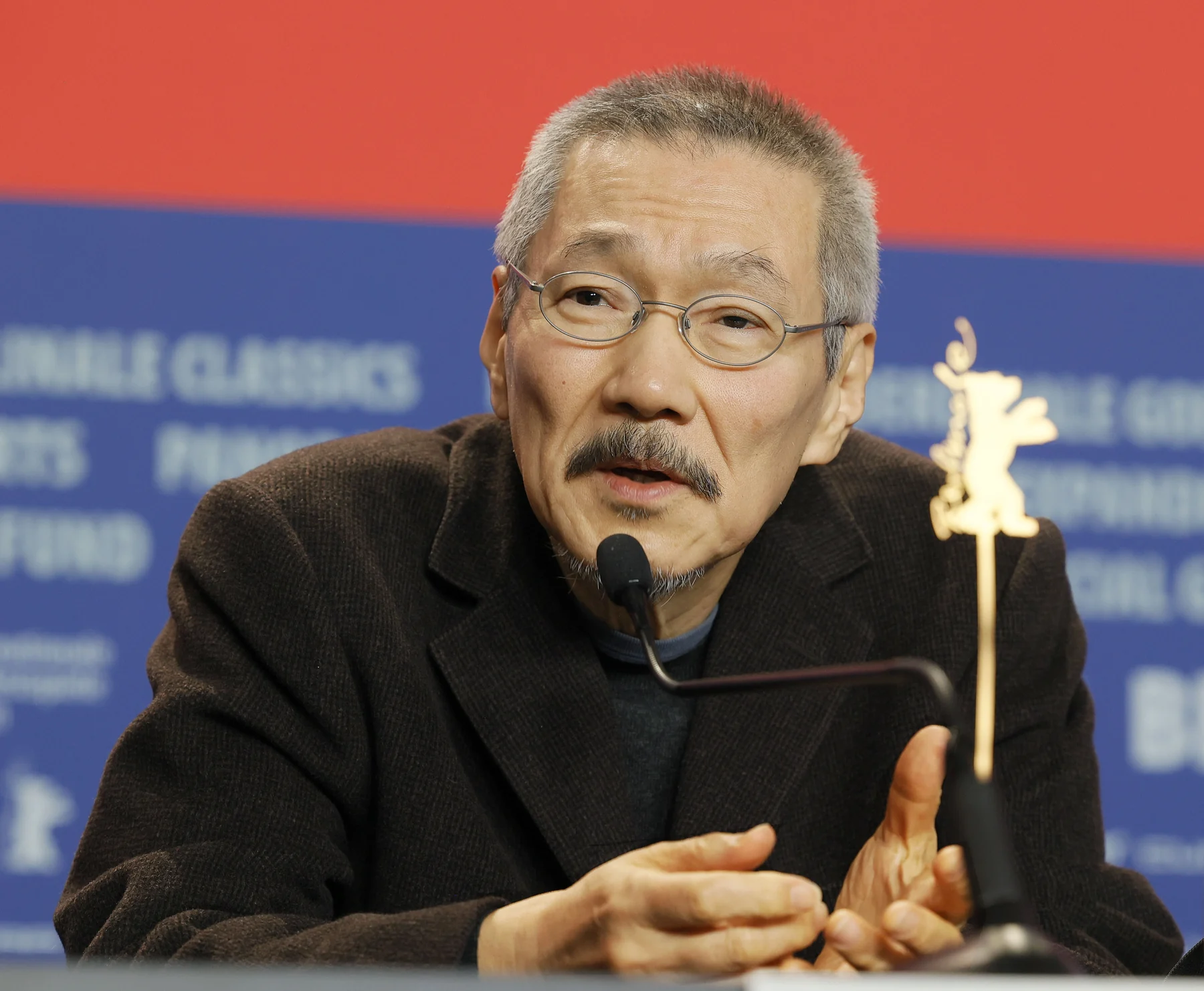
In this biography
Quick facts
- Born
- 1968
- Birthplace
- Hwacheon, Gangwon Province, South Korea
- Country
- South Korea
- Nationality
- Not independently established
- Known for
- I Have the Right to Destroy Myself, Black Flower and Diary of a Murderer
- Literary debut
- Reflections in the Mirror, 1995
- Debut novel
- I Have the Right to Destroy Myself, 1996
- Historical fiction
- Black Flower
- Screen credit
- Original story for Memoir of a Murderer, 2017
Why this life matters
His career shows the range of contemporary Korean fiction across urban narrative, historical migration, crime stories and public literary conversation.
Timeline
Key moments
Birth
Born in Hwacheon, Gangwon Province.
Short-story debut
Published Reflections in the Mirror.
First novel recognised
I Have the Right to Destroy Myself received the inaugural Munhakdongne New Writer’s Award.
Change of working life
Left his teaching post to concentrate on writing, according to TED’s biographical record.
Screen adaptation
KOFIC lists an original-story credit for Memoir of a Murderer.
Travel essays
LTI Korea dates Yeohaengui iyu to 2019.
Business studies preceded a literary debut
Kim Young-ha was born in Hwacheon in 1968. His official profile records graduate study in business administration at Yonsei University, while LTI Korea places his early life in a military family that moved frequently. He entered literary publication in 1995 with the short story Reflections in the Mirror. The following year his debut novel, I Have the Right to Destroy Myself, received the first Munhakdongne New Writer’s Award. This sequence distinguishes the appearance of a short story from the publication of a first novel. His public career began through both forms, rather than a single undifferentiated debut.
Contemporary lives allowed unusual narrators
His early fiction attracted attention through protagonists and situations that depart from the representative social figure. LTI Korea’s account discusses a suicide coordinator and other unusual narrators as ways of disturbing familiar narrative expectations. The unsettling material belongs to fictional voices; it cannot be converted into the writer’s personal advice or biography. Kim’s official account identifies death, violence, memory and identity as recurring concerns. Those concerns connect stories that cross genre boundaries, while irony and narrative momentum can make their disturbing premises accessible. The resulting career cannot be reduced to one genre of crime writing.
Historical migration widened the fictional world
Black Flower follows Korean migrants who travel to Mexico in the early twentieth century. TED’s speaker biography locates its story in the 1905 migration to the Yucatán and describes the workers’ indentured conditions. The novel therefore extends Kim’s range beyond contemporary Seoul and beyond the peninsula. The historical subject also creates a useful distinction for readers: a novel can open an inquiry into a migration without replacing passenger lists, contracts or family records. Kim’s international readership encountered a fiction writer moving between historical displacement and contemporary anxieties, rather than an author confined to a single national setting.
Memory becomes a problem inside the story
Your Republic Is Calling You concerns a North Korean operative whose established life in the South is disrupted by a summons. Diary of a Murderer instead places the reader near a former killer whose memory is failing. The publisher’s synopsis makes uncertainty part of the latter premise, while LTI Korea identifies memory and survival among its concerns. Neither narrator should be treated as a transparent witness. These differing situations demonstrate Kim’s interest in the stories people tell about themselves and the institutions or relationships that unsettle them. They also give readers distinct questions about perspective before any comparison of endings or narrative technique.
Screen adaptation introduced separate creative roles
KOFIC credits Kim with the original story for Memoir of a Murderer, released in 2017, and lists other original-story credits including The Scarlet Letter. It separately identifies him as a script editor on A Moment to Remember. Those labels describe different kinds of participation. Originating a story does not make its author the film’s director, nor does a script-editing credit establish sole screenplay authorship. The adaptations show the reach of his writing into another medium while retaining the collaborators and production decisions involved. They should be followed through the individual film record rather than collected under an unspecified claim that he made the films.
Sources for this section: [5]
Essays and speaking extend the public career
Kim has also written essays and participated in literary broadcasting and speaking. LTI Korea’s catalogue records the 2019 essay book Yeohaengui iyu, organised around travel, and his official profile describes podcast and lecture work. TED’s older biography records his departure from a teaching position in 2008; its book totals are a historical snapshot rather than a current count. Across fiction and nonfiction, his career connects literary experimentation with a public conversation about reading and creativity. Its range is best understood through identifiable works and editions, especially when English titles and publication dates differ from the Korean originals.
Quick answers
Frequently asked questions about Kim Young-ha
- Is Kim Young-ha the same writer as Young-ha Kim?
- Yes. English publishers and institutions use both name orders; the Korean name is 김영하.
- Did Kim Young-ha direct Memoir of a Murderer?
- The consulted KOFIC record credits him with the original story. That credit does not identify him as the film’s director.
Keep exploring
Lives connected to this story
- Hwang Sok-yong
Compare a different generation’s treatment of labour, memory and national division.
- Lee Chang-dong
Follow another writer’s movement into cinema while distinguishing original-story, screenplay and directing credits.
- Han Kang
Compare another contemporary Korean novelist’s translated publication history.
Sources and further reading
Explore the evidence
These references support the biography and offer further reading. Official records, first-person accounts and independent reporting provide different perspectives; image records document attribution and licensing.
- 1. Kim Young-haKim Young-ha: official profile
Read the Korean official profile and portrait caption. Its selected-work parenthetical years are not treated as verified Korean first-edition dates.
- 2. Literature Translation Institute of KoreaKim Young-ha: writer record, Life and Writing
Read English Life and Writing and identity metadata. Multilingual sections contain historical snapshots; changing work totals and residence statements were not adopted as current facts.
- 3. TEDYoung-ha Kim: speaker biography
Read the speaker biography as a dated career snapshot; the talk video was not watched and current book totals were not inferred.
- 4. Atlantic BooksDiary of a Murderer: edition records and publisher synopsis
Read the publisher’s synopsis and distinct 2020 ebook / 2026 paperback fields. The full story collection was not inspected.
- 5. Korean Film Council / KoBizKim Young-ha: Original Story and Script Editor filmography
Read filmography credit labels; Memoir of a Murderer is an original-story credit, while A Moment to Remember is script editing.
- 6. Literature Translation Institute of KoreaYeohaengui iyu: Korean original-work catalogue record
Read Korean title, author, essay classification, publisher, year and catalogue description; no English edition is implied.