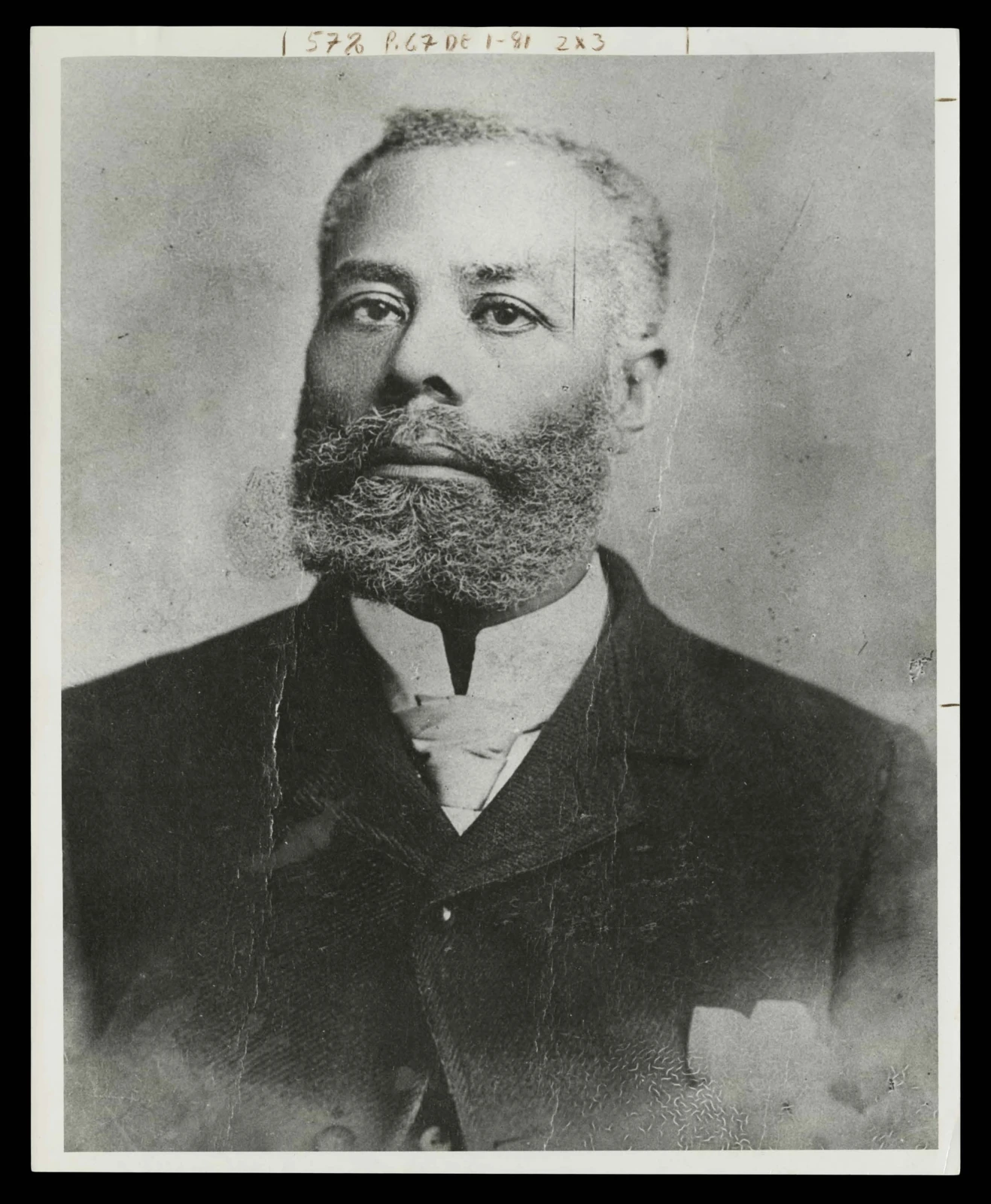
In this biography
Quick facts
- Born
- 1856
- Died
- 1910
- Birthplace
- Columbus, Ohio, United States
- Country
- United States
- Nationality
- Not independently established
- Known for
- Patented systems for railway telegraphy and electrical transport
- Known for
- Patented systems for railway telegraphy and electrical transport
Why this life matters
Patented systems for railway telegraphy and electrical transport.
Timeline
Key moments
Learning through mechanical and electrical work
Granville Woods was born in Columbus, Ohio, in 1856. His early work included mechanical trades, railways and other industrial settings, alongside further study of electrical engineering. He established an inventive career in Cincinnati before moving his business to New York in 1890. The railway supplied a particularly demanding setting for that work: vehicles moved along a fixed route, while communication needed to connect them with people and equipment elsewhere. Woods developed several inventions rather than one device that exhausted all of these problems.
Sources for this section: [1]
Read one communication patent precisely
Woods's United States patent 373,915, granted in November 1887, describes communication between moving vehicles or between vehicles and fixed stations by induction. The specification places a helix associated with the vehicle near an arranged line conductor so that electrical impulses can be coupled between them. This is a particular record, distinct from patent 373,383 cited in his Hall of Fame summary. Keeping the numbers separate prevents details from different inventions being silently combined into a single supposed design.
An independent inventor within an electrical industry
Woods pursued telegraph, telephone and railway-electrical work through patents and commercial arrangements. His later career included collaboration with his brother Lyates. He died in 1910. His significance lies partly in confronting an operational problem: a moving train should not have to become a stationary office before receiving information. The surviving specification gives a more useful account of that contribution than a sweeping claim that he invented all railway communication. It also leaves room to distinguish a proposed signal mechanism from evidence about deployment, reliability and the behaviour of railway operators.
Quick answers
Frequently asked questions about Granville Woods
- What is Granville Woods known for?
- Patented systems for railway telegraphy and electrical transport.
Keep exploring
Lives connected to this story
- Elijah McCoy
How did McCoy’s lubricator feed oil into operating machinery?
- Lewis Latimer
What did Latimer’s carbon-filament patent actually claim?
- William Fothergill Cooke
Explore William Fothergill Cooke’s work: commercialising electric telegraphy through partnership and patents with Charles Wheatstone.
Sources and further reading
Explore the evidence
These references support the biography and offer further reading. Official records, first-person accounts and independent reporting provide different perspectives; image records document attribution and licensing.
- 1. National Inventors Hall of FameGranville Woods
Actual biography read:1856–1910, Cincinnati/NewYork 1890, mechanical/electricalcareer, brotherLyates. Broadall-railwaypriorityclaimsnotadopted; record 373383 keptdistinct.
- 2. Granville Woods / United States Patent OfficeUS373915A: Railway communication specification
Primary 1887 description read:communicationbetweenmovingvehicles/fixedstations, linehelixandvehiclehelixininductiveproximity, telegraph/telephone receiving arrangements. GoogleOCRtitleSignmentsnotadoptedasoriginaltitle.