

The short answer
How did Woods’s railway telegraph transmit information to a moving train?
Compare the evidence
A Moving Train and an Inductive Signal
Compare what each inspected record establishes with the claim that remains separate.
| Record or observation | What it supports | What remains separate |
|---|---|---|
| Patent 373,915 specification | Explains an inductive link between line and vehicle arrangements | Does not by itself demonstrate deployment or automatic braking |
| Biographical railway history | Places the device within Woods’s larger inventive career | Does not make a different patent number the same document |
The vehicle and the line do not play the same role
Woods's 1887 patent 373,915 describes a line arrangement and a corresponding helix carried by a vehicle. The vehicle component moves in close inductive proximity to the line conductor. An electrical impulse in one arrangement produces a corresponding impulse in the other through induction. The proposal therefore connects a moving receiver or transmitter with a route-based system without treating the train as permanently wired to a stationary desk.
Sources for this section: [2]
A signal link is not an automatic train-control system
The specification discusses receiving arrangements for telegraphic and telephone signals. Communication can provide information, but the existence of a link does not itself prove that a train stops, that a dispatcher interprets a message correctly or that every section of track has suitable coverage. Woods's biographical record places the device among several railway inventions. Its individual patent should be read for the mechanism it describes, with operational outcomes and later systems documented separately.
Label a communication path
Draw an original classroom schematic containing a station, a trackside line and a vehicle-borne coil. Add arrows for a transmitted signal and a received signal, then place a separate box for a human decision. Ask where the patent's coupling problem ends and an operating procedure begins. The answer keeps transmission distinct from interpreting and acting on a message. This schematic is not a reproduction of Woods's winding geometry and supplies neither a measured range nor a modern railway safety design. Its purpose is to separate roles that broad invention summaries can blur.
Continue the chronology
Related history guides
Biography context
Explore United States through connected lives
Connected biographies
People behind the records
1856–1910
Granville Woods
Electrical inventor and railway-communications developerPatented systems for railway telegraphy and electrical transport.Read biography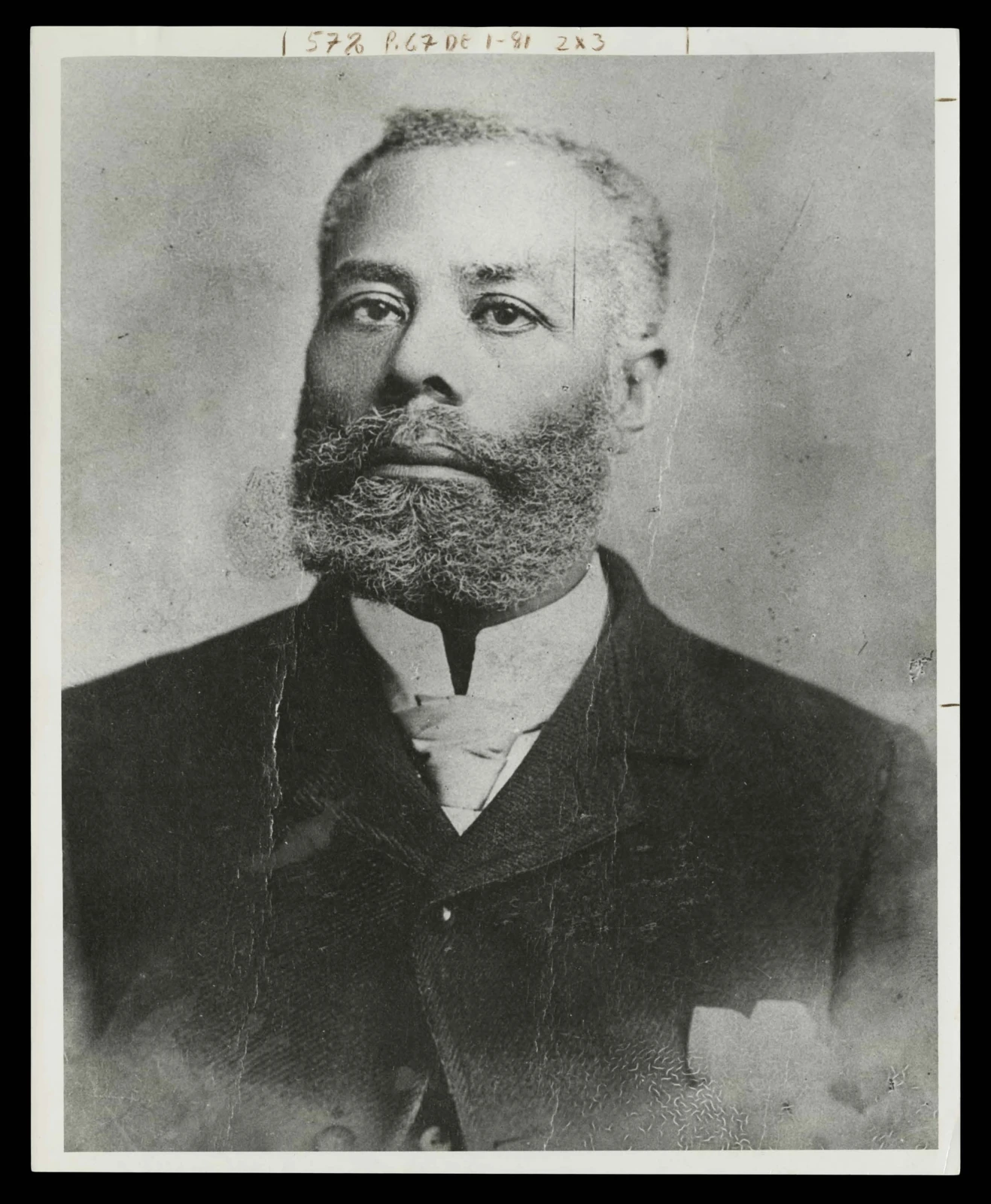
1844–1929
Elijah McCoy
Mechanical inventor and automatic-lubrication developerAutomatic lubricators that supplied oil to operating machinery.Read biography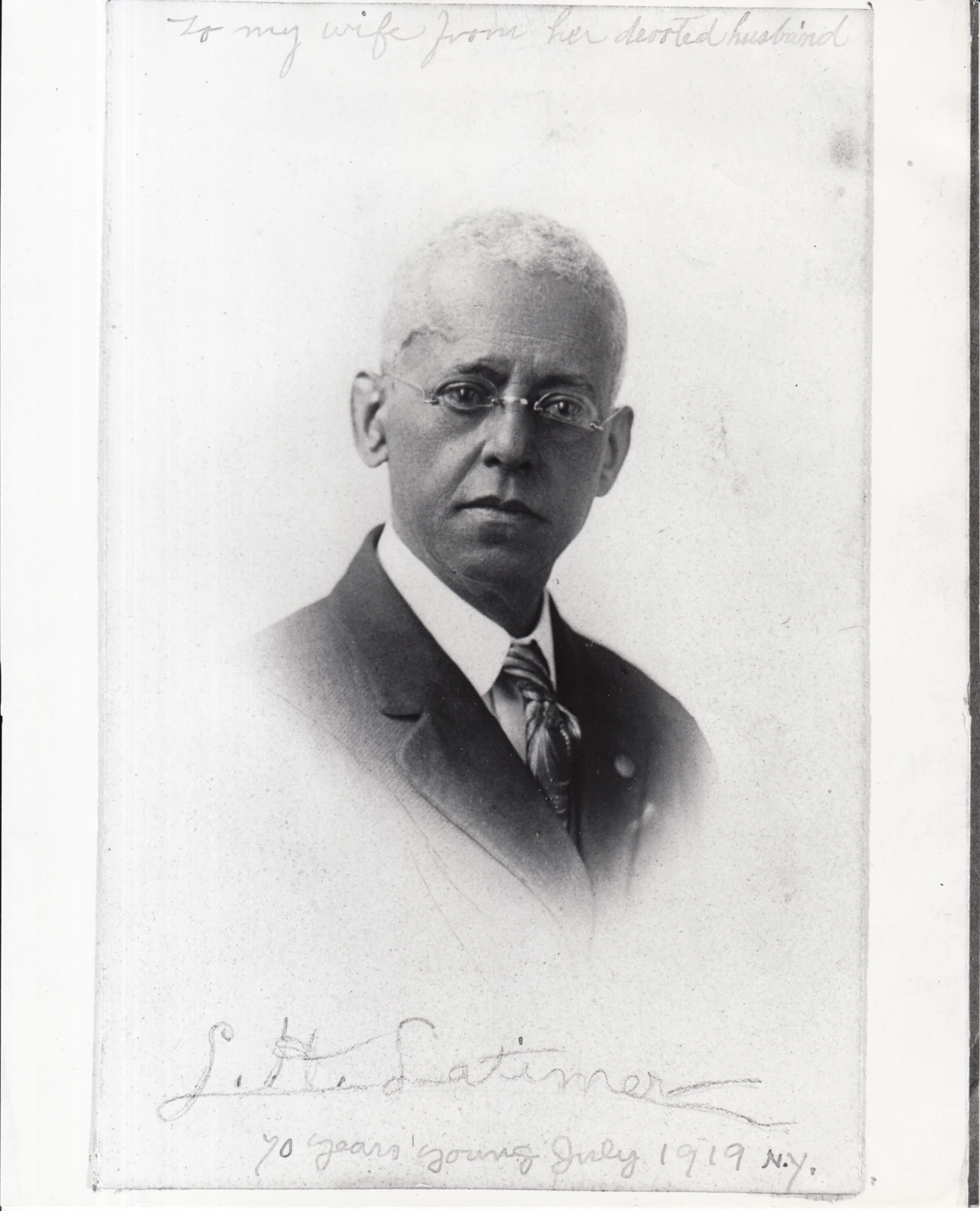
1848–1928
Lewis Latimer
Draftsman, electrical inventor and patent specialistCarbon-filament manufacturing improvements and work documenting electrical inventions.Read biographyQuick answers
Common questions
- How did Woods’s railway telegraph transmit information to a moving train?
- The examined patent proposes inductive coupling between a line arrangement and a nearby vehicle-borne helix. Receiving a message is distinct from automatically controlling or stopping the train.
Primary and institutional sources
How this history was checked
Sources distinguish individual patent or technical records from biographical and retrospective accounts. Their actual reading scope is retained in the biography source notes. This article was reviewed on 7 November 2026.