In this biography
Quick facts
- Born
- 30 July 1818
- Died
- 19 December 1848
- Birthplace
- Thornton, Yorkshire, England
- Country
- United Kingdom
- Nationality
- English
- Known for
- Wuthering Heights, Gondal poetry and the pen name Ellis Bell
- Pen name
- Ellis Bell
- Only published novel
- Wuthering Heights, 1847
- Shared poetry volume
- Poems by Currer, Ellis, and Acton Bell, 1846
- Family relationship
- Younger sister of Charlotte; older sister of Anne Brontë
Why this life matters
Her one published novel and surviving poetry challenge the comforting idea that passionate feeling necessarily produces moral insight or freedom.
Timeline
Key moments
Born in Thornton
Born on 30 July, the fifth of Patrick and Maria Brontë’s six children.
Haworth and school
Moved to Haworth; returned from Cowan Bridge after her older sisters’ deaths.
Writing and education
Developed imaginative writing with Anne and spent periods away for school and teaching.
Brussels
Studied at the Pensionnat Héger with Charlotte before returning to Haworth.
Poems under Ellis Bell
Joined Charlotte and Anne in their self-financed poetry collection.
Wuthering Heights
Her novel appeared alongside Anne’s Agnes Grey in a three-volume publication.
Death and a new edition
Died on 19 December 1848; Charlotte introduced a posthumous edition in 1850.
Thornton, Haworth and an English literary household
Emily Jane Brontë was born at Thornton in Yorkshire on 30 July 1818. Her parents were Patrick Brontë, an Irish-born Anglican clergyman, and Maria Branwell Brontë, who came from Cornwall. The family moved to Haworth in 1820. Her mother died the next year, and Aunt Elizabeth Branwell helped care for the children. Emily’s English life belonged to a family with connections beyond Yorkshire.
In 1824 she joined her older sisters at the Clergy Daughters’ School at Cowan Bridge. After Maria and Elizabeth died, Emily and Charlotte returned to Haworth. Home education included access to books and intensive imaginative activity with the surviving siblings. The familiar moorland setting matters, but the record also contains reading, family collaboration and periods of formal education rather than an author untouched by culture.
Gondal and the problems of reconstructing a private writer
Emily and Anne developed Gondal, an invented world whose surviving poems place emotions within imagined conflicts and political relationships. Manuscripts do not always supply straightforward dates, speakers or explanations. A poem’s first-person voice should therefore not automatically become evidence of a particular romance or event in Emily’s own life. The gap between a dramatic speaker and an author remains essential.
The scarcity of personal documentation encourages confident legends. Charlotte’s later account portrays her sister as fiercely private and exceptionally attached to home; it is close testimony but also a constructed memorial. A careful biography can acknowledge that reserve without turning it into an illness, a supernatural affinity with the landscape or proof that the novelist secretly experienced everything her characters do.
Learning, employment and the return to Haworth
Emily spent a short period at Roe Head, where Charlotte taught, and later worked as a teacher away from home. In 1842 the two sisters went to Brussels to study at the Pensionnat Héger. The journey formed part of a practical educational project, improving skills they hoped could support a school. It was not simply an excursion from an otherwise entirely stationary life.
After their aunt’s death Emily returned to Haworth and remained there. Accounts differ over the precise dating of some earlier employment and whether to describe her Brussels role as student or teacher; this profile does not force those discrepancies into a false precision. The secure outline is enough to show both an attachment to home and experience of institutions beyond it.
Ellis Bell and a difficult entry into publication
Charlotte recalled discovering a manuscript volume of Emily’s poetry in 1845 and needing time to persuade her that publication was worthwhile. In 1846 the three sisters financed Poems by Currer, Ellis, and Acton Bell. Emily became Ellis Bell. Charlotte’s explanation stresses privacy and the prejudice faced by women authors, but her recollection should retain its status as one participant’s account.
The poetry volume attracted few readers. The sisters nevertheless continued to submit fiction, and Thomas Cautley Newby published Wuthering Heights with Anne’s Agnes Grey in 1847. The two works occupied a shared three-volume publication; they were not jointly written. Confusion about the Bell names led some readers to attribute several different novels to the same author, something Charlotte later explicitly challenged.
Wuthering Heights and the consequences of possession
Emily’s only published novel moves between Wuthering Heights and Thrushcross Grange across two generations. Lockwood hears much of the earlier history from Nelly Dean, so readers encounter competing judgements and remembered conversations rather than an unmediated report. Catherine Earnshaw’s choice of Edgar Linton, Heathcliff’s return and the younger characters’ inheritance entangle intimate attachment with social position and property.
Heathcliff’s childhood mistreatment does not make his later coercion harmless. His actions towards Isabella, Hareton and the younger Catherine prevent an adequate reading from stopping at an ideal romance between two exceptional lovers. Early responses varied from disgust to admiration for the novel’s power. Its later prestige should not conceal the disturbing acts that made its first reception difficult.
Death, Charlotte’s edition and an independent achievement
Emily died of tuberculosis at Haworth on 19 December 1848, aged thirty. In 1850 Charlotte supplied a Biographical Notice and preface for a new edition of Wuthering Heights. These defended the authorship and supplied information about Emily, while describing her in terms that became unusually influential. A bereaved sister’s wish to protect a reputation could also narrow how later readers imagined the writer.
Emily’s poetry and novel reward attention to their own structures, not merely to that family portrait. They make allegiance unstable, give powerful language to people whose actions remain troubling and leave a reader to judge what a narrator cannot fully resolve. Recognising her place beside Charlotte and Anne should sharpen awareness of those differences. The sisters shared resources and a publishing strategy, not a single literary personality.
Quick answers
Frequently asked questions about Emily Brontë
- Did Emily Brontë write more than one novel?
- Wuthering Heights, published in 1847, is her only published novel. Her substantial surviving poetry is another part of her achievement.
- Who was Ellis Bell?
- Ellis Bell was Emily Brontë’s publishing pseudonym. Charlotte used Currer Bell and Anne used Acton Bell.
- Is Wuthering Heights simply a love story?
- It includes intense attachment, but also violence, coercion, inheritance and two generations of conflict. Its narrators complicate any account of Heathcliff and Catherine as uncomplicated romantic ideals.
- What was Gondal?
- Gondal was the imaginary world Emily developed with Anne. Surviving poems relate to it, although reconstructing a complete plot and sequence from the manuscripts remains difficult.
Keep exploring
Lives connected to this story
- Charlotte Brontë
Her older sister, fellow Bell poet and the editor who shaped Emily’s posthumous presentation.
- Elizabeth Gaskell
A later biographer of Charlotte whose work contributed to the family’s public history.
Sources and further reading
Explore the evidence
These references support the biography and offer further reading. Official records, first-person accounts and independent reporting provide different perspectives; image records document attribution and licensing.
- 1. Academy of American PoetsEmily Brontë: family, education, poetry and novel
The Academy’s employment dating and description of Brussels differ from other accounts. Exact disputed employment years and a claimed Brussels teaching appointment are not asserted.
- 2. Poetry FoundationEmily Brontë: selected indexed passages on manuscripts and Gondal poetry
Read selected indexed passages on Gondal, manuscript uncertainty and childhood; live page returned 403. No complete reconstruction of Gondal or reading of all poems is claimed.
- 3. University of St AndrewsEmily Brontë at 200: the 1850 edition and Charlotte’s influential portrait
The collection essay’s caution about Charlotte’s influential memorial portrait is distinguished from evidence of Emily’s own intentions.
- 4. Charlotte Brontë / Project Gutenberg1850 Biographical Notice and editor’s preface: a sister’s retrospective account
- 5. Emily Brontë / Project GutenbergWuthering Heights: selected opening, confession, coercion and closing passages
Read opening chapters and selected Catherine confession, coercive marriage and later literacy/closing passages; not a complete novel or first-edition collation.
- 6. British LibraryWuthering Heights: publication, multiple narrators and early reception
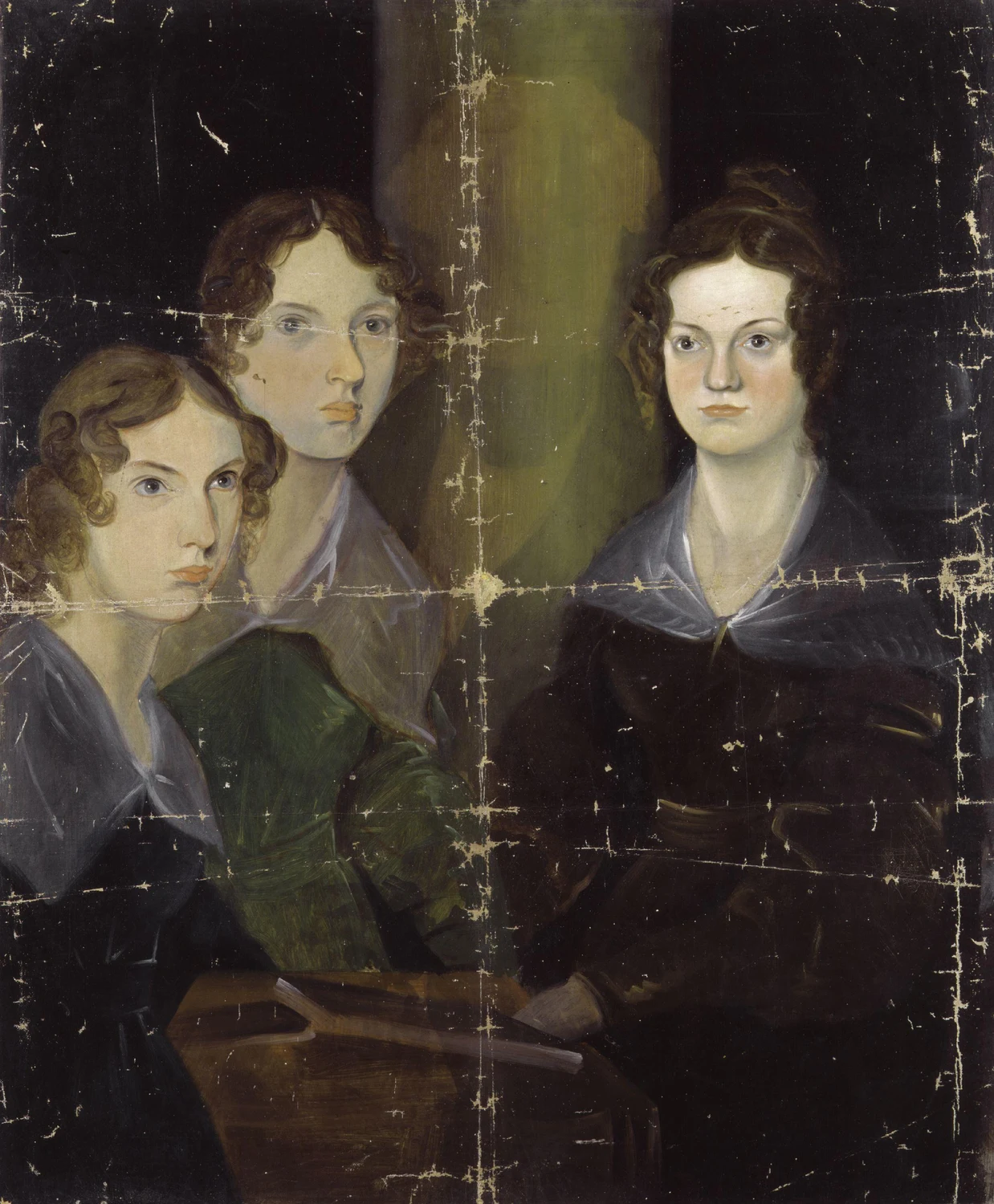
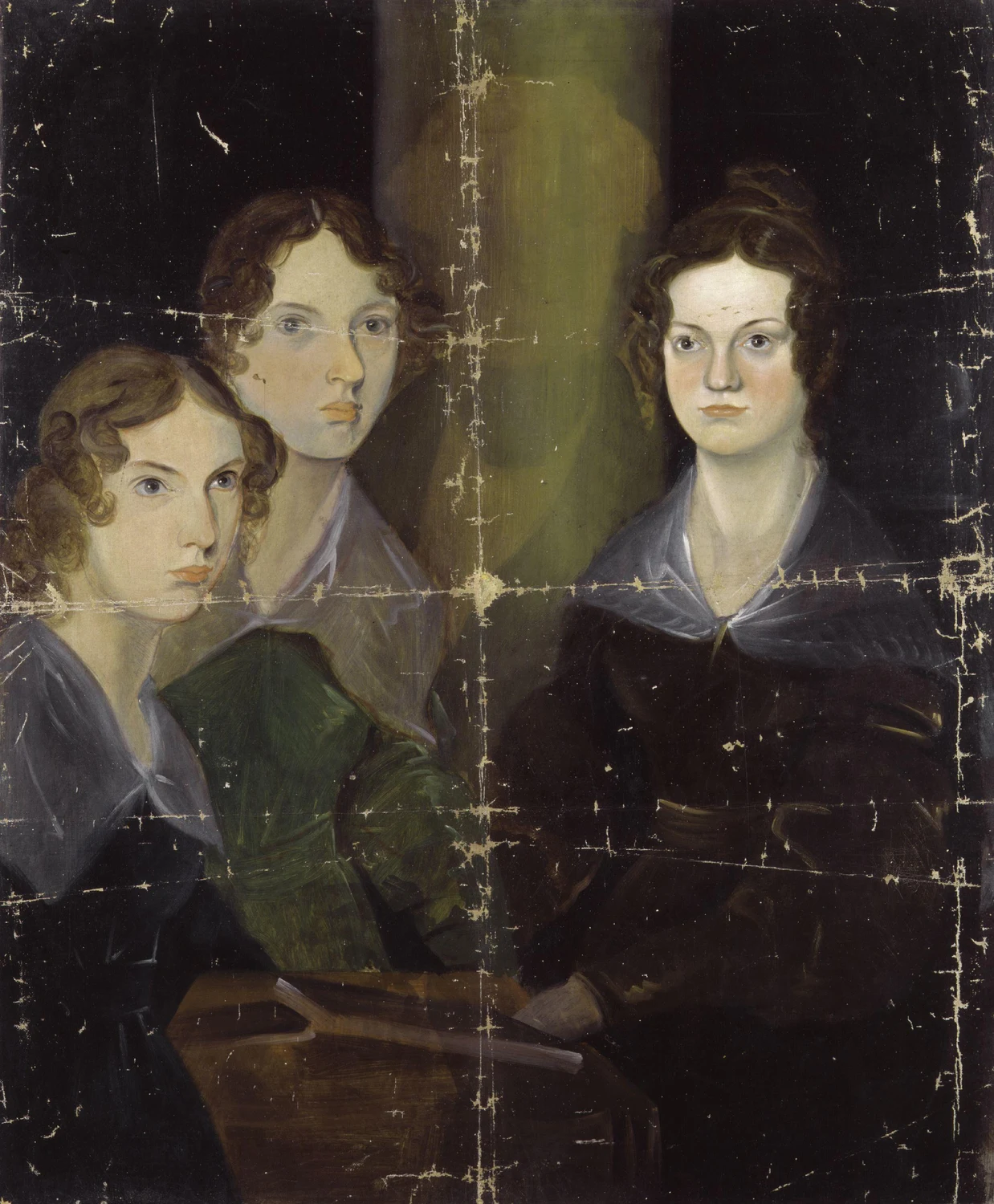
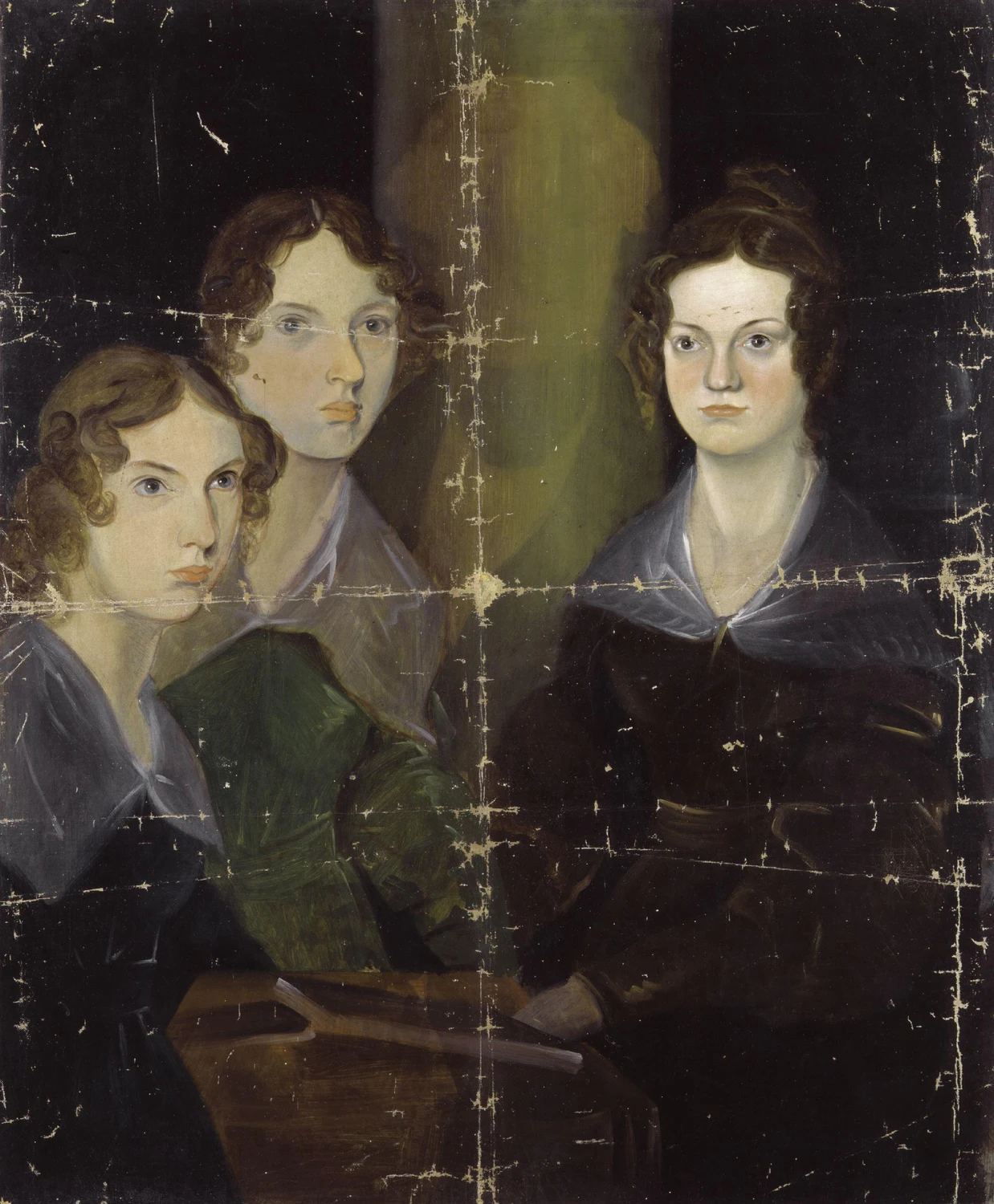
- 7. Branwell Brontë / Wikimedia CommonsComplete original group portrait, public-domain basis and sole original upload
Shared complete original group portrait; Emily is the central sister. No solo crop or digital restoration is used.
- 8. Wikimedia CommonsOriginal full group JPEG
- 9. Wikimedia CommonsSeparate 2009 digital restoration record, examined to exclude that derivative
- 10. National Portrait Gallery / Richard OrmondNPG 1725: selected indexed extended catalogue text and historical paint changes
- 11. Morgan Library & Museum / Christine NelsonThe Professor: indexed introduction and publication-history passages