In this biography
Quick facts
- Born
- 17 January 1820
- Died
- 28 May 1849
- Birthplace
- Thornton, Yorkshire, England
- Country
- United Kingdom
- Nationality
- English
- Known for
- Agnes Grey, The Tenant of Wildfell Hall and the pen name Acton Bell
- Publishing name
- Acton Bell
- First novel
- Agnes Grey, 1847
- Second novel
- The Tenant of Wildfell Hall, 1848
- Paid employment
- Governess, 1839–1845, in two households
Why this life matters
Her two novels make practical labour, observation and moral judgement central to women’s attempts to act within constraining households.
Timeline
Key moments
Thornton to Haworth
Born on 17 January; the family moved to Haworth later that year.
Formal schooling
Studied at Margaret Wooler’s school at Roe Head and Dewsbury Moor.
Governess employment
Worked for the Ingham and Robinson families.
Acton Bell in print
Contributed to the sisters’ poetry volume; Agnes Grey appeared in 1847.
Tenant and authorship
The Tenant of Wildfell Hall appeared; Anne and Charlotte visited their London publisher.
Death at Scarborough
Anne died on 28 May, aged twenty-nine.
Posthumous publication decisions
Charlotte omitted Tenant from the 1850 reissue; a later 1854 edition and royalty evidence complicate claims of permanent suppression.
The youngest sister in a creative household
Anne Brontë was born at Thornton in Yorkshire on 17 January 1820, the youngest of Patrick and Maria Brontë’s six children. The family moved to Haworth that year. After Maria died in 1821, her sister Elizabeth Branwell helped care for the household. Anne’s childhood joined family bereavement with access to reading, discussion and imaginative play.
With Emily she developed writing associated with the invented world of Gondal. Later schooling under Margaret Wooler supplied another setting for study. The Poetry Foundation dates that education to 1835–1837, across the school’s move from Roe Head to Dewsbury Moor. This more precise account is useful beside the abbreviated description of two years at Roe Head found in shorter biographies.
Working as a governess
Financial circumstances made paid employment important. Anne worked for the Ingham family at Blake Hall during 1839, then for the Robinson family at Thorp Green from 1840 until 1845. A governess was responsible for children while depending on employers who controlled the household. That unequal position supplied knowledge of domestic behaviour and education that Haworth alone could not provide.
Branwell later joined the Robinson household as a tutor. Stories about his departure and private relationships require care: retrospective family accounts are not transparent evidence for every event. Anne’s fiction can be connected with employment and observation without treating its employers, marriages or troubled men as exact portraits of named people.
Poetry and the deliberately separate Acton Bell
In 1846 Anne joined Charlotte and Emily in Poems by Currer, Ellis, and Acton Bell. Acton was Anne’s name; the three signatures represented three writers. The shared publication and its limited early audience came before their better-known novels. Charlotte’s 1850 Biographical Notice preserves details of these efforts while speaking retrospectively after both sisters had died.
Anne’s poetry includes work connected with Gondal as well as poems about faith, doubt, loss and perseverance. The temptation to assign every grieving speaker a documented lover exceeds the surviving evidence. The often-repeated romantic connection with curate William Weightman is conjectural. Literary voices can explore feeling without supplying an independently verifiable entry in an author’s personal history.
Two novels with distinct practical problems
Agnes Grey appeared in 1847, sharing a three-volume publication with Emily’s Wuthering Heights. It follows a governess’s attempts to exercise moral and educational responsibility while her position limits her authority. The work gives sustained attention to ordinary employment and the ways adults permit or reward children’s behaviour. Its modest scale is part of its method.
The Tenant of Wildfell Hall followed in 1848. A male narrator’s account of a mysterious neighbour opens into Helen’s diary of marriage, her husband’s behaviour and her effort to leave with her son. Painting becomes an intended source of income, making the destruction of her materials a concrete attack on her capacity to act. The novel’s claims depend on work and resources as well as conviction.
Publication, criticism and the danger of a family myth
Anne defended Tenant in the preface to its second edition, arguing that unpleasant subjects could serve a serious purpose and rejecting different standards for male and female authors. In July 1848 she and Charlotte travelled to London to establish that the Bells were separate people. These were public professional actions, difficult to reconcile with a picture of Anne as merely passive.
Charlotte later criticised Tenant and chose Agnes Grey for the 1850 Smith, Elder reissue. That decision should not become a claim that she permanently prevented republication. Graham Watson’s April 2026 Brontë Society Gazette article identifies an 1854 Hodgson edition and Charlotte’s receipt of royalties on 18 March 1854. Tenant reappeared during her lifetime; the receipt alone does not establish that she edited, promoted, authorised or controlled that edition.
Scarborough and the evidence left behind
Anne died of tuberculosis at Scarborough on 28 May 1849, after the deaths of Branwell and Emily in 1848. She was twenty-nine. The shortness of her life and the small surviving body of private papers have encouraged later writers to rely heavily on Charlotte. That testimony is valuable, but its judgements belong to a bereaved sister with her own literary preferences.
Reading Anne on her own terms means preserving the differences between her poems and novels, and between those works and later family commentary. Her characters confront money, shelter, employment, reputation and the education of children. Those concrete pressures help explain the continuing interest of a career consisting of much more than a supplementary chapter in her sisters’ biographies.
Quick answers
Frequently asked questions about Anne Brontë
- Which books did Anne Brontë write?
- Her novels are Agnes Grey, published in 1847, and The Tenant of Wildfell Hall, published in 1848. She also wrote poetry, including contributions to the sisters’ 1846 volume.
- Who was Acton Bell?
- Acton Bell was Anne’s pen name. Currer was Charlotte and Ellis was Emily; the names did not conceal a single author.
- Did Charlotte permanently suppress Tenant?
- Charlotte criticised it and omitted it from the 1850 reissue. The Brontë Society’s April 2026 Gazette reports an 1854 edition and her receipt of royalties, so permanent suppression is too broad a claim.
- Was Anne a governess like Agnes Grey?
- Yes, she worked for two families between 1839 and 1845. The novel is still fiction, and its scenes should not automatically be assigned to particular real employers.
Keep exploring
Lives connected to this story
- Charlotte Brontë
Read the sister whose retrospective notice preserved family evidence and shaped Anne’s early reception.
- Emily Brontë
Compare Anne’s Gondal collaborator and the distinct author of Wuthering Heights.
- Elizabeth Gaskell
Compare a later novelist and biographer whose writing also considers work and punitive social judgement.
Sources and further reading
Explore the evidence
These references support the biography and offer further reading. Official records, first-person accounts and independent reporting provide different perspectives; image records document attribution and licensing.
- 1. Academy of American PoetsAnne Brontë: education, governess work, Gondal and publications
The page’s 1824 date for the older sisters’ deaths conflicts with the 1825 chronology established by the family notice and prior batch research. The incorrect year is not adopted.
- 2. Poetry FoundationAnne Brontë: selected indexed employment, poetry, reception and evidence passages
Live access returned 403; selected indexed passages on employment, poetry, uncertain romance and reception were read. Its stronger 1850 suppression narrative is qualified by the Society’s 2026 evidence.
- 3. Brontë Parsonage MuseumThe lives of the Brontës: family and distinct Bell names
- 4. Charlotte Brontë / Project Gutenberg1850 Biographical Notice: retrospective account of Anne and publishing
- 5. Anne Brontë / Project GutenbergThe Tenant of Wildfell Hall: preface, frame, diary, artwork and ending
Selected preface, studio, diary, escape and ending passages were read in a 1920-edition transcription with Humphry Ward’s introduction. Ward’s later judgements are distinguished from Anne’s text.
- 6. Brontë Society Gazette / Graham WatsonThe Slandering of Charlotte Brontë, issue 99, April 2026, pages 18–19
Read the relevant pages 18–19 article passages. Its 1854 royalty claim is attributed to Watson; the underlying receipt and complete publishing archive were not personally examined.
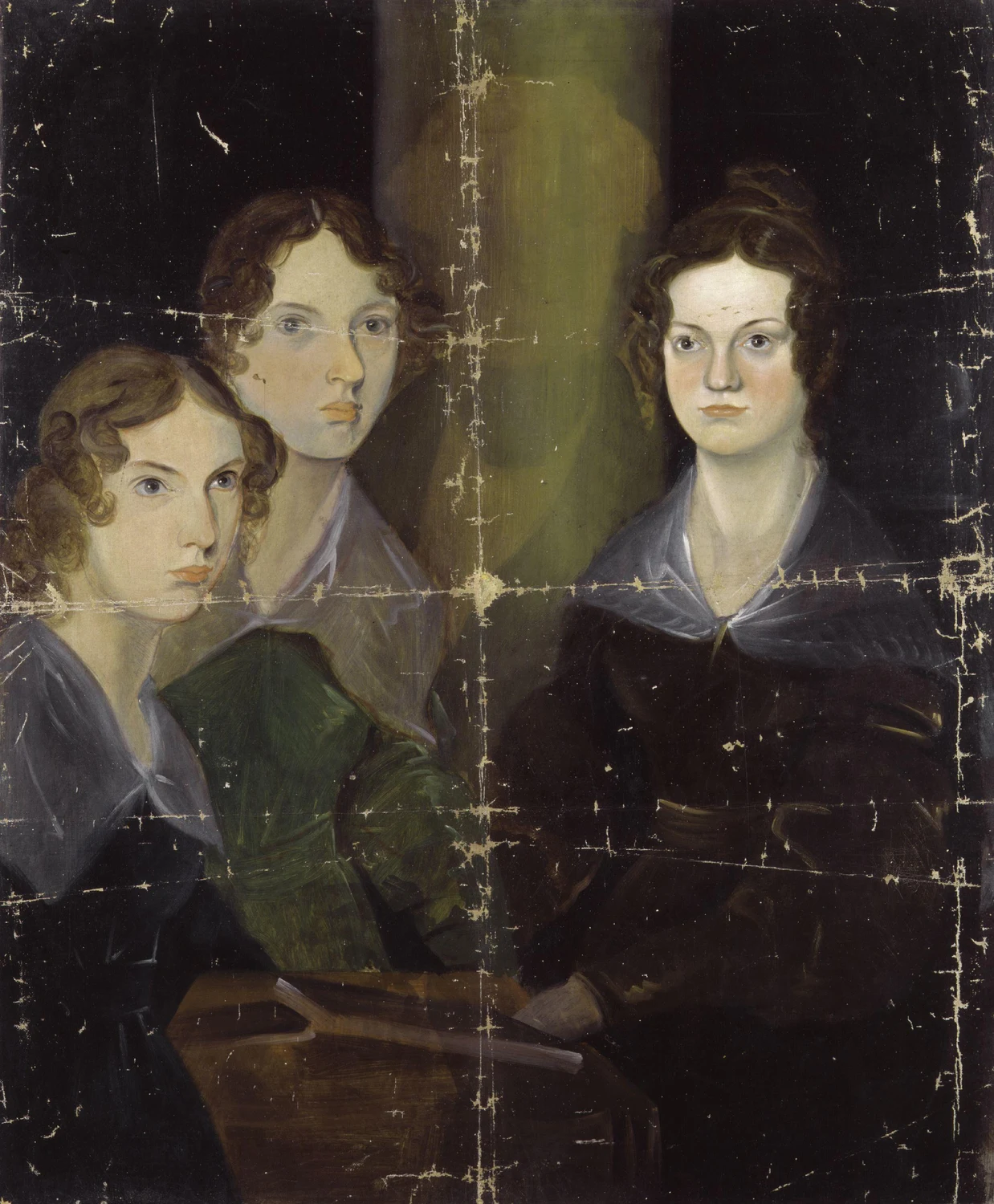
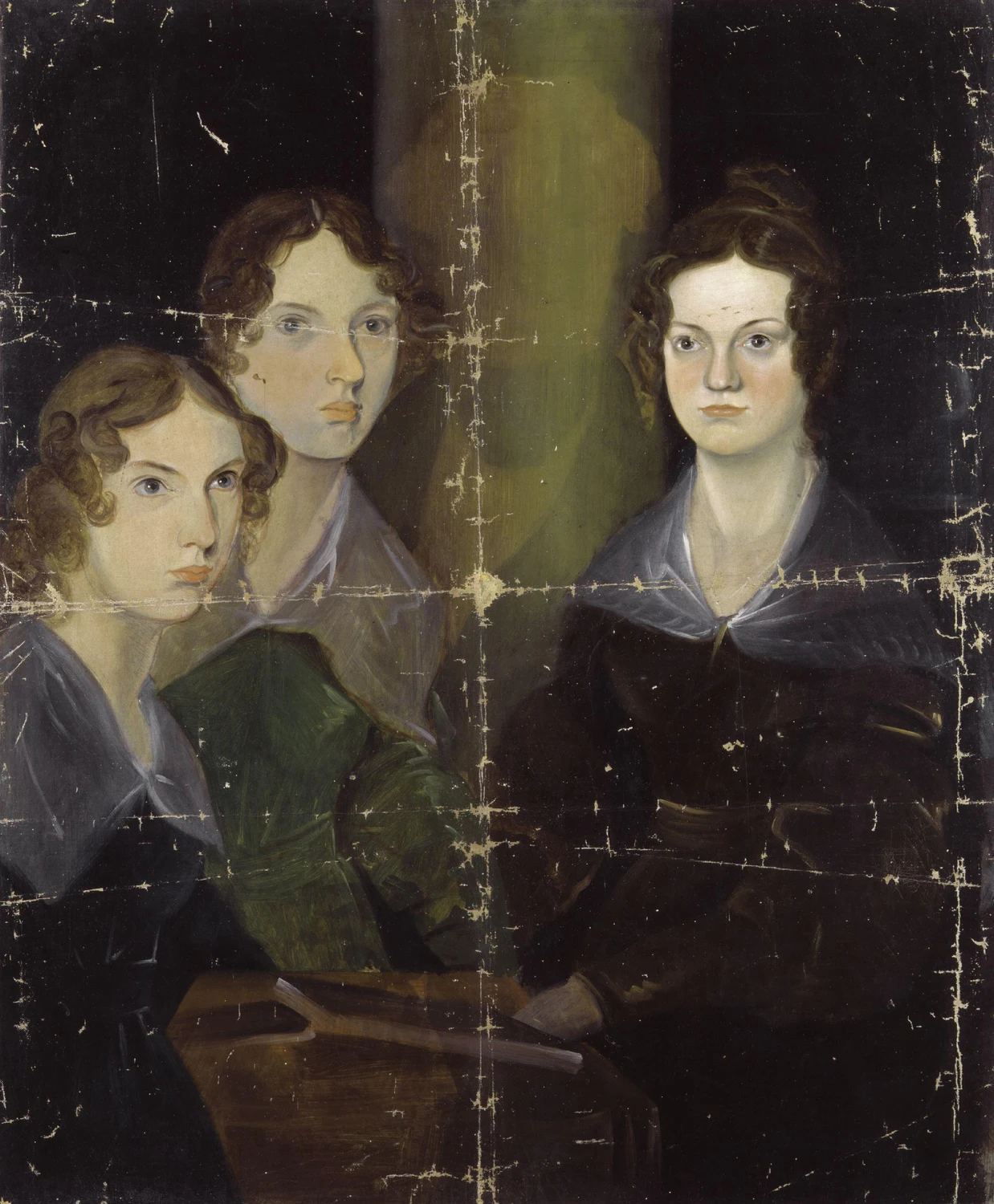
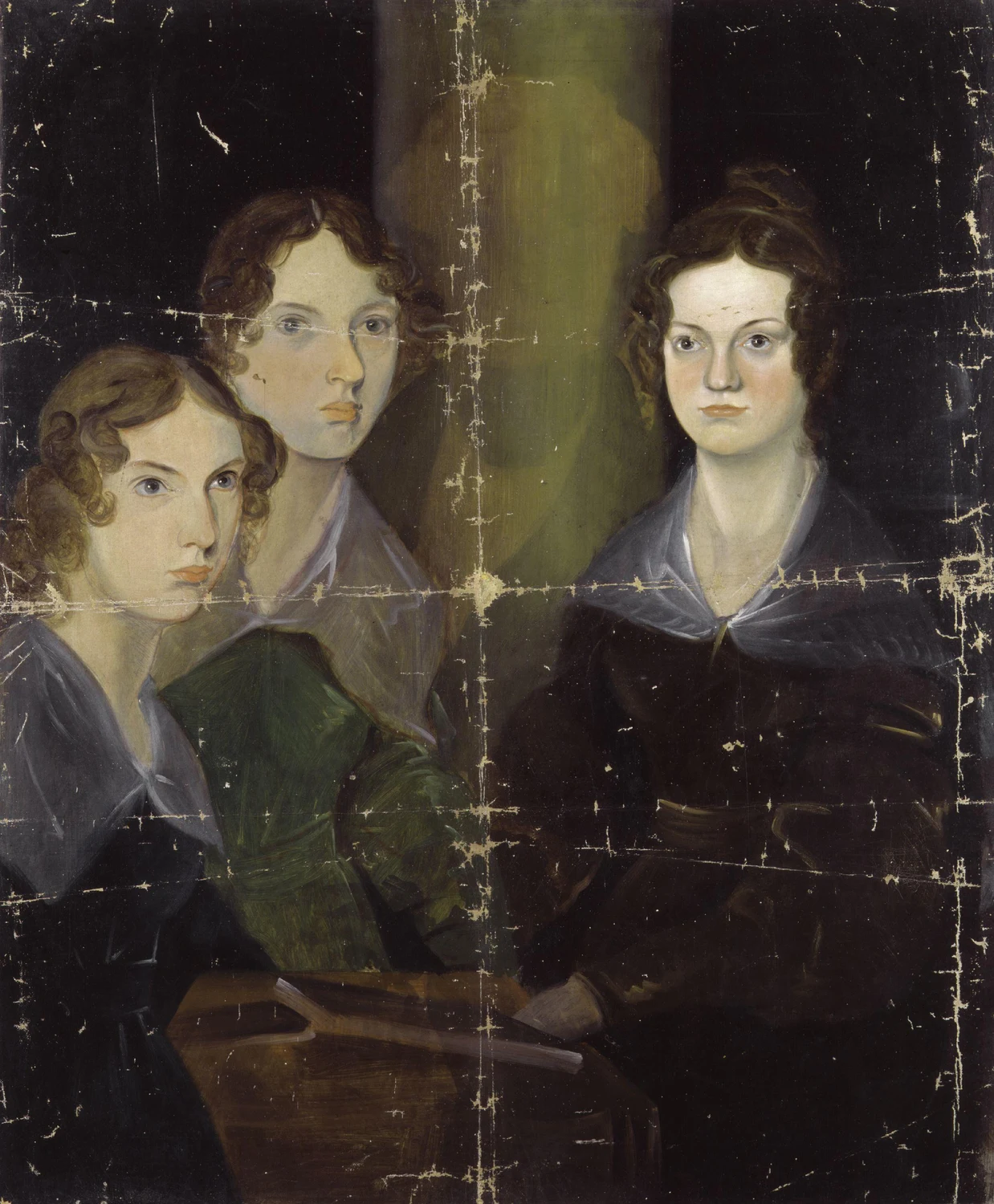
- 7. Branwell Brontë / Wikimedia CommonsComplete damaged group portrait, public-domain basis and original revision
Rights and revision proof reused from the verified eighth-batch research after identical SHA256 confirmation. The restored derivative is not the acquired file.
- 8. Wikimedia CommonsComplete original Brontë JPEG
- 9. Wikimedia CommonsSeparate digital restoration record, excluded from use