In this biography
Quick facts
- Born
- 19 March 1891
- Died
- 9 July 1974
- Birthplace
- Los Angeles, California, United States
- Country
- United States
- Nationality
- Not independently established
- Known for
- Leading the Supreme Court during major civil-rights and representation decisions
- Working context
- California governor and Chief Justice of the United States
Why this life matters
His record combines consequential rights decisions with an earlier role supporting Japanese American removal that he later regretted.
Timeline
Key moments
Legal education
Completes a law degree.
California governorship
Takes office in January.
Chief Justice
Moves to the Supreme Court in October.
Brown
Delivers the Court’s school-segregation opinion.
Reynolds
Writes the legislative-apportionment opinion.
Retirement
Leaves active service as Chief Justice.
From California schooling to public law
Warren grew up in Bakersfield after his birth in Los Angeles. He completed university study in 1912 and a law degree in 1914. Private practice and Army service preceded a sequence of local legal posts, including work for Alameda County.
This was a career built through elected and administrative institutions before he became a judge. The professional background matters when considering the managerial and political experience he later brought to the Court.
Attorney general and governor
As California attorney general, Warren supported the forcible removal of people of Japanese ancestry from the West Coast. He later expressed regret for that position. It belongs alongside his later rights decisions, rather than disappearing from an account organised only around his judicial achievements.
He became governor in January 1943 and served until October 1953. His administration worked on public institutions and social provision, including prisons and benefits for older people. In 1948 he ran for vice president on Thomas Dewey’s Republican ticket, which lost to Harry Truman.
A chief justice among colleagues
President Dwight D. Eisenhower brought Warren to the Supreme Court in 1953. He led it until 1969. In Brown v. Board of Education, the 1954 opinion he delivered rejected state-imposed segregation in public education.
The name Warren Court identifies an era, not the author of every opinion issued within it. Lawyers, litigants and fellow justices were essential to its decisions. William Brennan, for example, wrote the Court’s 1962 opinion in Baker v. Carr; Warren wrote Reynolds v. Sims in 1964.
He also delivered the opinions in Miranda v. Arizona (1966), concerning custodial interrogation and self-incrimination, and Loving v. Virginia (1967), which rejected Virginia’s racial restrictions on marriage. These cases address distinct uses of state power; they should not be collapsed into a single general declaration about rights.
Representation and public investigation
Reynolds addressed state legislative apportionment and the relation between population and representation. Its reasoning belongs to a specific judgment; the related learning guide distinguishes it from Baker’s earlier decision on whether the challenge could be heard.
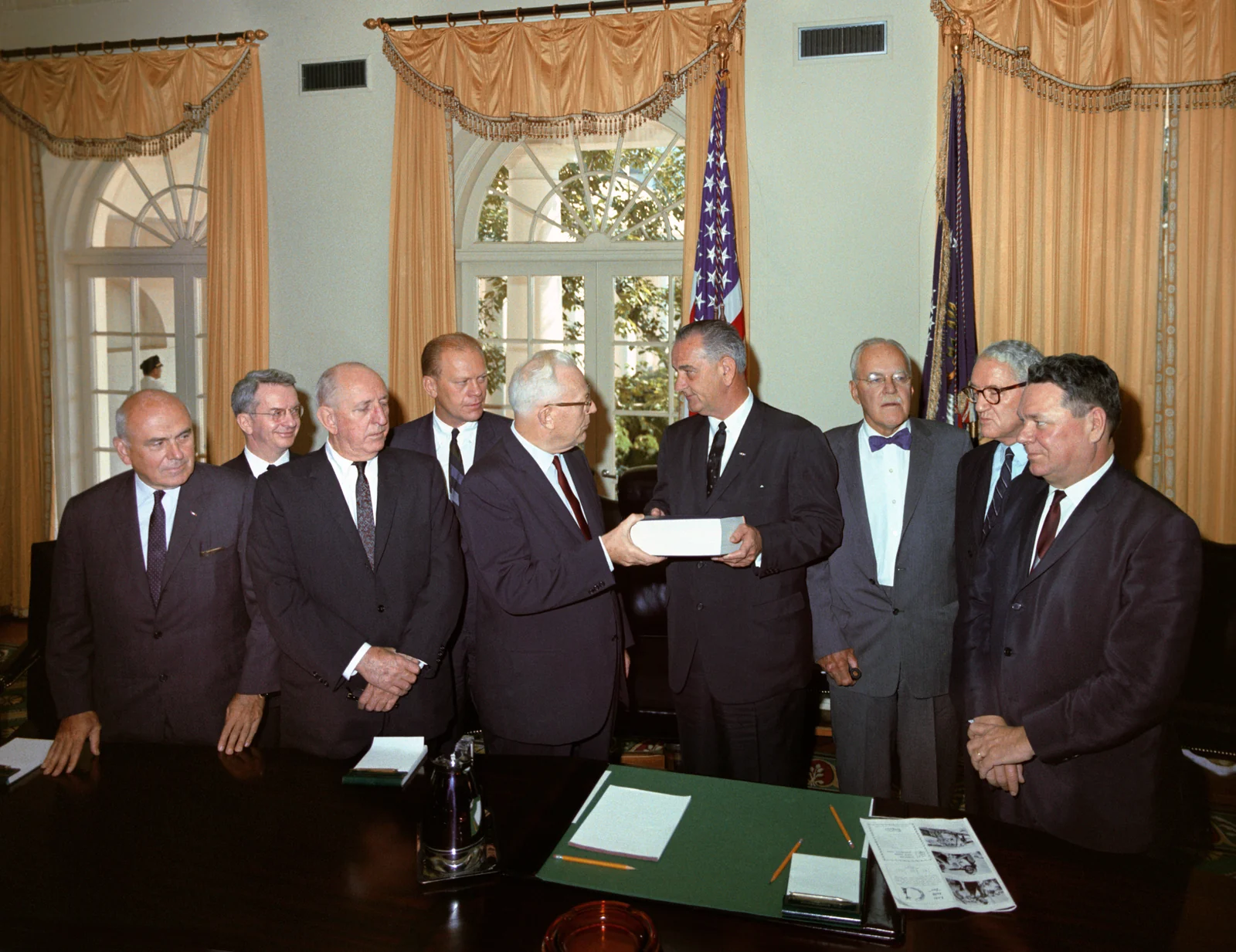
Warren also chaired the presidential commission investigating John F. Kennedy’s assassination. That was an investigative assignment outside his ordinary judicial responsibilities. A report submitted by such a commission is a different kind of document from an opinion resolving a case before the Supreme Court.
Retirement and an uneven legacy
He retired from the Court in 1969 and died in 1974. Assessing his influence requires holding together different parts of that record: state power used against Japanese Americans, the later protection of individual rights, and leadership within a court whose work was collective.
A chronological account is useful precisely because it resists making the later career erase the earlier one. Individual cases then allow readers to examine what the Court actually decided, who wrote the opinion and which questions remained outside it.
Quick answers
Frequently asked questions about Earl Warren
- Who was Earl Warren?
- Earl Warren was a california governor and Chief Justice of the United States. His record combines consequential rights decisions with an earlier role supporting Japanese American removal that he later regretted.
- What is Earl Warren best known for?
- Earl Warren is best known for leading the Supreme Court during major civil-rights and representation decisions.
- When and where was Earl Warren born?
- Earl Warren was born on 19 March 1891 in Los Angeles, California, United States.
- When did Earl Warren die?
- Earl Warren died on 9 July 1974.
Keep exploring
Lives connected to this story
- Thurgood Marshall
Follow the civil-rights lawyer and later justice whose career connects litigation with the Court’s decisions.
- Dwight D. Eisenhower
Read the president’s wider career alongside the appointment that brought Warren to the Supreme Court.
- William Howard Taft
Compare another chief justice and the institutions through which the Court selects its work.
Sources and further reading
Explore the evidence
These references support the biography and offer further reading. Official records, first-person accounts and independent reporting provide different perspectives; image records document attribution and licensing.
- 1. California State LibraryGovernors of California: Earl Warren
Term headers and corroborated career stages used. Several dates in the narrative are unreliable and were not adopted as authoritative just because the host is official.
- 2. Supreme Court Historical SocietyEarl Warren
Selected biography passages read; its Mapp authorship claim was not repeated. Baker and Reynolds authors and holdings were checked in the reproduced opinions.
- 3. Federal Judicial CenterWarren, Earl: judicial service record
- 4. U.S. Supreme Court / Cornell Legal Information InstituteBaker v. Carr,369 U.S.186 (1962): selected majority passages
- 5. U.S. Supreme Court / Cornell Legal Information InstituteReynolds v. Sims,377 U.S.533 (1964): selected majority passages
- 6. U.S. Supreme Court / Cornell Legal Information InstituteMiranda v. Arizona,384U.S.436 (1966):heading and opening majority passages
- 7. U.S. Supreme Court / Cornell Legal Information InstituteLoving v. Virginia,388U.S.1 (1967):heading and opening majority passages