In this biography
Quick facts
- Born
- 20 January 1976
- Birthplace
- Bandung, West Java, Indonesia
- Country
- Indonesia
- Nationality
- Indonesian
- Known for
- Supernova, Filosofi Kopi, Rectoverso, Perahu Kertas and Rapijali
- Birth name
- Dewi Lestari Simangunsong
- Music background
- Rida Sita Dewi and solo songwriting
- Fiction debut
- Supernova: Kesatria, Putri, dan Bintang Jatuh, 2001
- Hybrid project
- Rectoverso connects prose and music
- Later serial
- Rapijali, released in digital and print forms in 2021
Why this life matters
Her work links contemporary Indonesian fiction with popular music and shows how stories travel between books, songs, film and translated editions.
Timeline
Key moments
Born in Bandung
Born on 20 January.
Rida Sita Dewi
The trio’s first album, Antara Kita, was released.
Supernova begins
Published Kesatria, Putri, dan Bintang Jatuh under the name Dee.
Different storytelling forms
Rectoverso connected music and stories; Perahu Kertas followed as a novel.
Stories reach film audiences
Adaptations included Perahu Kertas and Filosofi Kopi.
Supernova’s sixth instalment
Inteligensi Embun Pagi completed the six-volume sequence.
Rapijali
The music-centred trilogy appeared through digital serialisation and print publication.
Dewi Lestari, the singer who became Dee
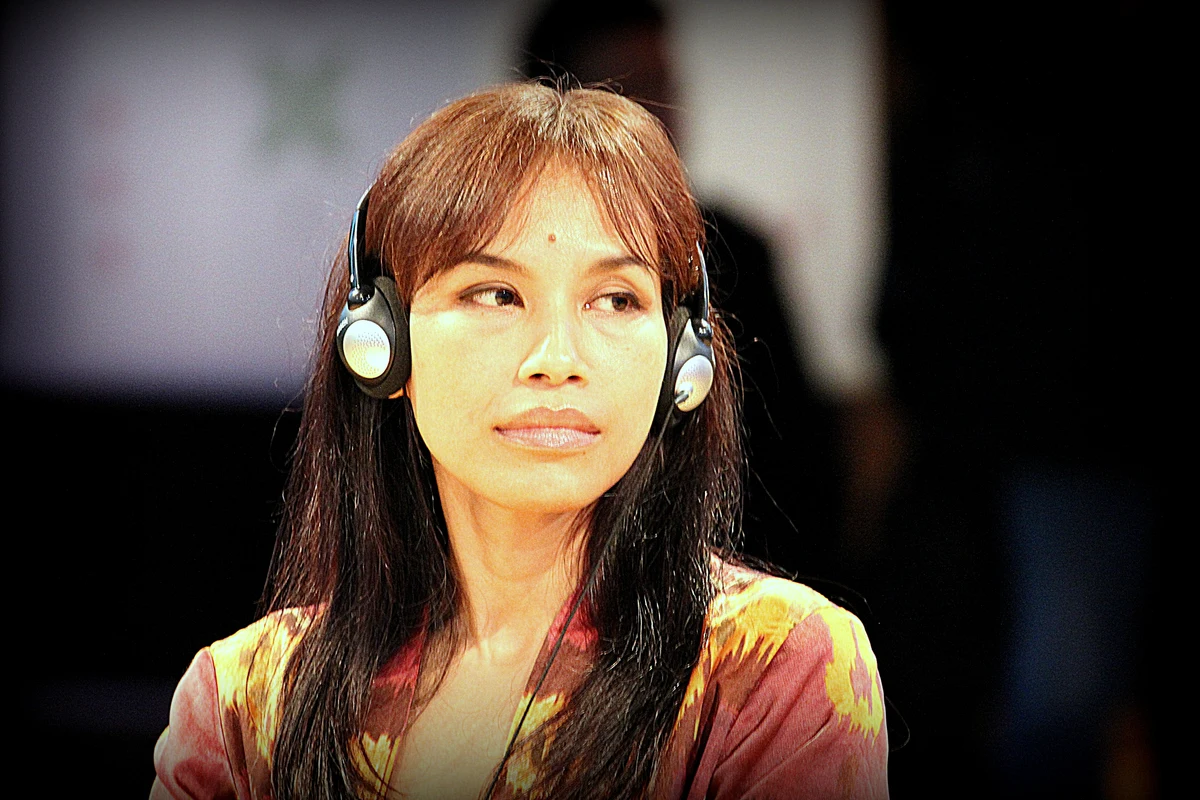
Dee Lestari was born Dewi Lestari Simangunsong in Bandung on 20 January 1976. Her first public career developed in music. She worked as a backing singer and became part of the vocal trio Rida Sita Dewi, whose first album, Antara Kita, appeared in 1995. Songwriting remained part of her work as fiction later became increasingly prominent.
In an interview with the British Council, she described herself fundamentally as a storyteller rather than someone divided into incompatible artistic identities. Songs and prose offered different ways to develop the stories she imagined. The pen name Dee also became the name associated with her literary career, rather than identifying a separate writer from Dewi Lestari.
Supernova and the move into long-form fiction
Her fiction debut came in 2001 with Supernova: Kesatria, Putri, dan Bintang Jatuh. The series combined questions about science, spirituality, relationships and consciousness within linked stories. The publisher’s overview identifies six books; it is a multi-volume fictional project, not a scientific textbook or a single novel repeatedly issued under different titles.
Inteligensi Embun Pagi, the sixth instalment, appeared in 2016. In a contemporary ANTARA interview she discussed the creative process behind bringing that sequence together. The fifteen-year span between the first and sixth books helps distinguish original publication from the later editions readers may encounter in catalogues. Her changing fictional perspectives developed over a sustained project rather than one sudden publication.
Short prose, songs and screen adaptations
Outside Supernova, her books include Filosofi Kopi, Madre and Perahu Kertas. These offered different scales of storytelling, from shorter pieces to a novel that later reached cinema audiences. Rectoverso was conceived as a hybrid of prose and music, making the relationship between her two creative practices part of the work itself.
The movement to film introduced another set of collaborators and production choices. Perahu Kertas, Rectoverso and Filosofi Kopi have screen adaptations, but an author’s source material, songwriting and screenplay participation are not the same as directing every adaptation. Dee’s career is therefore broader than a list of books, while the credits of each version still need to remain distinct.
Rapijali, readers and stories across languages
Rapijali returned explicitly to a musical world through the story of Ping and her move into unfamiliar circumstances. In 2021 the trilogy appeared through digital serialisation as well as print. The publisher records the serial format, while an original Konde interview describes interaction between Dee and readers through the project’s online community.
International circulation adds another layer. In the British Council interview, Dee discussed translation and the difficulty of carrying cultural meanings into another language. That concern complements the movement between songs, stories and screen versions: changing the medium or language changes how a story reaches its audience. Her biography connects these forms without treating every translated edition or adaptation as a new original work.
Quick answers
Frequently asked questions about Dee Lestari
- Are Dee Lestari and Dewi Lestari the same person?
- Yes. Dee is the pen name of Dewi Lestari Simangunsong, the Indonesian author, singer and songwriter.
- When did Dee Lestari start Supernova?
- The first instalment, Kesatria, Putri, dan Bintang Jatuh, appeared in 2001. Inteligensi Embun Pagi was the sixth instalment in 2016.
- Is Rectoverso only a novel?
- It is a hybrid prose-and-music project. Its book, music and later film adaptation are related but distinct forms.
- What is Rapijali?
- It is Dee’s music-centred trilogy, released through digital serialisation and print in 2021, with an online reader community forming part of its publication experience.
Keep exploring
Lives connected to this story
- Leila S. Chudori
Compare another contemporary Indonesian novelist through books about exile, disappeared activists and family memory.
- Pramoedya Ananta Toer
Compare an earlier Indonesian literary career with Dee’s contemporary fiction and cross-media readership.
- Anggun
Read another Indonesian vocalist’s career, without assuming the two singers collaborated.
- Prabda Yoon
Compare another Southeast Asian writer whose work moves between literature, translation and cinema.
Sources and further reading
Explore the evidence
These references support the biography and offer further reading. Official records, first-person accounts and independent reporting provide different perspectives; image records document attribution and licensing.
- 1. Dee Lestari · official biographyBirth identity, music chronology and bibliography
Use the explicit biographical and bibliography entries, not stale present-tense family wording or duplicated page-builder text. The article does not infer current family circumstances from this page.
- 2. British Council · original author interviewStorytelling, pen name, translation and creative practice
The original interview supplies the author’s own account of storytelling and translation; no translated quotation or song lyrics are reproduced.
- 3. IDWRITERS · author profileFiction debut and work beyond Supernova
- 4. Bentang Pustaka · Supernova overviewSix-volume series and linked fictional setting
Use the six-book description, with original start/end chronology cross-checked against the contemporary 2016 interview. Reprint dates and inconsistent intermediate-year display labels are not used as original publication dates.
- 5. ANTARA · 28 February 2016 interviewInteligensi Embun Pagi and completion of the sequence
- 6. Bentang Pustaka · Rapijali 3 cataloguePublisher description and digital serial format
- 7. Komdigi library · bibliographic recordRapijali 1: Mencari, Bentang Pustaka, 2021
- 8. Konde · original 2021 author/reader interviewsDigital serialisation and reader-community interaction
- 9. Wikimedia Commons · Neal HarrisonIdentified 2010 festival photograph and CC BY 3.0 declaration
The file-specific Commons record names Neal Harrison and expressly declares CC BY 3.0. The historical Picasa URL contains a search licence filter, which is not itself treated as permission. No passed Flickr/YouTube review is claimed for this file. The 350 × 387 image is retained without enlargement.