In this biography
Quick facts
- Born
- 1962
- Birthplace
- Jakarta, Indonesia
- Country
- Indonesia
- Nationality
- Indonesian
- Known for
- Pulang, Laut Bercerita and fiction about exile, disappearance and political memory
- Education
- Trent University, Canada; returned to Indonesia in 1988
- Journalism
- Joined Tempo in 1989; later retired from the magazine
- Pulang in English
- Home, translated by John H. McGlynn
- Laut Bercerita in English
- The Sea Speaks His Name, translated by John H. McGlynn
- Related novel
- Namaku Alam (2023), set in the world of Pulang
Why this life matters
Her fiction connects public history with family life and helps international readers encounter Indonesian experiences through translated literature.
Timeline
Key moments
Jakarta origins
The publisher’s biographical note records her birthplace and birth year.
Early short fiction
Began publishing stories in children’s magazines at about twelve.
Return and journalism
Returned after studies in Canada, then joined Tempo.
Pulang
The novel later reached English readers as Home.
Laut Bercerita
Developed a fictional account of disappeared activists and families seeking answers.
English edition and regional award
The Sea Speaks His Name appeared in English; Laut Bercerita received the SEA Write Award.
Namaku Alam
Returned to the fictional world of Pulang through Segara Alam’s story.
Jakarta, early stories and journalism
Leila S. Chudori was born in Jakarta in 1962. She began publishing stories in children’s magazines at about twelve, long before she became known as a journalist. She studied at Trent University in Canada and returned to Indonesia in 1988, bringing an international educational experience into a career rooted in Indonesian writing.
She joined Tempo in 1989 and later retired from the magazine. Her work includes short-story collections, novels and screenwriting, so journalism is one part of a broader writing life. In her British Council interview she explained the different possibilities of short fiction and novels: a short story has little space, while a novel can develop backgrounds and relationships at greater length.
Pulang: exile, food and the meaning of home
Pulang, published in 2012 and translated into English as Home by John H. McGlynn, follows Indonesian exiles and their families across decades. Its historical setting reaches from the violence associated with 1965 to the upheavals of 1998. Paris and Indonesia become connected through people who cannot simply return to the country they remember.
The novel approaches political history through domestic experience, including meals, memory, love and relationships between generations. Deep Vellum’s description emphasises this combination of displacement and family life. Food and the idea of home connect the characters’ immediate lives with a country from which exile has separated them, giving a political history an intimate, intergenerational scale.
Laut Bercerita and families of the disappeared
Laut Bercerita shifts attention to student activists and the families left searching after disappearances around the end of Suharto’s rule. Penguin published McGlynn’s English translation, The Sea Speaks His Name, in February 2020. Biru Laut and his sister Asmara Jati provide different perspectives on detention, uncertainty and the effort to recover a missing person’s story.
In the British Council interview, Chudori discussed the real disappearances that informed the novel’s setting. The book’s emotional centre includes the relatives who continue waiting and asking questions, not only the experience of an abducted activist. Gramedia’s author account records the novel’s 2020 Southeast Asian Writers Award, alongside its circulation in Indonesian and English.
Namaku Alam and reading Chudori in translation
In 2023 Chudori returned to the world of Pulang with Namaku Alam. Gramedia’s launch feature identifies Segara Alam, a character from the earlier novel, as its focus. The later book follows the burden of inherited political history through childhood and adulthood, extending a fictional world rather than replacing Home with a new English title.
For English-language readers, Home and The Sea Speaks His Name offer distinct entry points: exile and return in one, disappearance and a family’s search in the other. McGlynn’s translation credit is important to both. Reading the books together reveals recurring concerns with memory and belonging without treating their plots, characters or periods as the same story.
Quick answers
Frequently asked questions about Leila S. Chudori
- Who is Leila S. Chudori?
- She is an Indonesian novelist, short-story writer and former Tempo journalist, known for fiction about exile, political violence and family memory.
- What is Pulang called in English?
- Pulang is published in English as Home, translated by John H. McGlynn. It is a different novel from The Sea Speaks His Name.
- Is The Sea Speaks His Name the same book as Laut Bercerita?
- Yes. It is John H. McGlynn’s English translation of Laut Bercerita, published by Penguin in February 2020.
- How is Namaku Alam related to Pulang?
- The 2023 novel develops Segara Alam’s story within the fictional world of Pulang. It is not another English title for Home.
Keep exploring
Lives connected to this story
- Dee Lestari
Compare another contemporary Indonesian novelist’s themes and routes to readers, without assuming the two authors collaborated.
- Pramoedya Ananta Toer
Read the writer whose Buru Quartet Chudori recommends in her British Council interview.
- Suharto
Explore the political history surrounding the New Order, distinct from Chudori’s fictional characters.
Sources and further reading
Explore the evidence
These references support the biography and offer further reading. Official records, first-person accounts and independent reporting provide different perspectives; image records document attribution and licensing.
- 1. Deep Vellum · HomeJakarta birth year, Trent studies, early writing and the translated novel
Use Jakarta and 1962 without inventing a precise birthday. This older publisher page’s present-tense Tempo role is not retained as current employment.
- 2. British Council · writer interviewWriting forms, exile and the background to Laut Bercerita
- 3. Penguin Random House SEA · author profileJournalism and published works
Publisher biographies differ on the ending year of her Tempo employment; retain the established 1989 start and later retirement, not an artificially resolved 2017/2018 endpoint.
- 4. Penguin Random House SEA · The Sea Speaks His NameTranslation, February 2020 edition and fictional characters
Keep original and English titles, fictional character names and McGlynn’s translator credit distinct. A novel inspired by disappearances is not itself a documentary casualty list.
- 5. Gramedia / KPG · Namaku AlamAuthor bibliography, award record and connected fictional world
Use the 2013 Khatulistiwa award wording in the Indonesian publisher record rather than silently equating it with an older publisher’s 2012 prize-cycle wording. No casualty count from an interview is republished as independently verified.
- 6. Gramedia · 9 August 2023Namaku Alam launch and its connection to Pulang
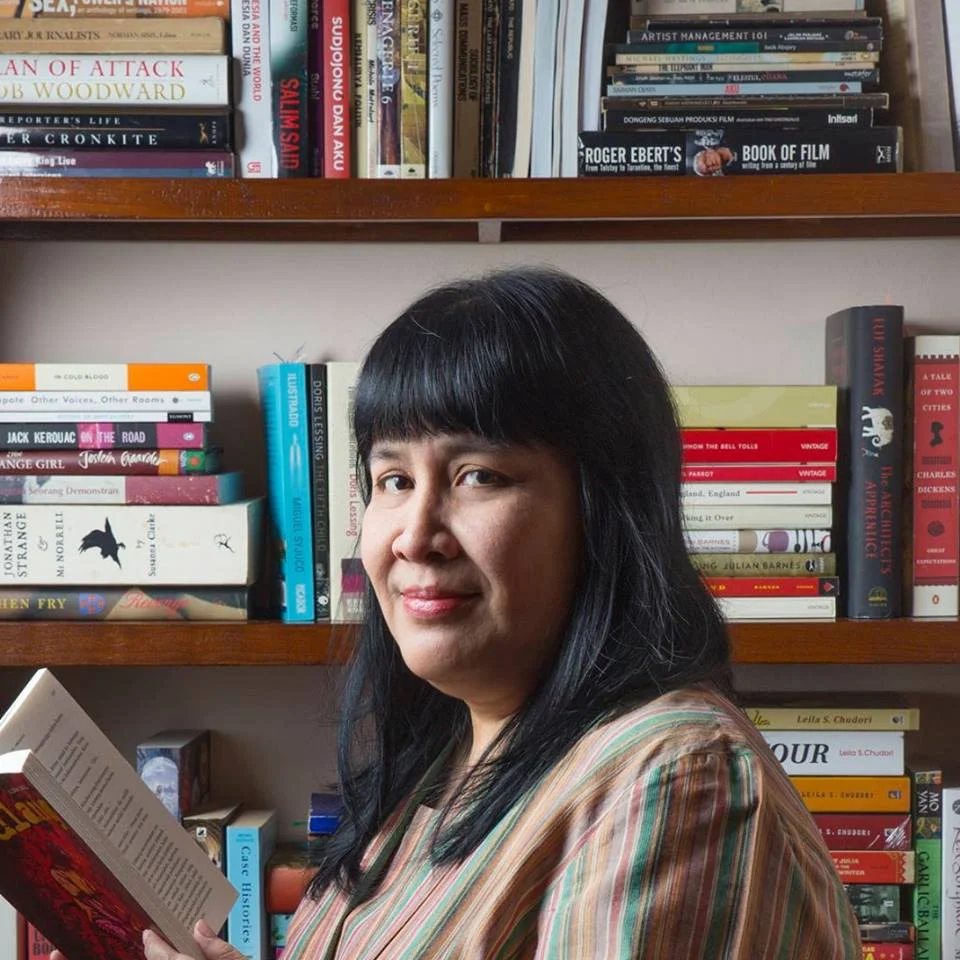
- 7. Wikimedia Commons · Bintang AdamasPerson photograph and CC BY-SA 4.0 terms
Bintang Adamas declares the photograph as own work under CC BY-SA 4.0. Description and metadata differ on the year; no exact shooting date is asserted. The entire 960 × 960 supplied frame is retained.