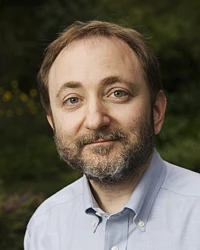
In this biography
Quick facts
- Born
- 1966
- Birthplace
- Boston, MA, USA
- Country
- United States
- Nationality
- Not independently established
- Known for
- Development of bioorthogonal reactions for investigating living systems
Why this life matters
Specific reagents, settings and readouts still need testing, making the method's limits part of its scientific value.
Timeline
Key moments
Birth
Born in Boston, MA, USA.
Nobel recognition
Received the Nobel Prize in Chemistry.
Chemistry meets glycobiology
Carolyn Bertozzi was born in Boston in 1966. She studied chemistry at Harvard and completed her doctorate at Berkeley in 1993. Postdoctoral work at UCSF concerned cellular immunology before she joined Berkeley's faculty in 1996. She moved to Stanford in 2015. Her institutional profile connects chemical synthesis with questions about glycans, the carbohydrate structures involved in many cellular interactions. The practical problem was how to investigate those molecules in living systems without a probe's chemistry overwhelming the biology being observed.
A selective reaction in a crowded environment
A 2000 paper with Eliana Saxon adapted the Staudinger reaction to connect deliberately introduced chemical partners on cell surfaces. The strategy installed an abiotic handle and used a matching reagent to form a stable linkage. Bertozzi's later bioorthogonal work extended the idea of reactions that operate in biological settings while avoiding inappropriate reactions with surrounding components. The important claim concerns the performance of chemistry in a particular biological context, not merely whether two reagents react cleanly in isolation.
Recognition for a research approach
Bertozzi shared the 2022 chemistry prize with Morten Meldal and Barry Sharpless for click and bioorthogonal chemistry. Stanford's account describes her group adapting chemical tools to observe cellular processes, while her profile records the broader academic path behind that work. The contribution did not make all selective reactions automatically compatible with living cells. It established a demanding experimental objective: useful chemical discrimination alongside biological compatibility. Specific reagents, settings and readouts still need testing, making the method's limits part of its scientific value.
Quick answers
Frequently asked questions about Carolyn R. Bertozzi
- What is Carolyn R. Bertozzi known for?
- Development of bioorthogonal reactions for investigating living systems.
Keep exploring
Lives connected to this story
- David W. C. MacMillan
Compare the related experimental question and research career.
- Thomas R. Cech
Compare the related experimental question and research career.
Sources and further reading
Explore the evidence
These references support the biography and offer further reading. Official records, first-person accounts and independent reporting provide different perspectives; image records document attribution and licensing.
- 1. Nobel Prize OutreachCarolyn R. Bertozzi — Facts
Source scope: Birth/death and award metadata; short official work summary.
- 2. Stanford UniversityCarolyn Bertozzi: biography and research
Source scope: Bio education and appointments; research section on azides, Staudinger ligation and strain-promoted reactions. Nobel biographical page explicitly contains no submitted biography and is not used as a life source.
- 3. Saxon and Bertozzi / ScienceCell surface engineering by a modified Staudinger reaction
Source scope: Complete abstract: engineered partners, azidosugar, stable surface adducts and prospective intracellular use.
- 4. Stanford ReportCarolyn Bertozzi wins Nobel in chemistry
Source scope: Research-history account and 2022 award; no verbatim quotations reused.