
The short answer
On 6 February 2015 the Supreme Court of Canada unanimously decided Carter v. Canada. It held that the criminal prohibition on physician-assisted dying violated section 7 of the Charter within the circumstances it defined. Understanding the case requires separating the litigants’ challenge, the constitutional reasoning, the delayed remedy and Parliament’s later response. This is a history of the ruling, not a guide to current eligibility or medical or legal advice.
Chronology
A timeline of the turning points
Rodriguez upholds the prohibition
A divided Supreme Court rejects the earlier constitutional challenge.
A different trial record
The British Columbia trial court accepts the Carter challenge after considering extensive evidence.
Court of Appeal reverses
The provincial appellate majority treats Rodriguez as binding.
The Supreme Court allows the appeal
The Court issues a unanimous judgment with a twelve-month suspended declaration.
An extension
The Court grants four additional months for the response, alongside a judicial exemption process.
Separate federal legislation
Bill C-14 receives royal assent, establishing a statutory framework.
The challenge brought several distinct experiences together
Gloria Taylor, who had amyotrophic lateral sclerosis, sought the ability to obtain a physician’s assistance in dying. Lee Carter and Hollis Johnson had helped Lee’s mother Kay travel to Switzerland after she developed spinal stenosis. Physician William Shoichet and the British Columbia Civil Liberties Association also joined the litigation.
Their claims challenged sections 14 and 241(b) of the Criminal Code. Kay Carter’s experience explained part of the case’s background; Lee Carter was the named appellant. Keeping those roles distinct prevents a familiar surname from obscuring who brought the legal challenge and whose circumstances formed the evidence.
An earlier precedent did not close every later inquiry
In Rodriguez in 1993, a divided Supreme Court had upheld the prohibition. In Carter, the British Columbia trial judge considered a substantially developed evidentiary record and changes in the law governing section 7. The provincial Court of Appeal majority nonetheless concluded that the earlier precedent controlled.
The Supreme Court explained that lower courts normally follow higher-court rulings, but reconsideration may be justified by new legal issues or a fundamental change in circumstances or evidence. It found those conditions present. The result therefore involved an explanation of how precedent could be revisited, alongside the substantive debate about assisted dying.
Section 7 connected life with autonomy and protection
The Court examined whether the prohibition deprived affected people of life, liberty and security of the person in a manner inconsistent with fundamental justice. Its reasoning included the risk that some people would end their lives prematurely, fearing loss of the physical ability to act later.
Protecting vulnerable people from being induced to die during weakness remained a legitimate objective. The constitutional difficulty was the prohibition’s reach beyond that group to competent adults making informed, voluntary decisions. The Court found the law overbroad and the infringement unjustified under section 1. Having decided the case through section 7, it did not determine the separate section 15 equality claim.
A defined declaration was different from an immediate system
The declaration concerned competent adults who clearly consented and had a grievous and irremediable medical condition causing enduring suffering intolerable to them. The Court expressly confined its conclusion to the circumstances before it and made no pronouncement on every other situation in which assistance might be sought.
It suspended the declaration for twelve months, allowing time for a legislative response. It also said its declaration did not compel physicians to provide assistance. These were constitutional parameters and limits, rather than a complete service model. The published reasons belonged to the Court collectively; naming Chief Justice Beverley McLachlin alone would misstate their authorship.
The response continued beyond the 2015 judgment
In January 2016 the Court extended the suspension by four months and permitted applications to superior courts for individual relief under its criteria. Bill C-14 received royal assent on 17 June 2016. That federal statute was a separate institutional response, requiring parliamentary debate and legislative choices.
The sequence matters when reading later accounts: a constitutional judgment, a suspension order and a statute perform different functions. This guide stops at that historical transition. The wording of the 2015 declaration and the original 2016 framework should not be substituted for current law or an assessment of an individual’s eligibility.
Continue the chronology
Related history guides
Biography context
Explore Canada through connected lives
Connected biographies
A chief justice within a collective Court
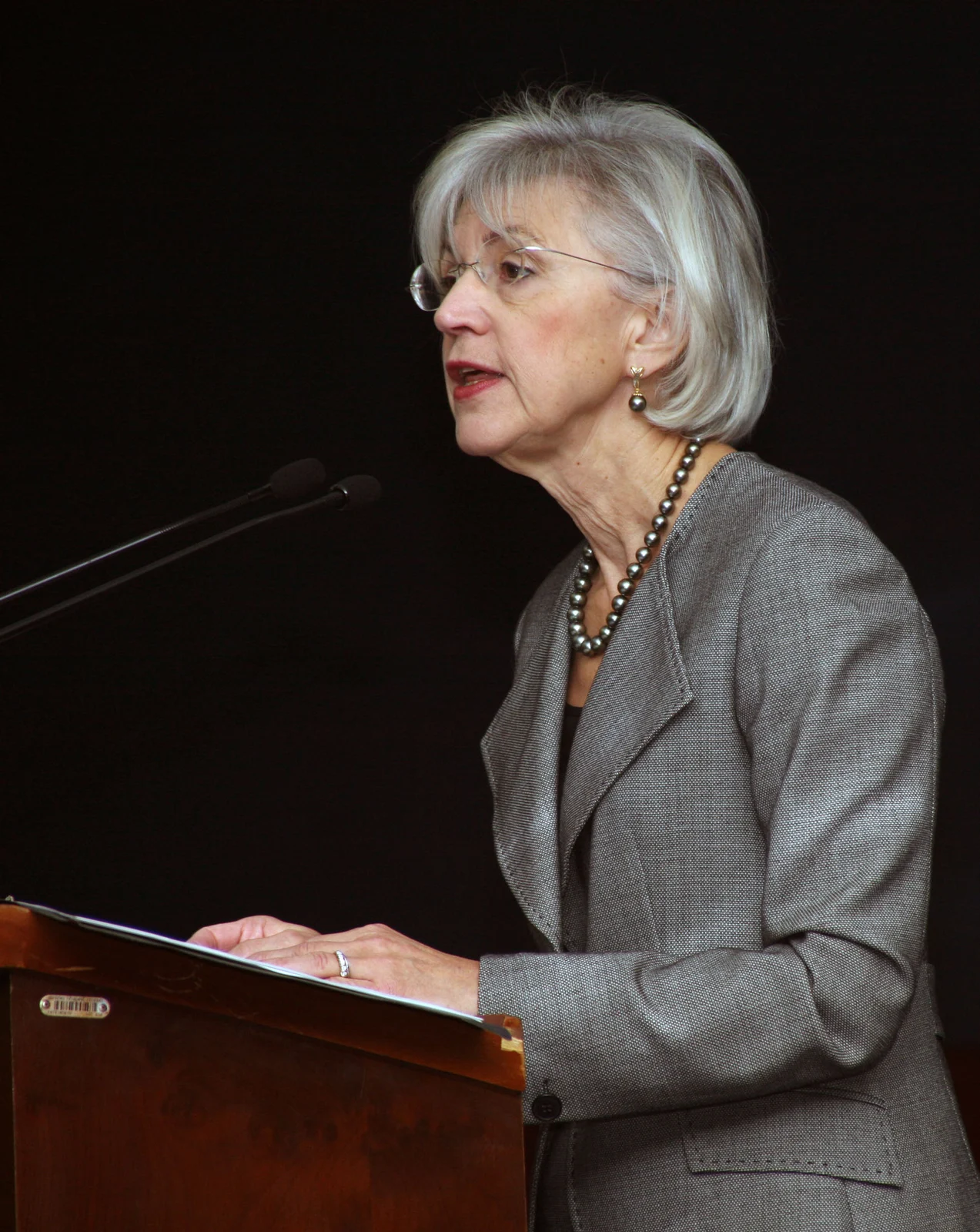
1943–
Beverley McLachlin
Former Chief Justice of Canada and authorAn Alberta-born lawyer and teacher who led the Supreme Court of Canada from 2000 to 2017 and later combined international judging with writing.Read biographyQuick answers
Common questions
- Was Kay Carter the named appellant?
- Her experience was central background, but the named appellants included her daughter Lee Carter and Hollis Johnson, alongside Gloria Taylor, William Shoichet and the BCCLA.
- Was Carter a decision written by McLachlin alone?
- No. The official reasons are attributed to the Court, with all nine participating justices joining the result.
- Did the prohibition become invalid immediately in February 2015?
- The declaration was initially suspended for twelve months. A further four-month extension followed in January 2016.
- Does this historical guide establish current assisted-dying eligibility?
- No. It explains the 2015 constitutional ruling and its initial aftermath. Current eligibility depends on later law and the individual situation.
Primary and institutional sources
How this history was checked
The original Supreme Court HTML, including the collective authorship and selected reasons and remedy paragraphs, controls the account. Library of Parliament and University of Toronto analyses supply independent explanation. The Justice page is explicitly archived. The 2007 image predates the case. This article was reviewed on Reviewed 23 October 2026.
- Supreme Court of CanadaCarter v. Canada (Attorney General), 2015 SCC 5, judgment of 6 February 2015
- Library of ParliamentMartha Butler and Marlisa Tiedemann: Carter v. Canada, background paper 2015-47-E, 7 October 2015
- University of Toronto / David Asper Centre for Constitutional RightsCarter v. Canada: section 7, precedent and remedy
- Department of Justice CanadaSupreme Court of Canada ruling: archived account of the suspension and 2016 response
- Wikimedia Commons / Agência BrasilGervásio Baptista: Beverley McLachlin, 20 November 2007; full original and file history
- Agência Brasil / Internet ArchiveArchived publisher photo gallery with CC BY 3.0 Brazil grant, 27 December 2016