In this biography
Quick facts
- Born
- 29 October 1945
- Died
- 9 September 2020
- Birthplace
- Goa, Camarines Sur, Philippines
- Country
- Philippines
- Nationality
- Filipino
- Known for
- Leading the House from November 2000 through the EDSA II transfer of power
- House speaker
- 13 November 2000–24 January 2001
- First national legislature
- Interim Batasang Pambansa, 1978–1984
- Constituency
- Camarines Sur, across several congressional periods
- Profession
- Lawyer and banker
Why this life matters
Fuentebella’s brief tenure shows how an internally elected speaker can change during impeachment and presidential succession without a general election.
Timeline
Key moments
Interim Batasang Pambansa
Served in the Marcos-era assembly.
First post-EDSA House period
Represented Camarines Sur in three consecutive Congresses.
Partido development law
Republic Act No. 7820 was approved on 18 November.
House speaker
Led the chamber from 13 November until 24 January.
EPIRA enacted
The energy-reform law was approved in June, after his speakership.
Later House service
Returned in two further periods and also served as a deputy speaker.
Died on 9 September
The Senate adopted a resolution honouring his public service.
Camarines Sur and two legislative systems
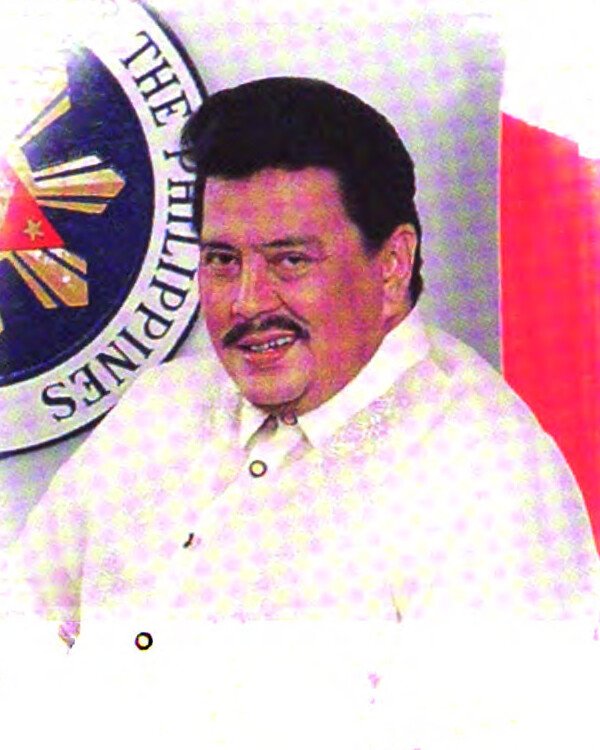
Arnulfo Palma Fuentebella, widely known as Noli, was a lawyer and politician from Camarines Sur. His national legislative career began in the Interim Batasang Pambansa, where he served from 1978 to 1984. That assembly operated within the Marcos-era parliamentary system, not the bicameral Congress established under the 1987 Constitution.
He returned to national legislative office in 1992 and accumulated twenty-one years in the post-EDSA House across three periods: 1992–2001, 2004–2013 and 2016–2019. The interruptions matter. They distinguish his own terms from those of relatives who represented the area, and prevent a long political career from becoming a claim of uninterrupted House service from 1978 to 2019.
The speakership during Estrada’s impeachment
Fuentebella became speaker on 13 November 2000 after Manuel Villar transmitted the impeachment articles against President Joseph Estrada to the Senate. The Supreme Court’s later account of the crisis records Villar’s replacement and the corresponding leadership change in the Senate. The speakership placed Fuentebella at the centre of events without making him a senator-judge.
The distinction follows the Constitution: the House initiates impeachment, while the Senate tries it. Fuentebella’s leadership concerned the lower chamber during a rapidly changing political confrontation. His brief tenure therefore cannot be described as presiding over Estrada’s Senate trial, a role held by the chief justice while the senators sat as judges.
January 2001 and a second change of speaker
In January 2001, House prosecutors withdrew after the Senate’s disputed second-envelope vote. The Court’s account records their resignation letter to Speaker Fuentebella. It also discusses Estrada’s letter asserting temporary inability to govern, sent to the House speaker and Senate president. Those documents became part of the later legal dispute over presidential succession.
Gloria Macapagal Arroyo took the presidential oath on 20 January. On 24 January, Feliciano Belmonte Jr. became House speaker, ending Fuentebella’s tenure. The four-day gap separates the presidential change from the chamber’s leadership vote. The Court ultimately rejected Estrada’s claim to remain president; its conclusion is not a personal ruling made by Fuentebella through receipt of a letter.
Partido development beyond the speaker’s chair
Fuentebella’s legislative work extended well beyond those ten weeks. The Senate’s 2020 tribute credits him with the initiative behind the Partido Development Administration. Republic Act No. 7820, approved on 18 November 1994, established an organisation covering ten Camarines Sur municipalities, including Goa, Tigaon, Lagonoy and Caramoan.
The law provided for coordinated planning, investment assistance and development projects across the district. It created a corporate body with municipal and other representation, rather than a personal agency belonging to the congressman. Its stated ambition was to help a lagging district catch up; the existence of that legal framework alone does not demonstrate that every planned improvement was delivered.
Energy reform, later House service and remembrance
As an energy-committee leader, Fuentebella was associated with the Electric Power Industry Reform Act, or EPIRA. The Senate tribute credits his sponsorship, while Republic Act No. 9136 establishes the law’s actual framework. Approved in June 2001, it reorganised the electricity sector through measures involving generation, transmission, distribution and regulation. Enactment came after his speakership had ended.
Fuentebella subsequently returned to the House and served as a deputy speaker for Luzon. He died on 9 September 2020. The commemorative account emphasises public-service achievements, but the lasting questions are institutional: how district development was organised, how energy reform operated and how chamber majorities changed during a national crisis. Those subjects give his career greater substance than the short speakership alone.
Quick answers
Frequently asked questions about Arnulfo Fuentebella
- When was Arnulfo Fuentebella House speaker?
- From 13 November 2000 until Feliciano Belmonte Jr. succeeded him on 24 January 2001, during the Eleventh Congress.
- Did he preside over Estrada’s impeachment trial?
- No. The House initiated impeachment, but the trial was in the Senate with the chief justice presiding. Fuentebella led the House.
- Was he continuously in Congress from 1978 to 2019?
- No. He served in the Interim Batasang Pambansa in 1978–1984, then in the restored House in 1992–2001, 2004–2013 and 2016–2019.
- Which legislation is associated with him?
- The Senate credits his work on the Partido Development Administration law and EPIRA. EPIRA became law in June 2001, after his speakership ended.
Keep exploring
Lives connected to this story
- Manuel Villar Jr.
Read the career of the speaker Fuentebella replaced during the impeachment crisis.
- Gloria Macapagal Arroyo
Follow the presidential succession and administration that reshaped the House majority.
- Feliciano Belmonte Jr.
Continue to the speaker elected on 24 January 2001.
Sources and further reading
Explore the evidence
These references support the biography and offer further reading. Official records, first-person accounts and independent reporting provide different perspectives; image records document attribution and licensing.
- 1. House of Representatives of the PhilippinesRoster of Philippine legislators, 1907–2019
- 2. The LawPhil Project1987 Constitution — Article VI on the legislature
- 3. Senate of the PhilippinesSenate tribute to former Speaker Arnulfo Fuentebella
- 4. Wikimedia CommonsPortrait and public-domain record
- 5. Senate of the PhilippinesProposed Resolution No. 521: service periods, offices and legislative tribute, 2020
The indexed resolution text supplies the interrupted service periods and proposed tribute. Full PDF inspection is not claimed; the dated Senate release separately reports adoption.
- 6. Senate of the Philippines / Richard GordonTribute and sponsorship of the resolution, 9 September 2020
This is an official commemorative account. Its favourable assessment of EPIRA and district development is distinguished from the laws’ provisions and from measured policy outcomes.
- 7. Supreme Court / LawPhilEstrada v. Desierto, 2 March 2001: crisis chronology and succession
The judgment supplies institutional events and dates. Receiving Estrada’s inability letter is not treated as adjudicating the succession dispute, and no motive is inferred from an appearance at the oath ceremony.
- 8. LawPhilRepublic Act No. 7820: Partido Development Administration Act, 1994
- 9. LawPhilRepublic Act No. 9136: EPIRA, 2001