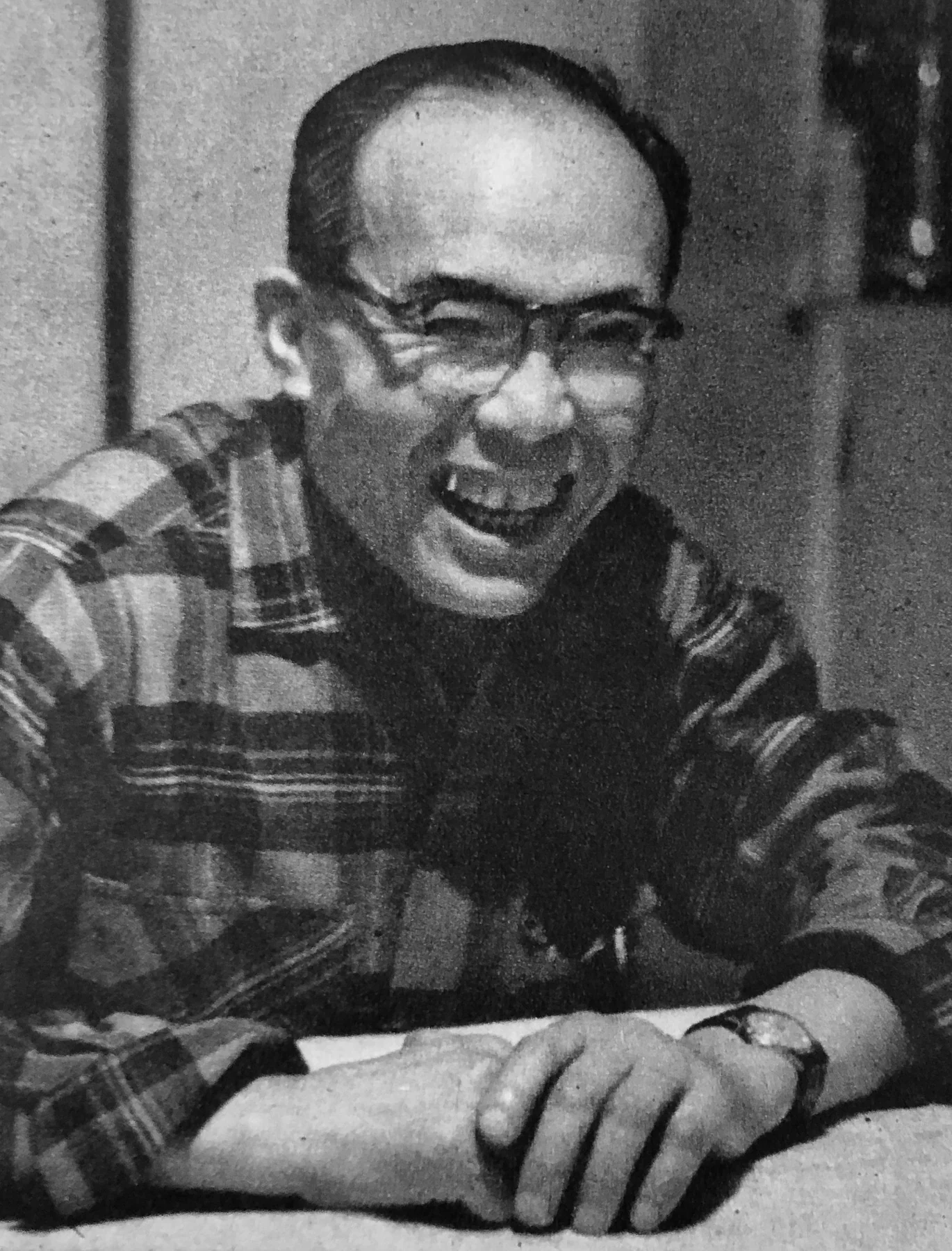
In this biography
Quick facts
- Born
- 26 January 1921
- Died
- 3 October 1999
- Birthplace
- Nagoya, Aichi Prefecture, Japan
- Country
- Japan
- Nationality
- Not independently established
- Known for
- Sony’s international business, branding and consumer electronics
- Education
- Physics graduate, Osaka Imperial University, 1944
- Company co-founder
- Tokyo Tsushin Kogyo, 1946
- Sony name adopted
- 1958
- Walkman launch
- 1979; developed by several Sony teams
Why this life matters
Morita helped make an electronics company internationally visible by combining product decisions with branding, local business relationships and access to capital.
Timeline
Key moments
Born in Nagoya
Born on 26 January into a sake-brewing family.
Physics graduate
Completed studies at Osaka Imperial University.
Company co-founder
Founded Tokyo Tsushin Kogyo with Masaru Ibuka.
TR-55 introduced
The company released Japan’s first transistor radio.
Sony Corporation
The company adopted the Sony corporate name.
United States company
Sony Corporation of America was established.
Walkman
Sony introduced the portable stereo cassette player.
Death
Died on 3 October.
Physics, family expectations and wartime research
Akio Morita was born in Nagoya on 26 January 1921 into a family with a long-established sake business. He pursued physics at Osaka Imperial University, graduating in 1944. During the war he served as a naval technical officer and met Masaru Ibuka through military research. The foundation-maintained chronology places their meeting at a Wartime Research Committee in 1945. Their later partnership grew from that encounter, although the consumer products for which they became known belonged to the very different conditions of postwar civilian production.
Sources for this section: [1]
Founding a company before it was called Sony
On 7 May 1946 Morita and Ibuka established Tokyo Tsushin Kogyo. Its original name is often translated as Tokyo Telecommunications Engineering Corporation. Sony’s archive describes operations initially divided between cramped premises, followed by a move that brought manufacturing and offices together in Shinagawa. The early company developed tape recorders before moving into transistor radios. Its later brand can make this sequence look inevitable. In practice, organizing a place to work, choosing a product and finding customers were separate business problems faced by a young enterprise.
Sources for this section: [2]
Connecting development to overseas customers
The transistor radio required licensed patent rights as well as the ability to manufacture components. Morita participated in negotiations with Western Electric, while Ibuka supported the project and Kazuo Iwama led transistor development. Morita’s contribution also included distribution. Sony records that Canadian importer Albert D. Cohen visited in 1955, met him and placed an order for TR-55 radios. That episode identifies a customer and an importing business, rather than suggesting that international demand appeared automatically when the radio worked. Its evidence comes from Sony’s own account of the relationship.
Building an international corporate presence
The corporate name changed to Sony in 1958. Morita helped expand the company’s overseas organization, including Sony Corporation of America, established in 1960. Sony issued American Depositary Receipts in 1961 and listed shares on the New York Stock Exchange in 1970. These financial and organizational steps supported a recognizable international brand. Sony’s 2000 tribute presents Morita as a champion of local integration abroad. That is the company’s assessment of his management philosophy; the dated establishments and securities milestones are more concrete evidence of the business structure he helped create.
The Walkman joined several teams’ work
The Walkman was introduced in 1979. Sony’s development history describes Ibuka asking for a lightweight stereo listening device, Norio Ohga bringing the request to Kozo Ohsone, and engineers modifying an existing Pressman recorder. Morita then promoted the idea of a playback-only product for younger listeners, with a target price and summer deadline. A separate lightweight-headphone project became part of the package. The account shows executive judgment giving direction to existing engineering work. Calling Morita the device’s sole inventor would erase the distinct contributions on which the commercial product depended.
Sources for this section: [6]
Audio standards and a public business voice
Other Sony projects also relied on cooperation. The compact disc grew through joint work with Philips and specialist engineering groups; Morita’s business role should not absorb those technical credits. He became a prominent representative of Japanese industry and wrote about management and international business. After becoming honorary chairman in 1994, he died on 3 October 1999. His significance lies in linking technical products with a company identity, overseas relationships and choices about how people might use electronics. It rests on those connections, rather than on an unsupported claim to have invented every Sony technology.
Quick answers
Frequently asked questions about Akio Morita
- Who founded Sony with Akio Morita?
- Masaru Ibuka. They established Tokyo Tsushin Kogyo in 1946; the company adopted the Sony corporate name in 1958.
- Was Sony’s TR-55 the world’s first transistor radio?
- No. It was Japan’s first. The Regency TR-1 was already on sale in the United States in 1954.
- Did Morita invent the Walkman by himself?
- No. He championed its market and product direction, working with Ibuka, Ohga, Ohsone and several engineering and headphone teams.
Keep exploring
Lives connected to this story
- Soichiro Honda
Compare another founder’s partnership between engineering and business organisation.
- Lee Byung-chul
Compare electronics manufacturing and the institutions behind a different East Asian business group.
- Masaru Ibuka
Follow his cofounder’s technical direction and the partnership behind the company.
- Kazuo Iwama
Read the transistor-development leader’s later engineering and management work.
- Tadashi Yanai
Compare a later Japanese consumer-business leader’s product planning and international retail expansion; no personal relationship implied.
- Leo Esaki
Explore Esaki’s semiconductor research within Sony’s wider engineering history.
Sources and further reading
Explore the evidence
These references support the biography and offer further reading. Official records, first-person accounts and independent reporting provide different perspectives; image records document attribution and licensing.
- 1. Tengai Foundation / Akio Morita official websiteAkio Morita chronology
The Tengai Foundation maintains this chronology. It is a founder-associated source; its claims about corporate influence are checked against dated Sony records where possible.
- 2. Sony GroupTime Capsule Vol. 3: the original Tokyo Tsushin Kogyo sign
- 3. Sony GroupSony History, Volume 1 Chapter 3: Developing the Transistor Radio
- 4. Sony GroupTime Capsule Vol. 25: Albert D. Cohen and the first Sony exports
- 5. Sony CorporationAnnual Report 2000: tribute to Akio Morita, printed pages 8–9
- 6. Sony GroupSony History, Volume 2 Chapter 3: A New Market Born from the Walkman
- 7. Sony GroupSony History, Volume 2 Chapter 7: Digitizing Music