In this biography
Quick facts
- Born
- 7 February 1919
- Died
- 24 August 1982
- Birthplace
- Nagoya, Aichi Prefecture, Japan
- Country
- Japan
- Nationality
- Not independently established
- Known for
- Transistor manufacturing development and sustained support for CCD image sensors
- Education
- Geophysics, Tokyo Imperial University, 1942
- Joined predecessor of Sony
- 1946
- Sony president
- 1976–1982
- CCD role
- Executive sponsor and technical manager; not the device’s inventor
Why this life matters
Iwama’s career shows how technical management can connect scientific knowledge, manufacturing discipline and sustained investment across a long development cycle.
Timeline
Key moments
Birth
Born on 7 February.
Geophysics graduation
Graduated from Tokyo Imperial University and joined its Earthquake Research Institute.
Joined Tokyo Tsushin Kogyo
Entered the newly established electronics company.
American technical visits
Reported on transistor manufacturing at Western Electric and other firms.
Dedicated CCD project
Helped concentrate resources on image-sensor development.
Sony presidency
Became president and CEO.
Death
Died on 24 August; mass production of CCDs followed in 1983.
A geophysicist enters electronics
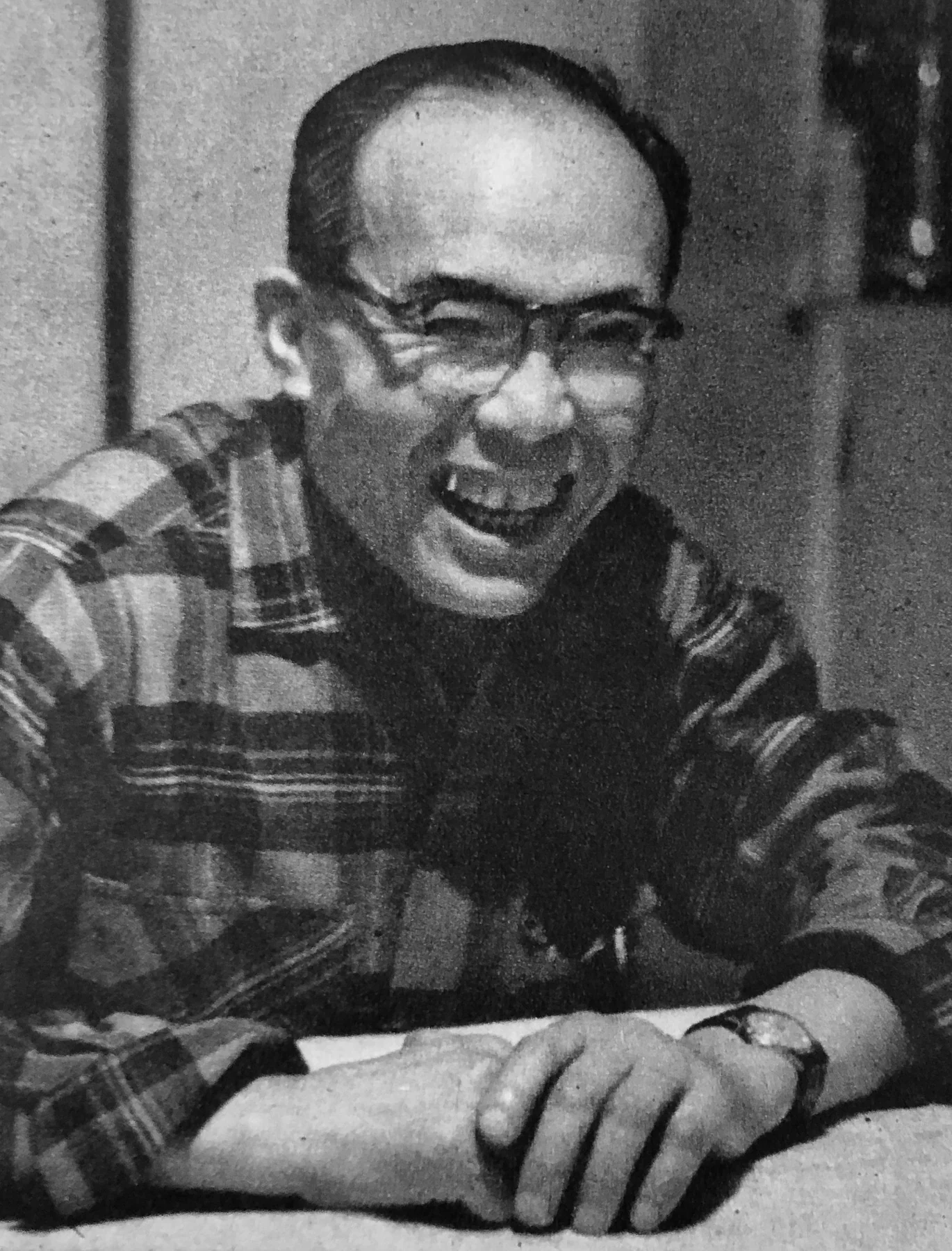
Kazuo Iwama was born on 7 February 1919. A contemporary report of his death identifies Nagoya as his birthplace. He graduated from the Geophysics Department in the Faculty of Science at Tokyo Imperial University in 1942 and worked at the university’s Earthquake Research Institute before joining Tokyo Tsushin Kogyo in 1946. This was a scientific education followed by a move into industrial electronics, rather than a semiconductor doctorate. The Semiconductor History Museum of Japan records these qualifications and dates, providing a useful anchor for a career often remembered through Sony’s later product successes.
Reports that carried knowledge across the Pacific
In 1954 Iwama visited Western Electric and other American businesses to study transistor technology. Sony preserves this work in its account of the Iwama Report: observations sent back to colleagues in Japan rather than a complete factory that could simply be copied. The reports mattered because useful knowledge had to move between a licensed technology and the people trying to manufacture it. Sony’s researchers still faced questions of materials, tools and performance. Reading the reports as part of an organized exchange makes Iwama’s contribution more precise than calling him the inventor of Sony’s transistor radio.
Technical work and executive responsibility
Iwama rose through senior management, becoming an executive managing director in 1957 and a senior managing director in 1966. He took office as president of Sony Corporation of America in 1971 and as president and chief executive of Sony Corporation in 1976. These posts gave him responsibility for an organization whose semiconductor research could be costly well before it produced a saleable device. The museum’s account emphasizes his continued backing for image sensors when their commercial prospects were uncertain. It describes an executive making decisions about time, people and expenditure, alongside engineers solving the device’s technical problems.
Sources for this section: [1]
Backing the image-sensor team
Sony’s image-sensor history names Shigeyuki Ochi as a researcher who pursued CCD imaging after reading a Bell Laboratories paper in 1970. Iwama subsequently supported a concentrated development program, with a dedicated project established by 1973. The team had to improve sensitivity and resolution and reduce defects caused by contamination. Sony recalls Iwama pressing for quantitative reports rather than vague assurances. Those details explain the practical content of sponsorship: a promise to continue research still required measurable progress. They also keep the research team visible within a narrative often organized around a senior executive’s persistence.
Sources for this section: [5]
Invention, demonstration and production
The CCD itself originated outside Sony. Bell Laboratories’ account of the 2009 Nobel Prize identifies Willard S. Boyle and George E. Smith as the CCD’s inventors. Sony’s achievement concerned further development of imaging devices and their manufacture. Its history records a CCD colour camera in 1980, followed by a long struggle with production yields and dust. A device that makes an image in a demonstration is not yet a component that a factory can supply in quantity. The gap is central to Iwama’s story: it explains both the financial pressure surrounding the project and why the eventual result depended on production workers as well as researchers.
A result he did not live to see
Iwama died on 24 August 1982, before CCD mass production began in 1983. The timing prevents an easy success story in which a manager watches every investment vindicated. Sony’s later growth in image sensors belongs to colleagues and successors who continued the work. His own contribution is clearer when stated narrowly: he helped the company acquire semiconductor knowledge and sustained a difficult development effort through years of uncertainty. The contemporary death report and the specialist museum’s chronology agree on the August date; the museum’s retrospective praise is valuable testimony but does not by itself independently measure the project’s eventual financial impact.
Quick answers
Frequently asked questions about Kazuo Iwama
- What did Kazuo Iwama study?
- He graduated in geophysics from Tokyo Imperial University’s Faculty of Science in 1942.
- Did Iwama invent the CCD?
- No. Boyle and Smith invented the CCD at Bell Laboratories. Iwama supported Sony’s subsequent image-sensor development and manufacturing program.
- Did Sony mass-produce CCDs during his lifetime?
- Sony dates mass production to 1983, after Iwama’s death on 24 August 1982.
Keep exploring
Lives connected to this story
- Masaru Ibuka
Follow the cofounder who backed transistor research.
- Akio Morita
Compare engineering leadership with another Sony executive’s international business work.
Sources and further reading
Explore the evidence
These references support the biography and offer further reading. Official records, first-person accounts and independent reporting provide different perspectives; image records document attribution and licensing.
- 1. Society of Semiconductor Industry Specialists, Semiconductor History Museum of JapanJapanese Pioneers: Kazuo Iwama
Birthplace is from the contemporary UPI report; degree and dates are from the specialist museum. Sony supplies detailed internal project recollections. Its assertions about rivals abandoning research and later profits are not repeated as independent findings.
- 2. United Press InternationalSony president dies (24 August 1982): contemporary report
- 3. Sony GroupTime Capsule Vol. 12: Kazuo Iwama and the Iwama Report
- 4. Sony GroupSony History, Volume 1 Chapter 3: Developing the Transistor Radio
- 5. Sony GroupSony History, Volume 2 Chapter 5: Image Sensor Development
- 6. Nokia Bell Labs2009 Nobel Prize in Physics: CCD invention and its Bell Laboratories history